The first offer is too low
We rebuild the estimate from the damage up, add what the carrier left out, and negotiate the supported repair scope.
Chicago's bungalows, two-flats, greystones, and high-rises face hail, lake-effect snow, ice dams, and freeze-thaw cycles every year. Water often travels behind walls and under floors before it shows, and the first estimate rarely captures the full scope. We document the whole loss and deal with the carrier so you can focus on repairs.
 Hail, wind & severe storm damage
Ice dams, frozen pipes & basement water
Fire, smoke & tree-fall damage
Condo, HOA, two-flat & commercial claims
We only get paid when you do.
Tell us about your property and the damage. We'll review it at no cost.
No upfront cost. We only get paid if you recover. Licensed Illinois public adjuster.
Results vary by claim. Figures reflect JustClaims claim experience.
JustClaims works for policyholders, not insurers. We inspect the loss, build the repair scope, and negotiate with the carrier from the first notice until the file closes.
We rebuild the estimate from the damage up, add what the carrier left out, and negotiate the supported repair scope.
We track every carrier request, deadline, and follow-up, and keep the claim moving when the file goes quiet.
We answer unsupported wear-and-tear, maintenance, or cosmetic labels with photos, reports, and a cause-and-origin analysis.
Single-family homes & bungalows
Two-flats & three-flats
Greystones & vintage walk-ups
Condos & townhomes
HOA communities
Rentals & multi-family
Commercial & retail
Renovation & new construction
Bungalows, two-flats, greystones, high-rises, and commercial buildings each fail in different ways. We scope the whole loss, not just the visible damage.
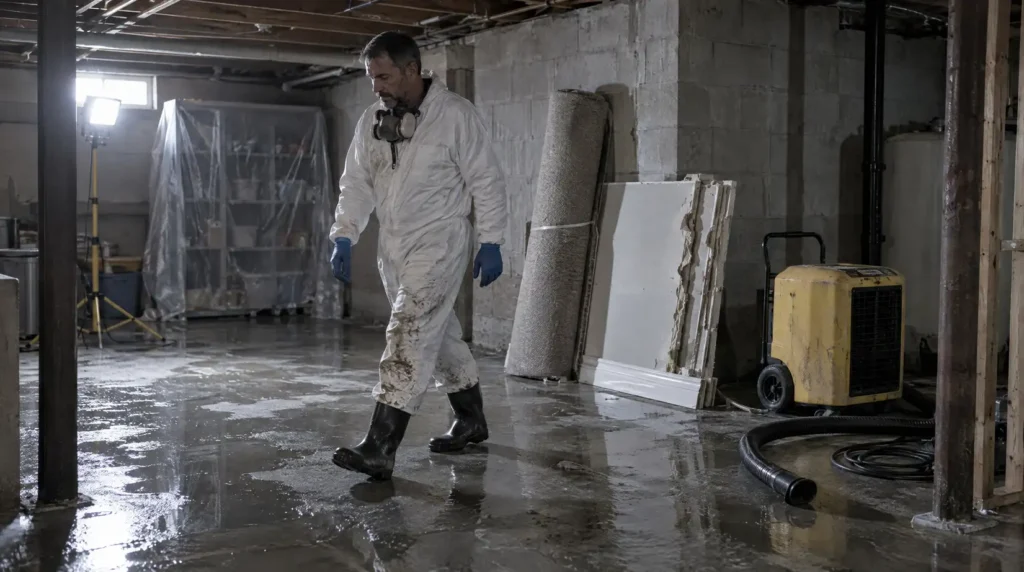
Freeze-thaw cycles, failed supply lines, and backed-up drains send water behind walls and under floors. We document the source, the moisture path, and the full interior repair before cleanup hides it.

Structure fires, smoke travel, and ash damage need full cleaning and repair scoping, not just the visible burn area. We document the building envelope, contents, and smoke path as one claim.
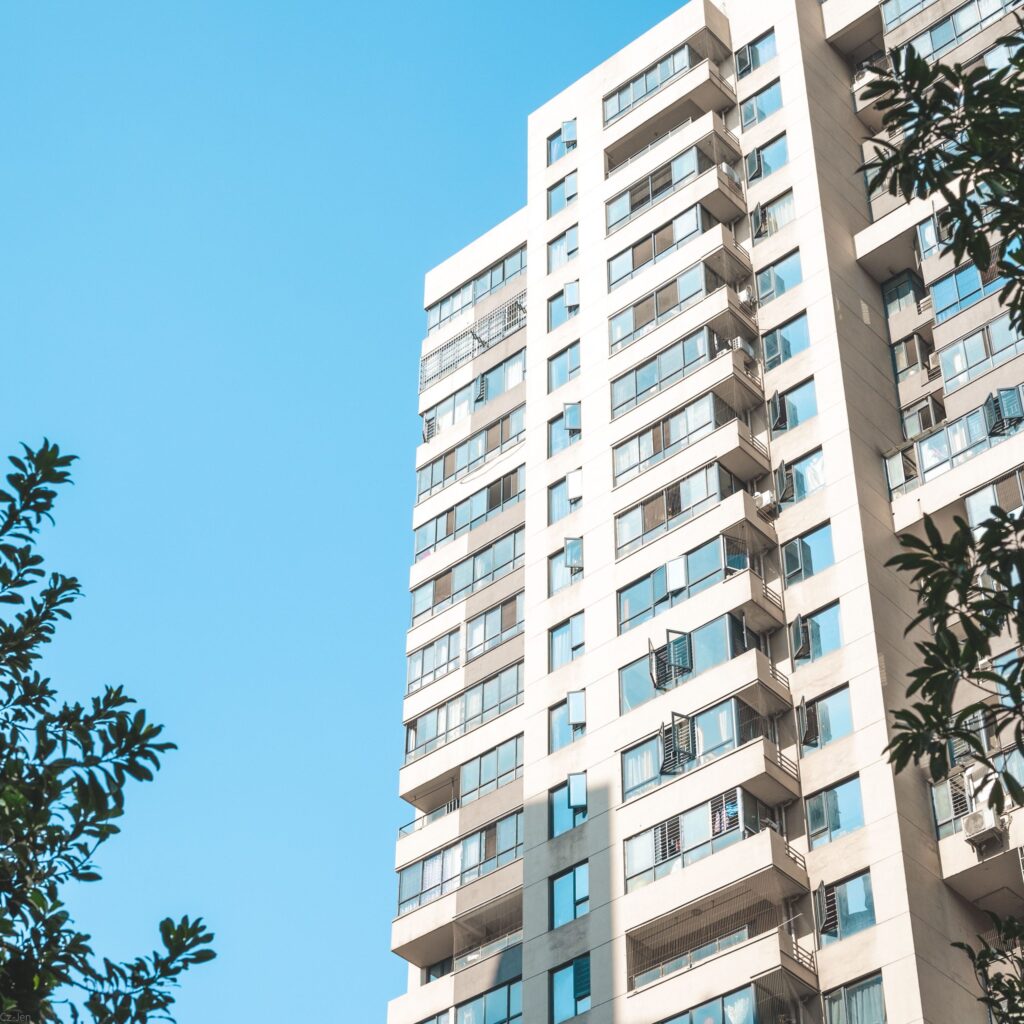
Master-policy gaps, loss assessments, and shared-structure damage complicate condo and HOA claims. We sort out what the association covers and what the unit owner's policy should pay.

Commercial buildings, rental income, and mixed-use exposures need a scope that matches how the property actually operates. We document the loss and the business interruption exposure.

Plaster-and-lath walls, vintage millwork, and code-sensitive repairs are easy to under-scope. We document matching, code upgrades, and the construction details that drive the real repair cost.
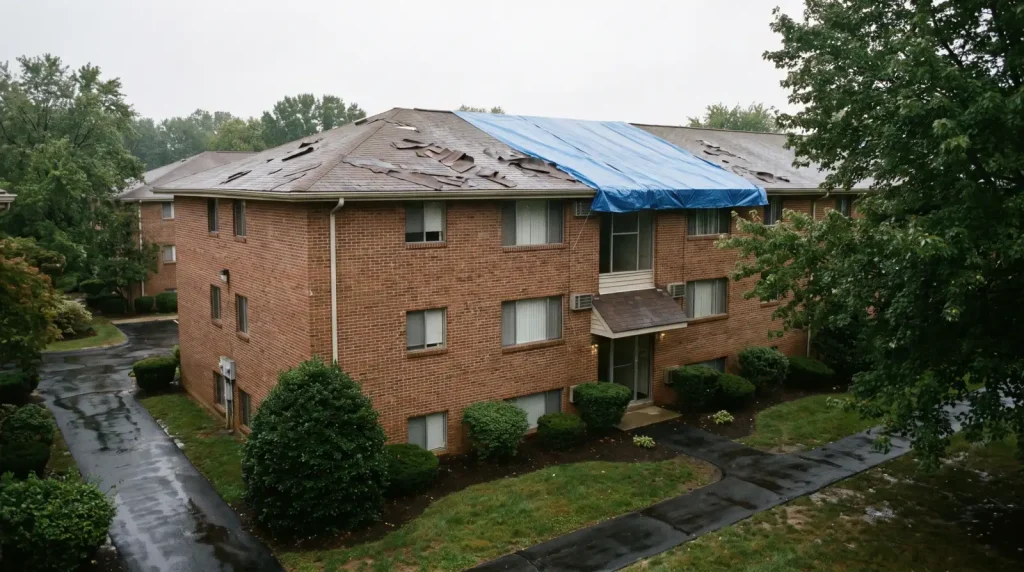
Shared walls, landlord and tenant coverage, and lost rent can turn one loss into several claims. We coordinate the building claim, unit damage, and rental income documentation.
Chicago storms rarely stay on the roof. Hail and straight-line wind open the building envelope; lake-effect snow builds ice dams; freeze-thaw pushes water into ceilings and walls. We scope the exterior and interior damage together.
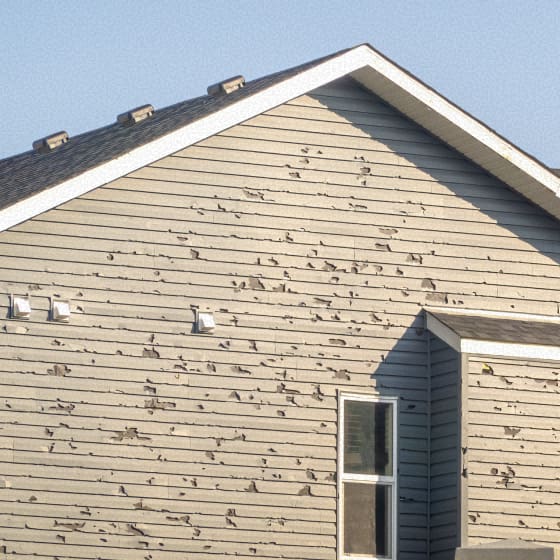
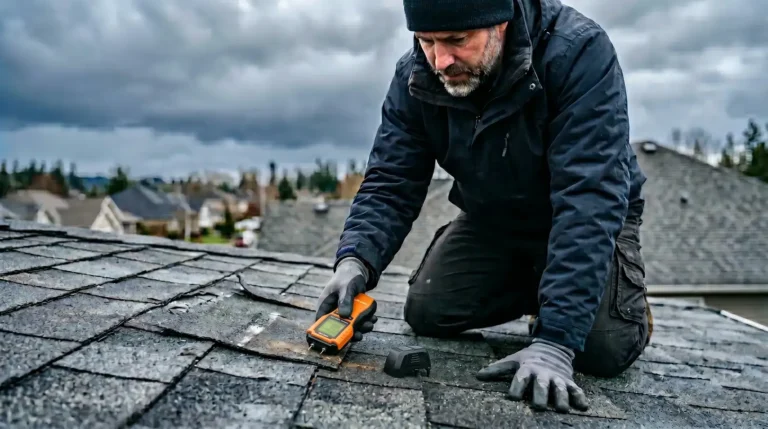
Hail cracks shingle mats, dents soft metals, and opens seams that keep water out. We document the roof system, flashing, vents, and the interior damage that follows, not only the visible dents.

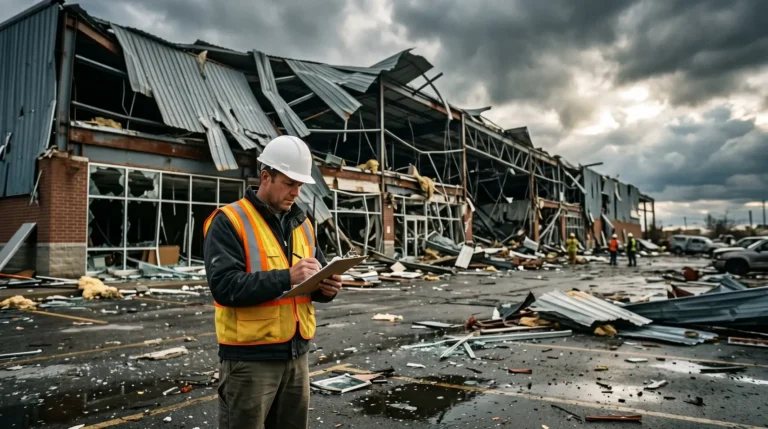
Straight-line wind peels roofing, breaks glazing, and drops limbs onto roofs and cars. We scope the building envelope, structural repairs, and debris removal as one storm claim.

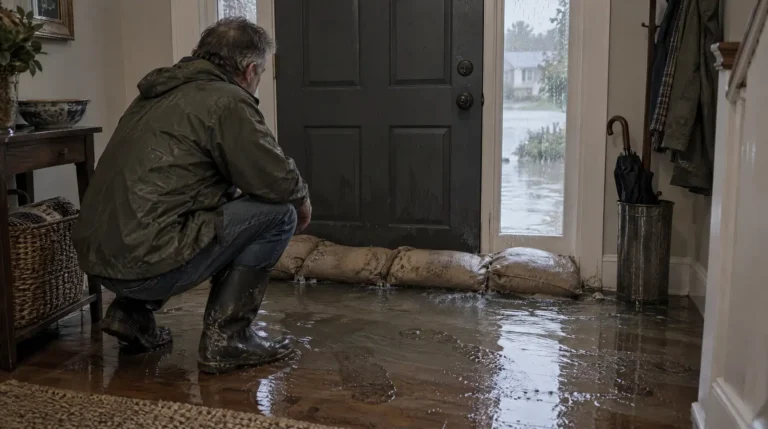
Ice dams trap meltwater behind shingles and push it into ceilings; frozen supply lines split inside walls. We trace the water path, identify the failed component, and scope the interior repair before the carrier calls it maintenance.
Start with a free review. We only get paid when you recover.
Tell us what happened and share your policy and photos. We review the loss at no cost and tell you whether a public adjuster adds value.
Start your free claim review →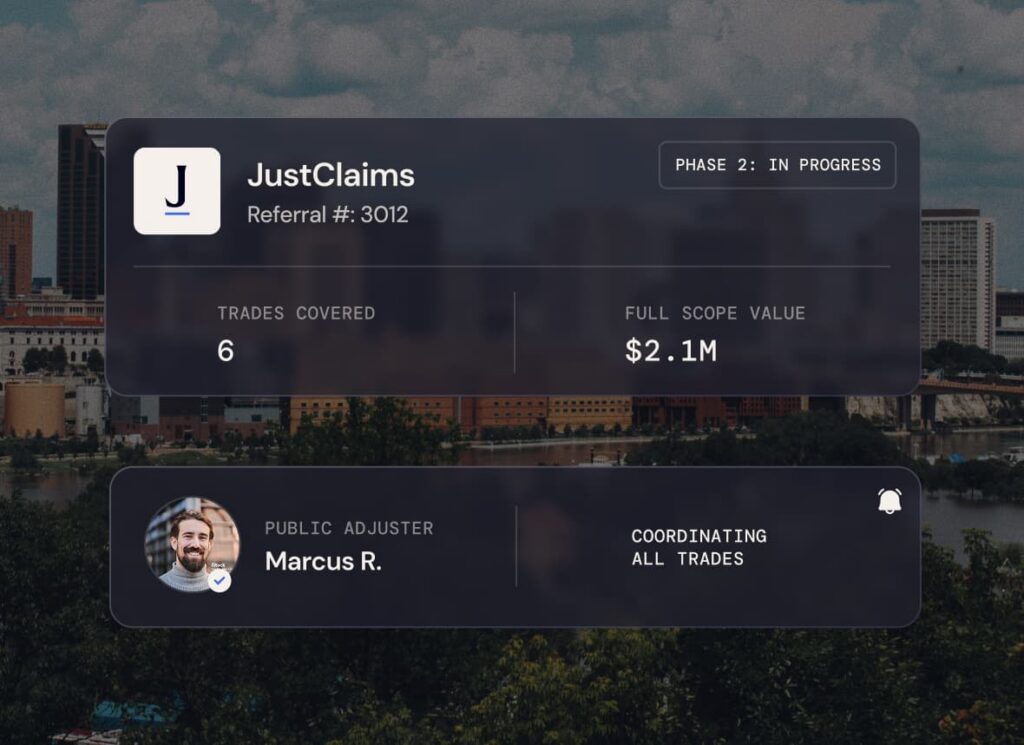
We inspect the property, photograph each affected assembly, and build a line-item scope that matches the repair.
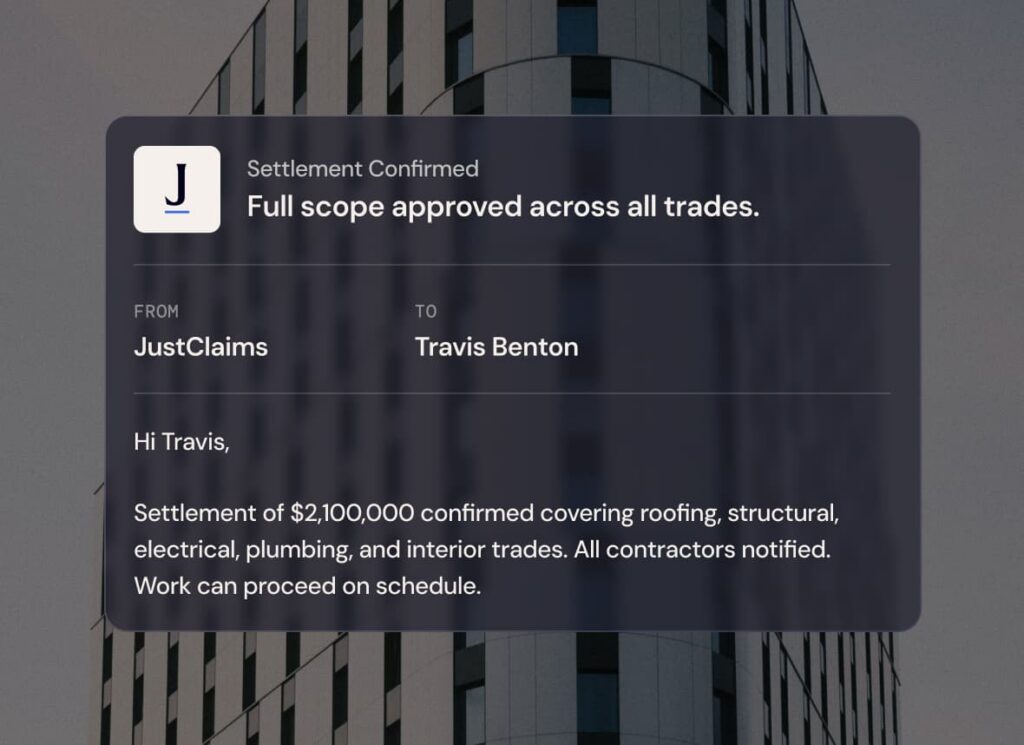
We present the documented scope, answer the carrier's questions, and negotiate until the file reflects the policy and the damage.
The carrier's estimate is below your contractor's bid
Damage is labeled "wear and tear," "maintenance," or "seepage"
Hidden moisture, code upgrades, or matching was missed
The settlement won't cover the full repair
The scope is not itemized line by line
Illinois has specific rules for public adjuster contracts, fees, cancellation, appraisal, and insurer delay. The points below are general information, not legal advice. Policy language and current law control.
Illinois caps a public adjuster's fee at 10% of the amount the insurer pays for a catastrophic-event claim on property other than a personal residence. The Director may approve a higher fee in writing. 215 ILCS 5/1570(d).
You can cancel an Illinois public adjuster contract only by certified mail within five business days after signing. The written contract must include the adjuster's legal name and address, license number, full fee, and exact percentage, among other required terms. 215 ILCS 5/1575(a)-(b); IDOI consumer guidance. Verify a license with the IDOI license lookup.
If the policy has an appraisal clause, either side can demand appraisal when the parties disagree on the amount of loss. If the insured's full appraised loss is upheld, Illinois can shift the insured's appraisal fee and the umpire's fee to the insurer. 215 ILCS 5/397.05. Appraisal decides the amount, not whether coverage applies.
If an insurer's delay is vexatious and without reasonable cause, an Illinois court may award attorney fees, costs, and other damages under 215 ILCS 5/155. The remedy is not automatic and requires court action.
JustClaims provides public adjusting services, not legal advice. Policy terms and current Illinois law control. Consult a licensed Illinois attorney for legal questions. Last reviewed October 2026.
Roofers, restoration crews, and general contractors use our documentation to keep the insurance scope aligned with the work their customers actually need.
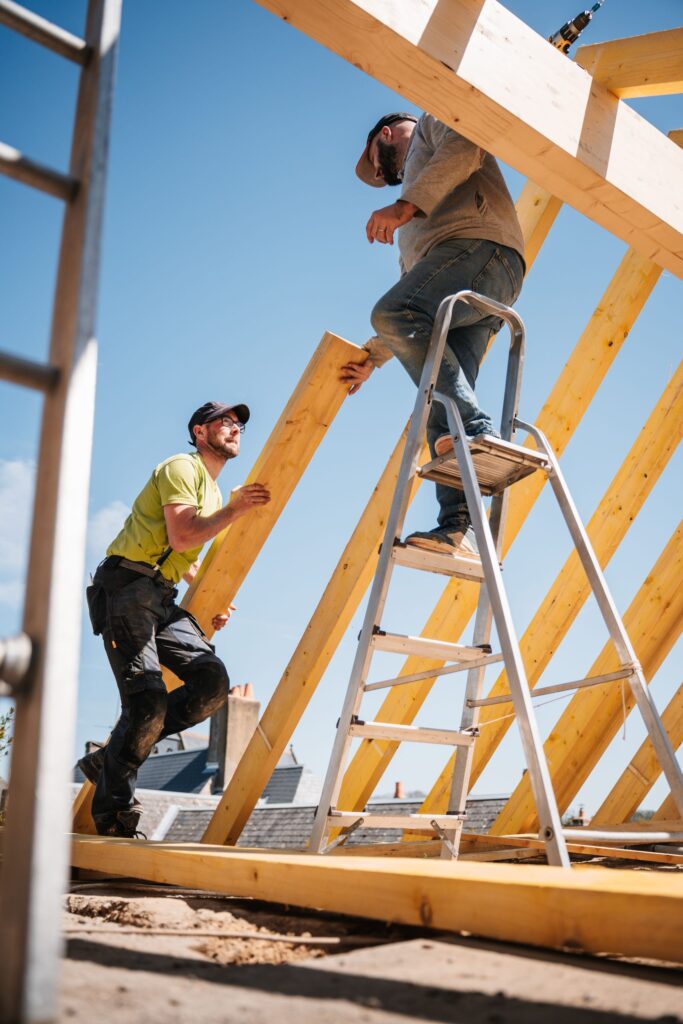
Roofing claims from hail, wind, and severe storms are documented to the full replacement scope the policy supports, with interior damage included.
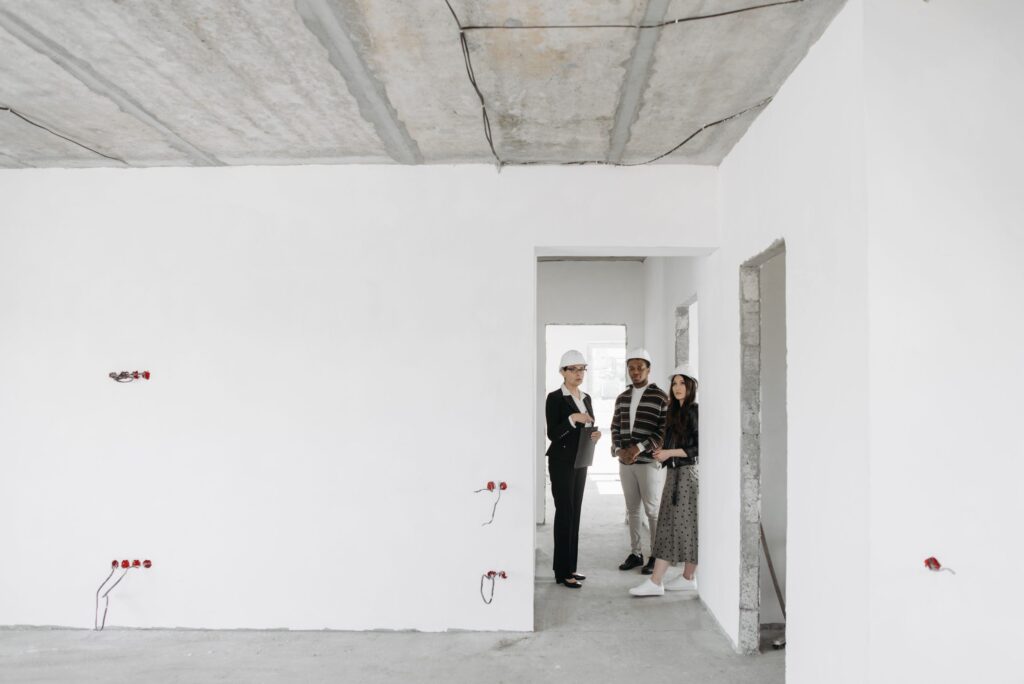
Water, fire, and smoke mitigation documented from the first visit, so the repair estimate and claim describe the same work.

We manage the carrier correspondence and negotiate the scope so your work is documented line by line.

Taylor Bezek leads the Illinois practice at JustClaims and works with Chicago owners on storm, hail, water, fire, condo, and commercial losses. Taylor's approach is documentation-first: photograph the damage, scope the full repair, and align the claim with the policy before negotiation. Taylor holds Illinois public adjuster license #17007117 and is licensed in multiple states. Taylor works only for policyholders.
From the North Side to the South Side and into the inner-ring suburbs, one Illinois-licensed team handles storm, water, fire, condo, and commercial claims.
Photograph every affected room and exterior elevation before cleanup, including the roof, gutters, ceilings, floors, and contents. Keep the damaged items until the adjuster sees them, and save receipts, contractor bids, and any hotel or rental costs. Also keep your policy, claim number, adjuster emails, and a dated log of calls. If water is still entering, stop the source and document that step too.
It depends on what was damaged and how the building is insured. In a condo, the association usually handles common elements such as the roof, exterior walls, and shared plumbing, while the unit owner covers interior finishes and personal property. In a two-flat, the owner of the damaged unit or the building owner files, depending on the policy. Read the declarations and association bylaws before filing.
Standard homeowners policies often exclude gradual seepage and may limit or exclude sewer backup unless you added an endorsement. Sudden burst pipes are usually treated differently from repeated dampness or foundation seepage. Check your declarations page and endorsements, and ask the carrier to identify the exact exclusion it is applying. Photograph the water line, damaged contents, and any sump pump or drain backup before cleanup.
Illinois law does not require you to accept the first offer, and you can hire a licensed public adjuster after a claim has been submitted or adjusted. Review the written contract, the fee percentage, and the five-business-day certified-mail cancellation right before signing. A public adjuster can reopen the scope, document missed damage, and negotiate the amount, but cannot change the policy's coverage terms.
Avoid guessing at causes, accepting a label of wear and tear or maintenance, or saying the damage is minor. Do not agree to a recorded statement before you have reviewed the policy and your documentation. Ask the adjuster to put the request in writing, keep a call log, and provide only facts you can support with photos, receipts, and contractor notes. You can ask to continue the conversation later.
Carriers label repeated damage as wear and tear, maintenance, or long-term seepage to avoid coverage. That label may be wrong when a storm, freeze, or sudden pipe failure caused the loss. Compare the denial letter with your policy, the date of loss, and your photos, and ask for the specific exclusion in writing. If the denial conflicts with the evidence, a licensed public adjuster can help document the cause.
Request a free review. No upfront cost, and we only get paid when you recover.
Illinois-licensed public adjuster #17007117 · Contingency fee, no upfront cost · Serving Chicago and Cook County · Company-wide results; individual outcomes vary