



Catastrophic Claims: 5 Tips for Faster Insurance Payouts
June 09, 2026
Written by Fred Dreuilhe
Share


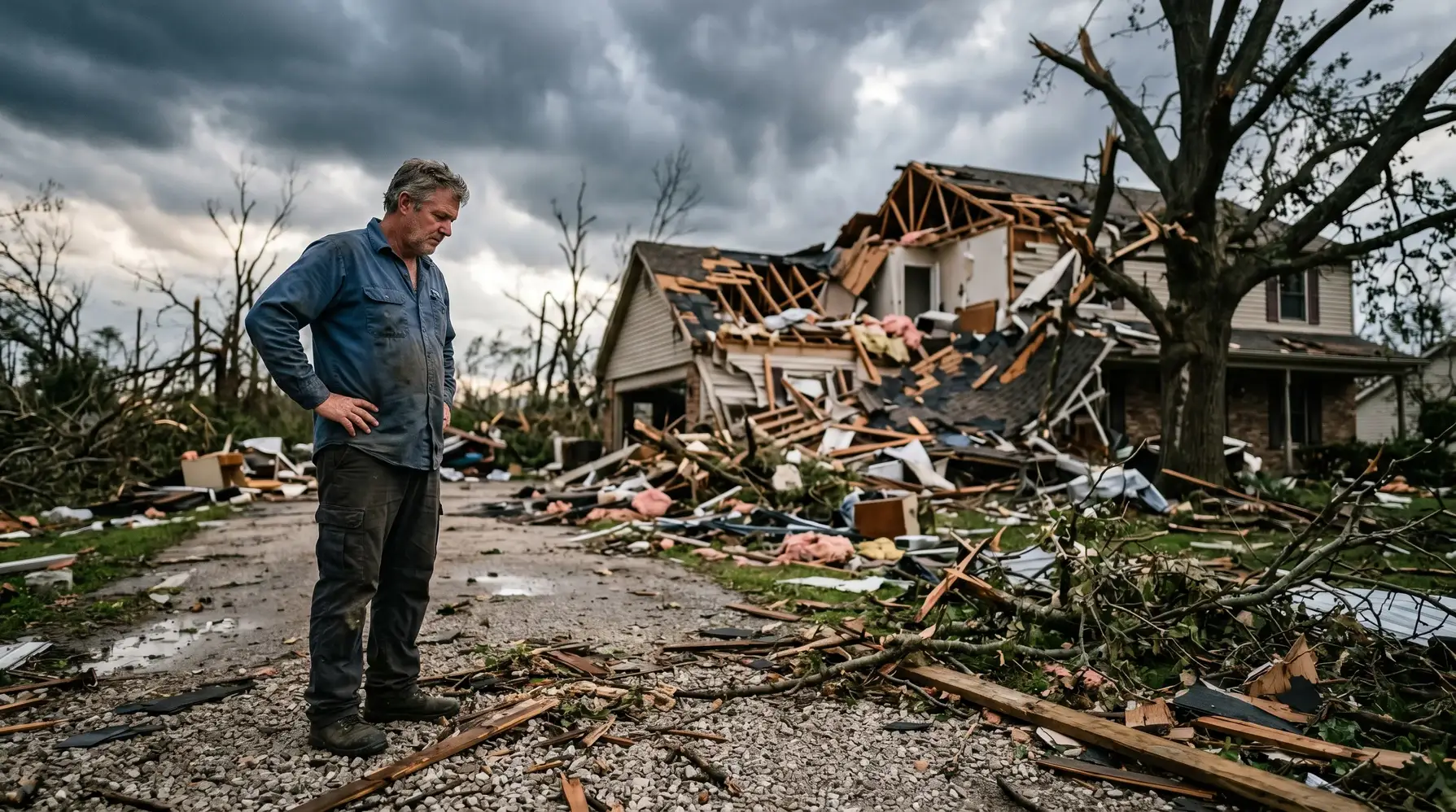
Following a natural disaster, property owners must act quickly to protect their structures from additional damage before initiating the claims process. Documenting the extent of the destruction with photos and videos prior to any cleanup efforts serves as the foundation for a supported insurance claim. Taking these immediate steps can help accelerate the timeline for receiving a settlement.
Key Takeaways
- Initial response: Following a natural disaster, policyholders should first try to protect their property from additional damage before calling their insurer.
- Documentation timing: Documenting the extent of the damage with photos or videos before starting any cleanup supports your claim.
- Temporary repairs: Making temporary, inexpensive repairs—such as boarding up broken windows or placing a tarp over a leaky roof—can prevent further damage.
- Reimbursement tracking: Keeping receipts for temporary repairs allows for insurance reimbursement.
- Process acceleration: Contacting your insurance company immediately to report the loss and keeping your policy and claim number handy can help accelerate the claims process.
The 5 Steps That Accelerate Your Catastrophic Claim
When severe weather or sudden disasters strike, the actions you take in the immediate aftermath play a significant role in how quickly your insurance carrier processes your file. By following a structured approach to mitigation and reporting, property owners can support their position and reduce unnecessary delays.
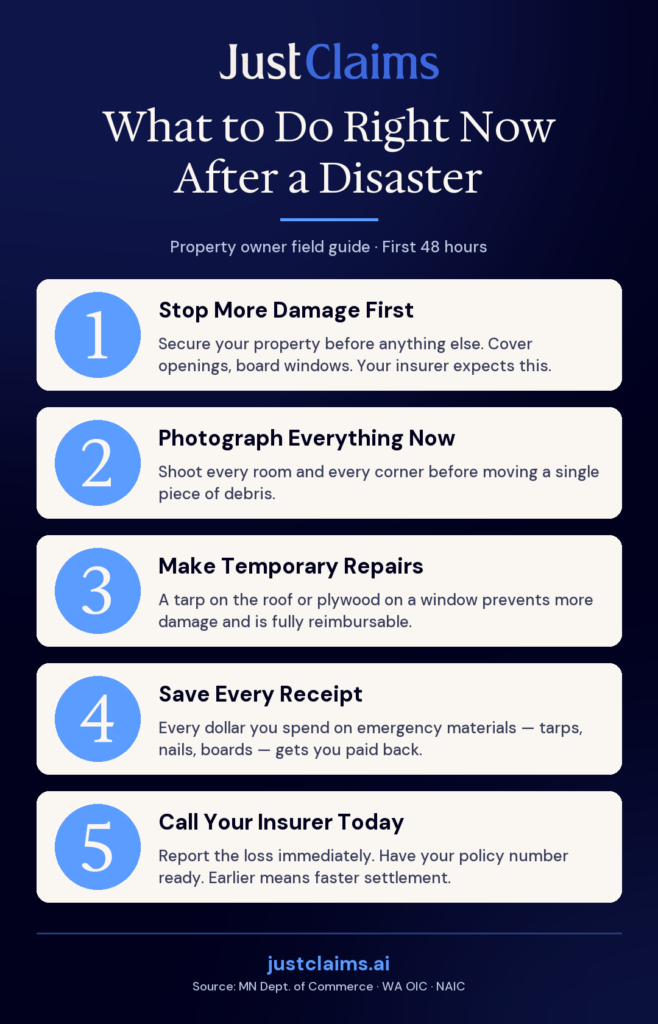
1. Protect the Property from Further Damage
Following a natural disaster, policyholders should first try to protect their property from additional damage before calling their insurer to start filing claims as soon as possible [2]. Carriers expect property owners to mitigate their losses, meaning you should take reasonable steps to ensure the initial damage does not worsen due to exposure to the elements.
2. Document the Damage Before Cleanup
Documenting the extent of the damage with photos or videos before starting any cleanup is a crucial step for building your home inventory and supporting your claim [1]. Visual evidence captured immediately after the event provides adjusters with a clear picture of the destruction before any debris is moved or altered. This documentation helps demonstrate the severity of the loss and supports the valuation of your damaged property. Timing matters as much as evidence, because state law sets limits on how long insurance has to pay. Clearing that wreckage carries its own cost, and debris removal insurance is a separate coverage that reimburses the expense of hauling away destroyed materials after a covered loss, often subject to its own sublimit.
3. Execute Temporary Repairs
Making temporary, inexpensive repairs—such as boarding up broken windows or placing a tarp over a leaky roof—can prevent further damage [1]. These stop-gap measures are not meant to be permanent fixes, but rather necessary interventions to secure the building envelope. By tarping a roof or sealing a shattered window, you protect the interior from subsequent rain, wind, or vandalism.
4. Retain All Mitigation Receipts
While executing temporary repairs, keeping receipts allows for insurance reimbursement [1]. Materials purchased for mitigation, such as plywood, tarps, nails, and heavy-duty tape, are typically covered under standard property policies. Organizing these receipts from day one helps prevent out-of-pocket losses for emergency stabilization efforts.
5. Report the Loss Immediately
Contacting your insurance company immediately to report the loss and keeping your policy and claim number handy can help accelerate the claims process [1]. Having your documentation organized before making the call allows the intake representative to route your file to the appropriate catastrophic response team without delay.
Navigating the Adjuster Review Process
Because accelerating your payout depends heavily on clear evidence, understanding how adjusters review your initial documentation is a vital part of the recovery process. When a catastrophic event occurs, insurance carriers are often inundated with thousands of claims simultaneously. This surge in volume can lead to extended wait times for field adjuster inspections. Owners who cannot absorb that delay often bring in representation, and our public adjuster for insurance claim guide explains when it pays off.
To keep your claim moving forward, the visual evidence and receipts you gathered during the initial mitigation phase become your primary tools. Desk adjusters often rely on policyholder-provided photos and videos to make preliminary coverage determinations and issue initial advances for emergency living expenses or immediate repairs. The first check you get from your insurance company is often an advance against the total settlement amount, not the final payment [3]. Providing a highly organized file—complete with a detailed home inventory, clear pre-cleanup photos, and itemized mitigation receipts—puts the carrier on notice regarding the full scope of your loss. On a large or total loss, the amount you can ultimately collect also depends on insurance to value—whether your policy limit reflects the full replacement cost of the structure.
Standard homeowners insurance typically does not cover flood or earthquake damage. Separate policies or endorsements are required for these perils [4].
In modern claims processing, carriers frequently utilize software and remote assessment tools to evaluate damage based on the media you submit. Ensuring your photos are well-lit, clearly labeled, and comprehensive can help reduce the back-and-forth communication that often stalls catastrophic settlements.
Frequently Asked Questions
When should I contact my insurance company after a disaster?
You should reach out to your insurer to report the loss as soon as you have secured the property against further harm. Having your policy details and claim number ready when you make this call can help speed up the overall processing timeline [1].
Can I start cleaning up debris before the adjuster arrives?
It is highly recommended to capture comprehensive photos and videos of the destruction before moving any debris or starting the cleanup process. This visual evidence is necessary to build your inventory and substantiate the full extent of your loss to the carrier [1].
Will my insurance pay for temporary repairs like roof tarps?
Yes, policies typically cover the cost of inexpensive, temporary fixes designed to stop additional damage, such as boarding up windows or tarping a roof. you should save all related hardware store receipts to submit them for proper reimbursement [1].
What is the first thing I should do after a catastrophic event?
Your immediate priority following a severe weather event is to safeguard the structure from taking on more damage. Once the property is stabilized and protected from the elements, you can then proceed with filing your formal claim [2].
How to Protect Your Settlement Rights
Recovering from catastrophic property damage requires swift action, meticulous documentation, and a clear understanding of your policy obligations [1][2]. By prioritizing emergency mitigation, capturing evidence before cleanup, and organizing your expenses, you build a strong foundation for your recovery. Our property damage consulting team can review your documentation before it goes back to the carrier. If your catastrophic claim was denied or underpaid, JustClaims‘ expert team — accelerated by our bespoke AI — reviews the policy language, compares it against your documentation, and flags likely underpayments so you can go back to the carrier with confidence.
This content is for informational purposes only and does not constitute legal or insurance advice. Coverage decisions depend on the specific terms, conditions, and exclusions of each policy and the laws of the applicable jurisdiction; policyholders and contractors should consult with a qualified professional for advice on their particular situation.
Sources
[1] https://mn.gov/commerce/insurance/home/dic/after-the-disaster.jsp
[3] https://content.naic.org/sites/default/files/publication-post-disaster-claims-guide.pdf
[4] https://www.iii.org/article/which-disasters-are-covered-by-homeowners-insurance


