Wind Damage on Your Roof: What Inspectors Look For and How to Claim It
June 04, 2026
Written by Taylor Bezek
Share


High-speed winds can lift shingles just enough to break their factory-applied adhesive seal, leaving roofs vulnerable to hidden leaks that rot the deck from the inside out. Because insurance adjusters actively look to distinguish between covered sudden storm damage and uncovered gradual deterioration, identifying these subtle signs is essential for contractors protecting their scope. Standard roof estimates often fall short, as successful claims require explicitly connecting the physical damage to a covered event.
Key Takeaways
- Hidden vulnerabilities: High-speed winds can lift shingles just enough to break their factory-applied adhesive seal, after which the shingle may lay back down and appear completely normal from the ground.
- Visual indicators: Granule loss that is concentrated near the edges of the shingle tabs, rather than spread uniformly across the surface, is a specific indicator of wind damage.
- Industry disputes: A 2017 HAAG Engineering paper argues that a shingle that is simply not adhered — with no crease, fold, tear, or missing material — is not evidence of wind-caused damage.
- Claim requirements: A successful insurance claim requires an inspection report that explicitly connects the damage to a covered event to overcome common insurer denials.
Safety First: Ground-Level vs. Roof-Level Inspections
Property owners and contractors should prioritize safety and avoid climbing onto a storm-damaged roof, as wet surfaces and debris make it incredibly dangerous [1]. Before setting up a ladder, a proper wind damage inspection begins at ground level, where inspectors look for collateral damage to the home’s exterior before assessing the roof itself [2]. Ground inspections are highly recommended for property owners immediately after severe weather to check for obvious signs of storm damage without the risks of climbing [3].
However, while ground-level inspections are a safe starting point, they are insufficient for a complete assessment because wind damage to shingles is not always visible from the ground [3]. Relying solely on a visual scan from the yard often results in missed damage, leaving the property vulnerable to future leaks and complicating the insurance recovery process.
Visual Signs of Wind Damage on Shingles
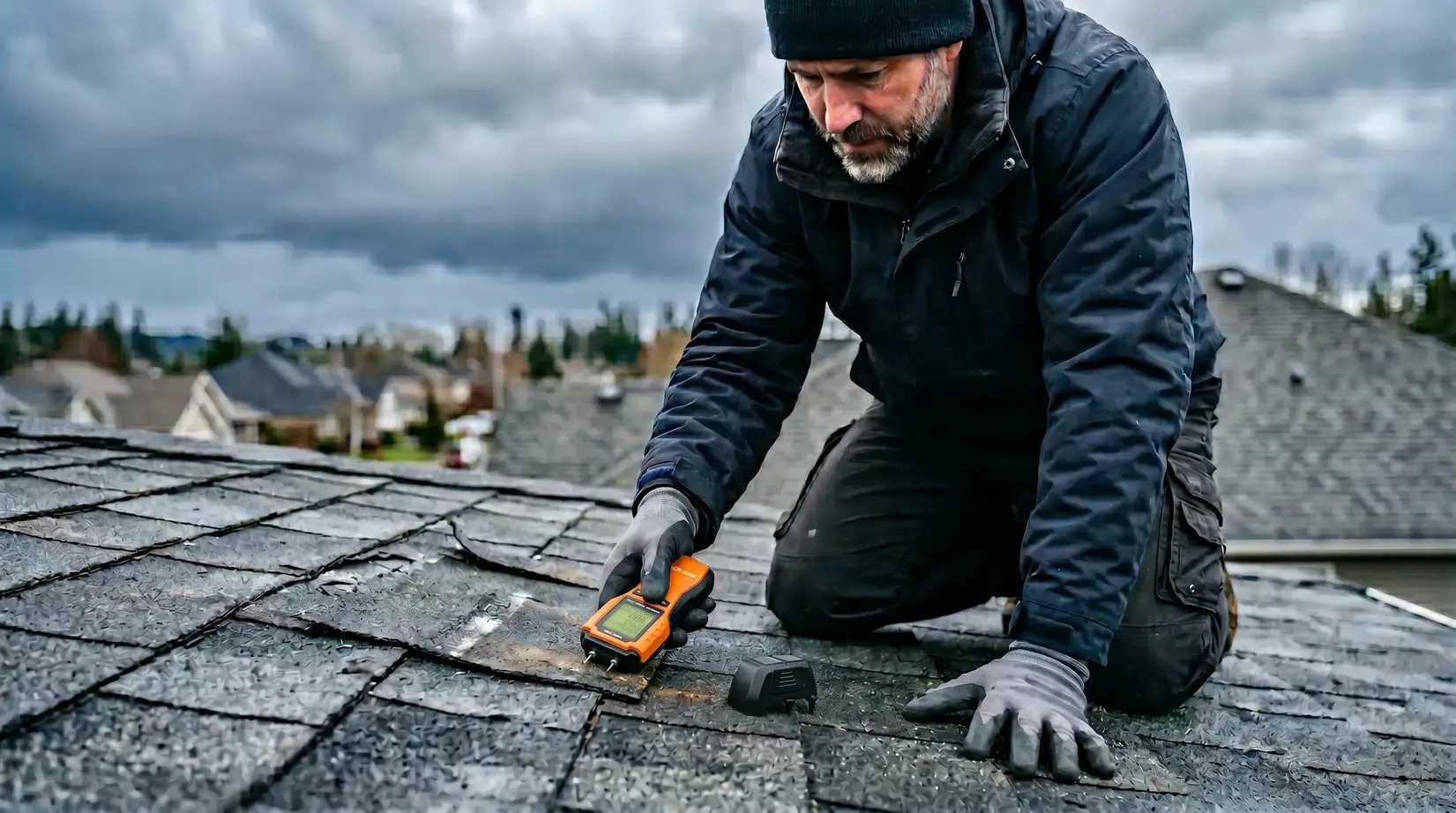
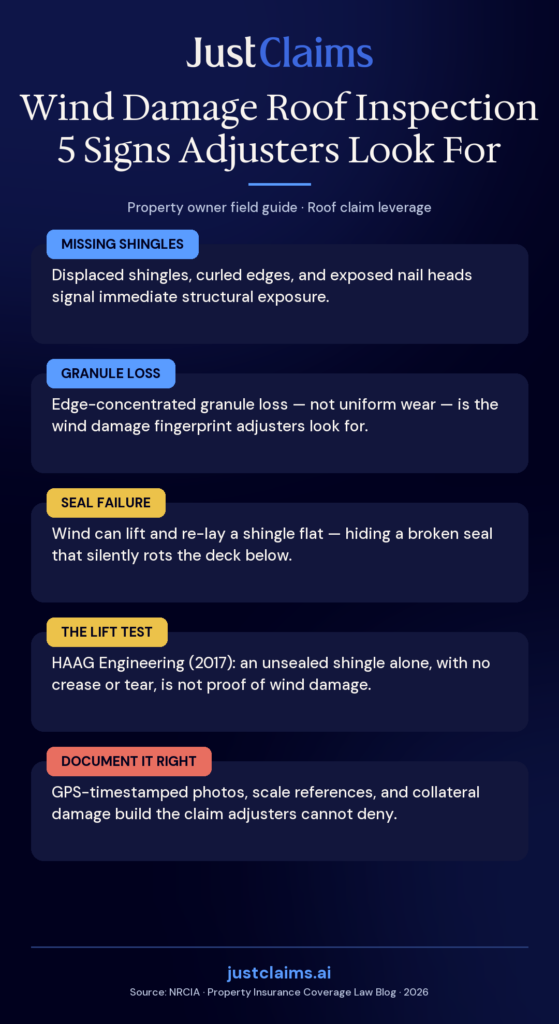
Because ground-level observations cannot capture the full scope of a storm’s impact, a detailed roof-level inspection is necessary to identify the specific visual signs of wind damage that adjusters require. The most obvious visual signs of wind damage that can often be spotted from the ground include missing or displaced shingles, curled edges, and exposed nail heads [4]. When shingles are entirely torn off, the underlying water barrier is exposed to the elements, requiring immediate mitigation.
Beyond missing materials, wind damage does not always result in completely missing shingles; it can also manifest as creasing or buckling along the edges of the tabs and the separation of sealant strips [4]. Wind abrasion can cause granule loss, creating streaks of bare mat material that compromise the shingle’s ability to resist weather [4]. Inspectors should pay close attention to the pattern of this wear. Granule loss that is concentrated near the edges of the shingle tabs, rather than spread uniformly across the surface, is a specific indicator of wind damage [4].
The Lift Test and Seal Failure Analysis
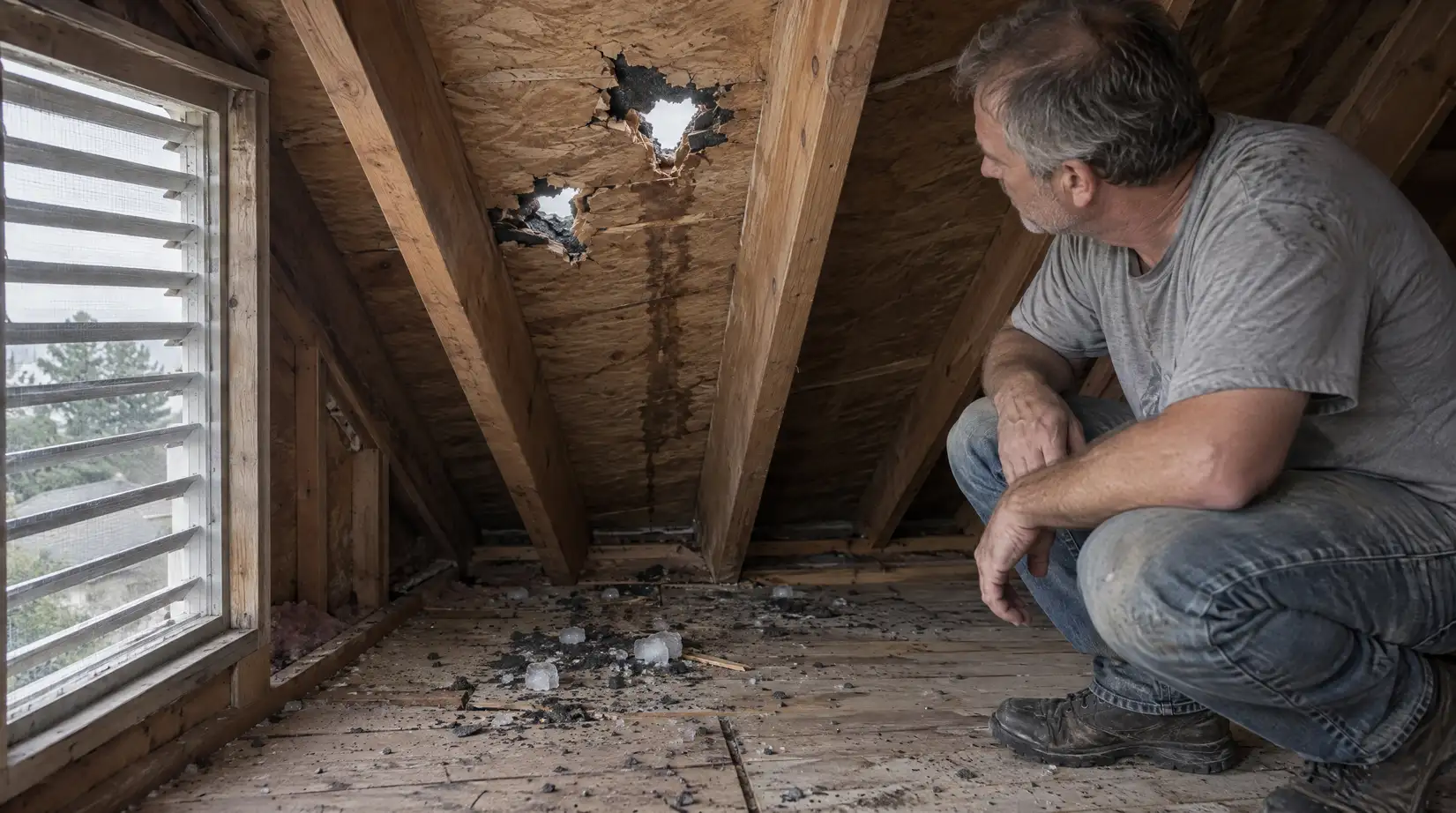
Identifying subtle creasing and granule loss often leads inspectors to investigate the integrity of the shingle’s adhesive, which is a frequent point of contention when adjusters attempt to classify damage as gradual wear and tear. High-speed winds can lift shingles just enough to break their factory-applied adhesive seal, after which the shingle may lay back down and appear completely normal from the ground [1]. A broken seal strip leaves the roof vulnerable to wind-driven rain, which can lead to slow, hidden leaks that rot the roof deck from the inside out On a condo, that same drip belongs squarely to the association — condo water damage from roof is one of the clearest cases where the master policy has to answer [1].
To assess this hidden vulnerability, inspectors have historically used a 1-finger test or lift test to check if the sealant bond on shingles has been compromised by wind [5]. By gently lifting the edge of the shingle, an inspector can determine if the adhesive has failed. However, there is industry debate over seal failure; in a 2017 paper titled “Misconceptions of Wind Damage to Asphalt Composition Shingles”, HAAG Engineering took the position that a shingle that is simply not adhered — but is not creased, folded, torn, or missing — is not sufficient evidence of wind-caused damage [5]. This debate makes thorough documentation and policy knowledge essential for overcoming adjuster pushback.
The 4 Steps That Matter for Wind Claim Documentation
Since adjusters often rely on engineering guidelines to dispute seal failures, meticulous documentation is the contractor’s best tool for substantiating sudden storm damage. Once your own documentation is in hand, the next step is how to prepare for home insurance inspection.
1. Capture Wide and Close-Up Angles
When documenting roof wind damage, take both wide shots to establish the baseline and close-up photos of specific damage like missing shingles or lifted tabs [6]. Wide shots provide context for the overall condition of the slopes, while close-ups highlight the specific mechanical damage caused by the wind. Wind and tornado losses document differently, as our tornado damage types breakdown shows. Take photos in natural daylight rather than using a flash, which can obscure important details of the roof damage [7].
2. Provide Accurate Scale
A photo of a creased shingle is often challenged if the adjuster cannot determine its size. Include a tape measure, ruler, or recognizable object in close-up photos to provide scale and show the exact size of the damage [7]. This helps correlate the physical damage to the reported wind speeds in the area.
3. Enable GPS and Timestamp Data
Insurance carriers require proof that the damage occurred during the specific policy period. Ensure your camera or smartphone has the GPS and timestamp features enabled so adjusters know exactly when and where the damage occurred [6]. Metadata embedded in the photos prevents disputes over the timeline of the loss.
4. Record Collateral Exterior Damage
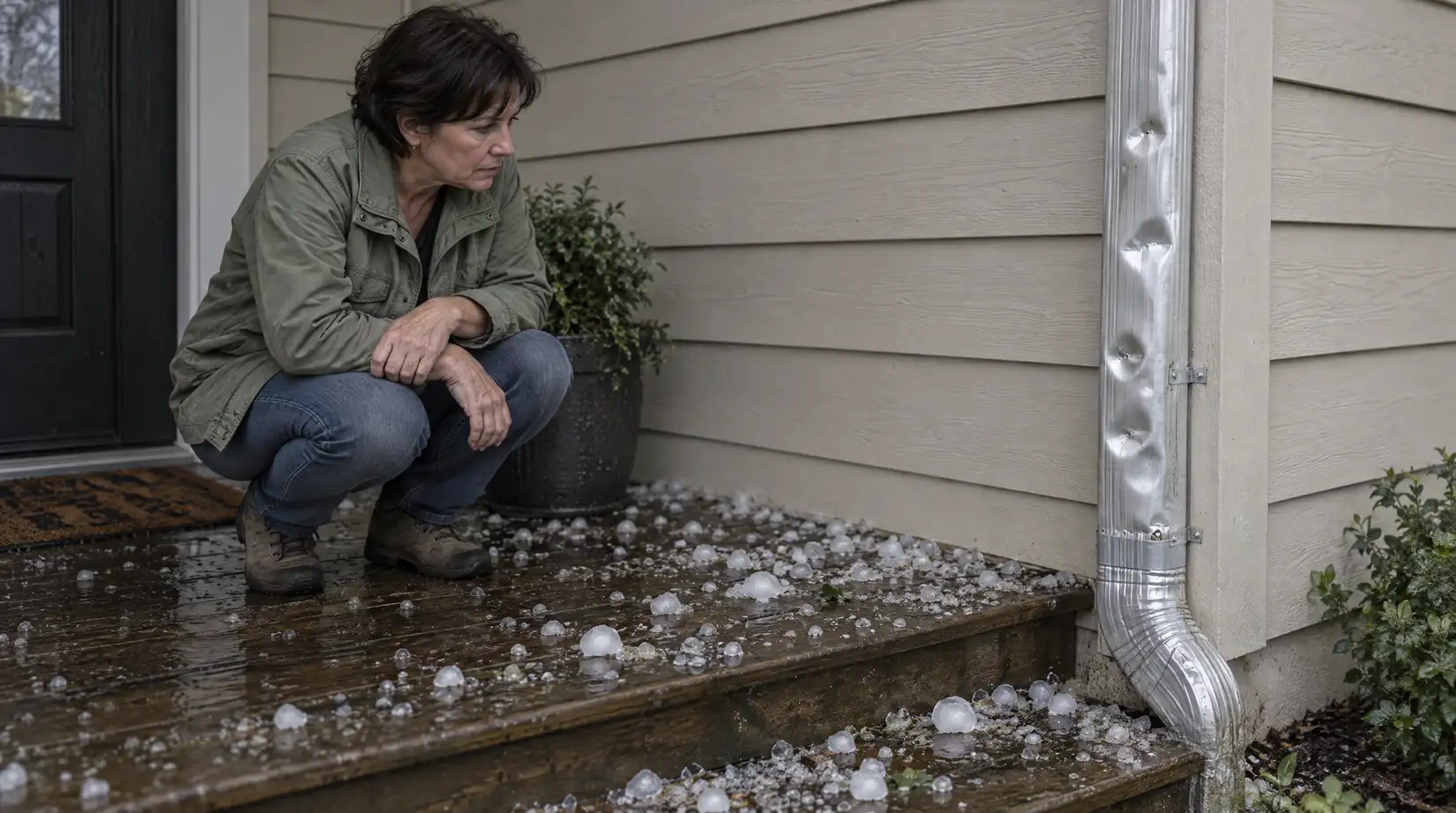
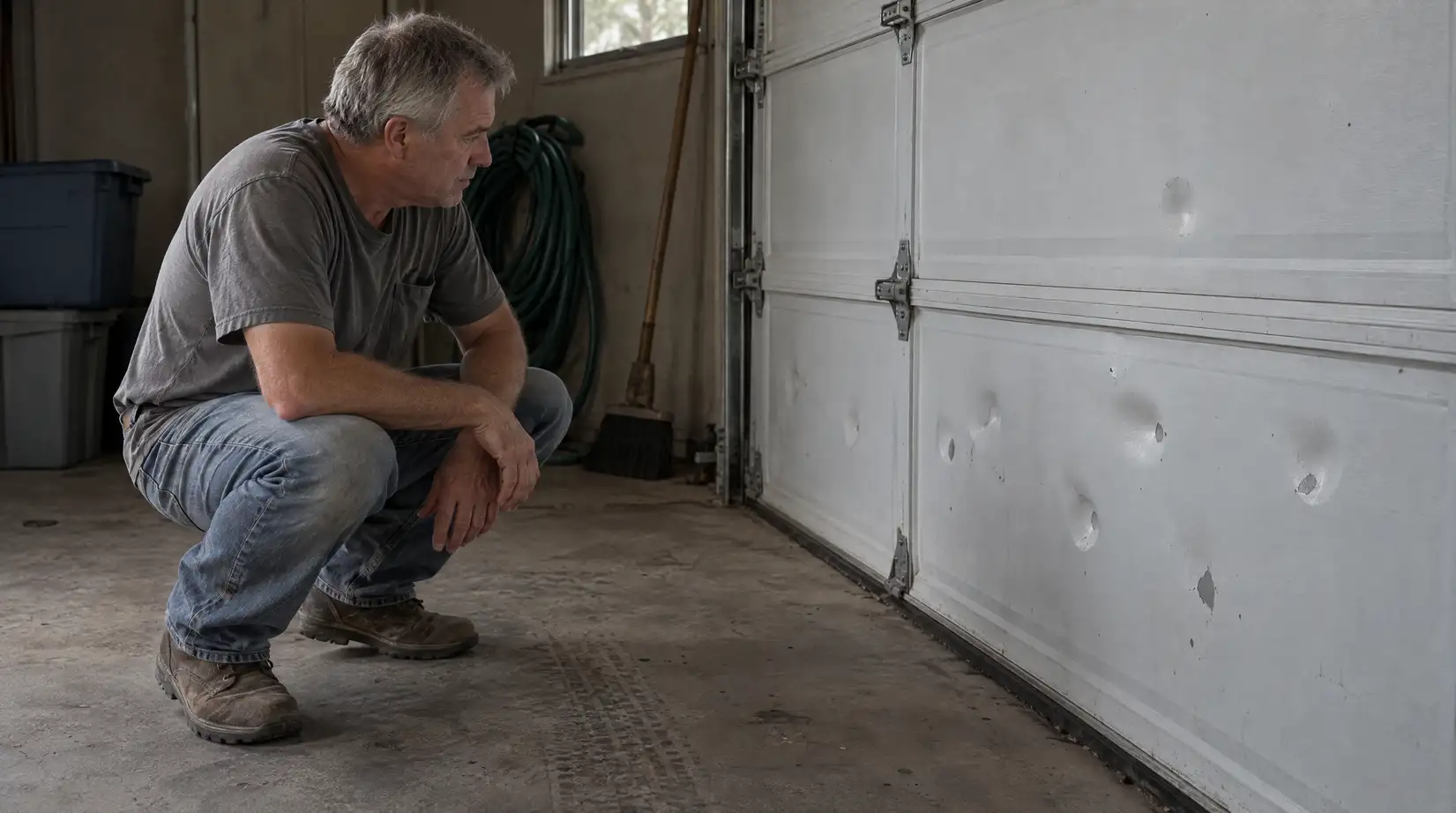
Wind rarely damages only the roof. Capture images of collateral damage, such as dented gutters, cracked vent caps, or fallen branches, to help adjusters understand the storm’s direction and severity [7]. Documenting the entire exterior builds a comprehensive narrative that supports the roof claim.
Why Standard Inspections Fail Without Policy Expertise
Even with perfect photo documentation, standard roof inspections often fail to secure insurance claims because disputes frequently hinge on specific policy language, claim handling, and exclusions rather than just the physical condition of the roof [8]. Insurance adjusters conduct inspections with the primary goal of evaluating liability for the company, often looking to distinguish between covered sudden storm damage and uncovered gradual deterioration [9].
A standard roofer’s estimate typically focuses only on the price to fix the damage, whereas a successful insurance claim requires an inspection report that explicitly connects the damage to a covered event to overcome common insurer denials. Everything the first estimate misses becomes the job of roofing supplements [9]. Furthermore, without policy expertise, standard inspections may fail to document damage in a way that triggers ordinance or law coverage, which is necessary to pay for required building code upgrades like improved underlayment or structural reinforcements [10]. Understanding how to frame the physical damage within the context of the property owner’s specific coverage limits is what separates a standard estimate from a successful recovery strategy.
Frequently Asked Questions
Can wind damage be accurately assessed from the ground?
While observing a property from the yard is a highly recommended first step after a storm, it is not enough for a thorough evaluation. Many forms of shingle damage, such as broken adhesive seals and subtle creasing, remain hidden from street level and require a closer look from the roof itself [3].
What does wind-driven granule loss look like?
When high winds cause abrasion, they often strip granules in a specific pattern rather than evenly across the roof. You will typically see streaks of bare mat material or concentrated granule loss near the edges of the shingle tabs, which helps differentiate storm damage from normal aging [5].
Why do insurance adjusters deny claims for broken shingle seals?
Carriers frequently rely on specific engineering guidelines, such as those published by HAAG Engineering, to evaluate claims. A 2017 HAAG Engineering paper argues that a failed adhesive bond alone is not enough to prove wind damage unless there is also a visible fold, tear, or crease — or the shingle is missing entirely [5].
How should contractors photograph roof damage for an insurance claim?
Proper documentation requires taking pictures in natural daylight without a flash to avoid obscuring details. It is also important to use a tape measure for scale and ensure that GPS and timestamp features are turned on to verify the exact location and date of the inspection [6][7].
How to Protect Your Scope
Identifying subtle wind damage and documenting it thoroughly is only the first step in the recovery process. Because adjusters actively look for ways to classify damage as gradual wear and tear, contractors must present evidence that aligns directly with the property owner’s policy language. If your insurance claim was denied or underpaid, JustClaims‘ expert team — accelerated by our bespoke AI — reviews the policy language, compares it against your documentation, and flags likely underpayments so you can go back to the carrier with confidence, knowing we don’t replace you — we back your assessment to help you get paid without the chase.
This content is for informational purposes only and does not constitute legal or insurance advice. Coverage decisions depend on the specific terms, conditions, and exclusions of each policy and the laws of the applicable jurisdiction; policyholders and contractors should consult with a qualified professional for advice on their particular situation.
Sources
[1] https://usasuperior.com/roof-inspection-after-storm/
[2] https://www.nachi.org/wind-damage-part6-45.htm
[3] https://www.ibhs.org/research-areas/wind/
[4] https://www.totalroofingstl.com/blogs/fixing-wind-damaged-roof-shingles/
[5] https://www.propertyinsurancecoveragelaw.com/blog/seal-strip-failure/
[6] https://companycam.com/resources/blog/photo-documentation-that-gets-insurance-claims-approved-faster
[7] https://www.nrcia.org/roof-inspection-insurance-claim/
[8] https://www.wallaceinsurancelaw.com/wind-damage-to-roof-common-reasons-insurance-claims-get-denied/
[9] https://www.nrcia.org/roof-inspection-insurance-claim/
[10] https://www.thehartford.com/commercial-property-insurance/ordinance-or-law-coverage

Taylor Bezek

As the General Manager at JustClaims, Taylor Bezek brings over a decade of experience managing complex residential, commercial, and large-loss claims. A licensed Public Adjuster in TX (#2125659), FL (#W455048), CO (#769172), and 10 additional states, Taylor founded his own firm before joining JustClaims to scale a tech-forward solution for the insured. He is committed to combining industry expertise with AI to enhance speed, clarity, and outcomes for every policyholder. Taylor's mission is to modernize the public adjusting profession and ensure owners get exactly what they are entitled to.