After the Flood: A Southern Colorado Flood Recovery Checklist for Property and Business Owners
November 06, 2026
Written by Taylor Bezek
Share


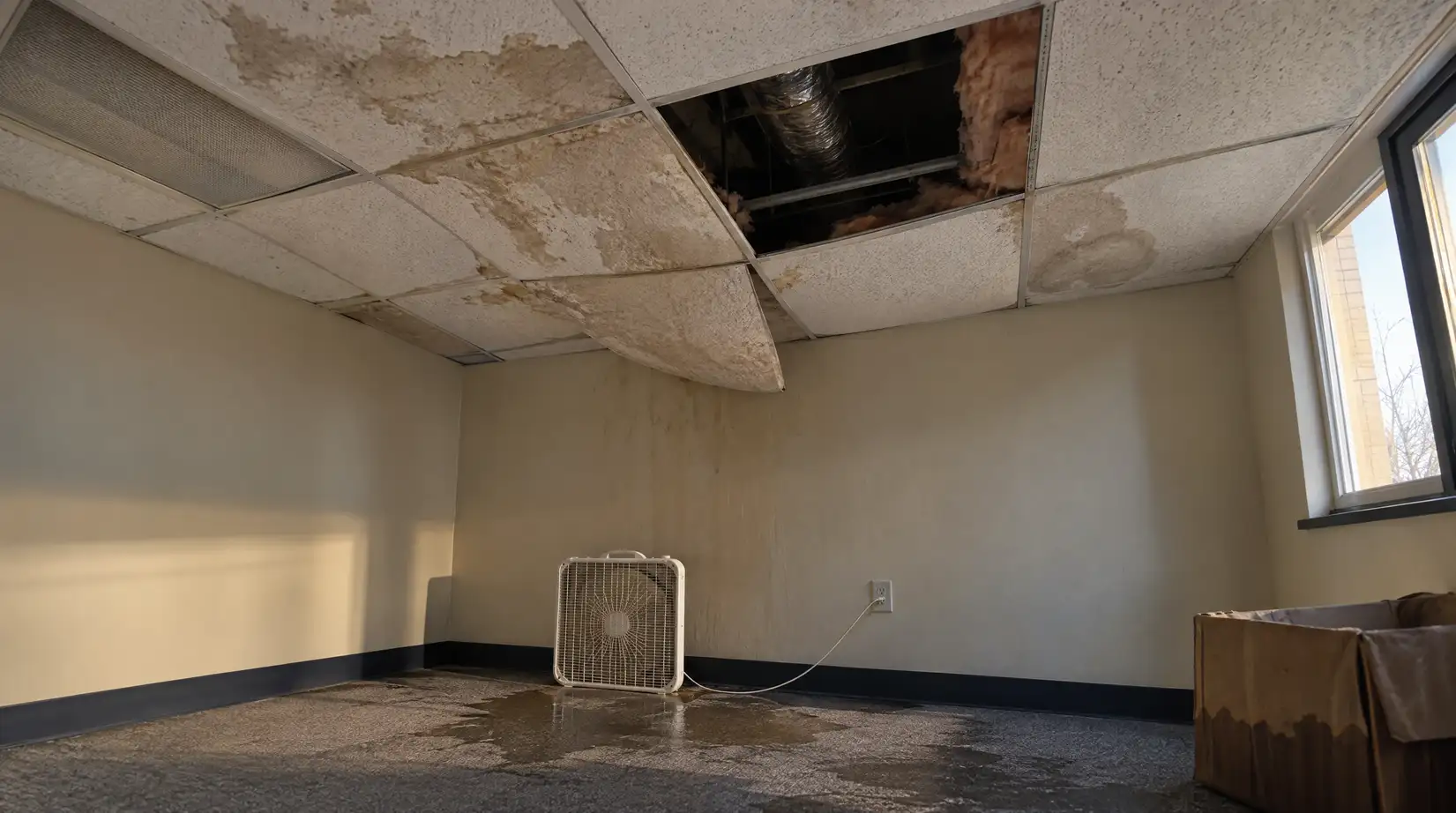
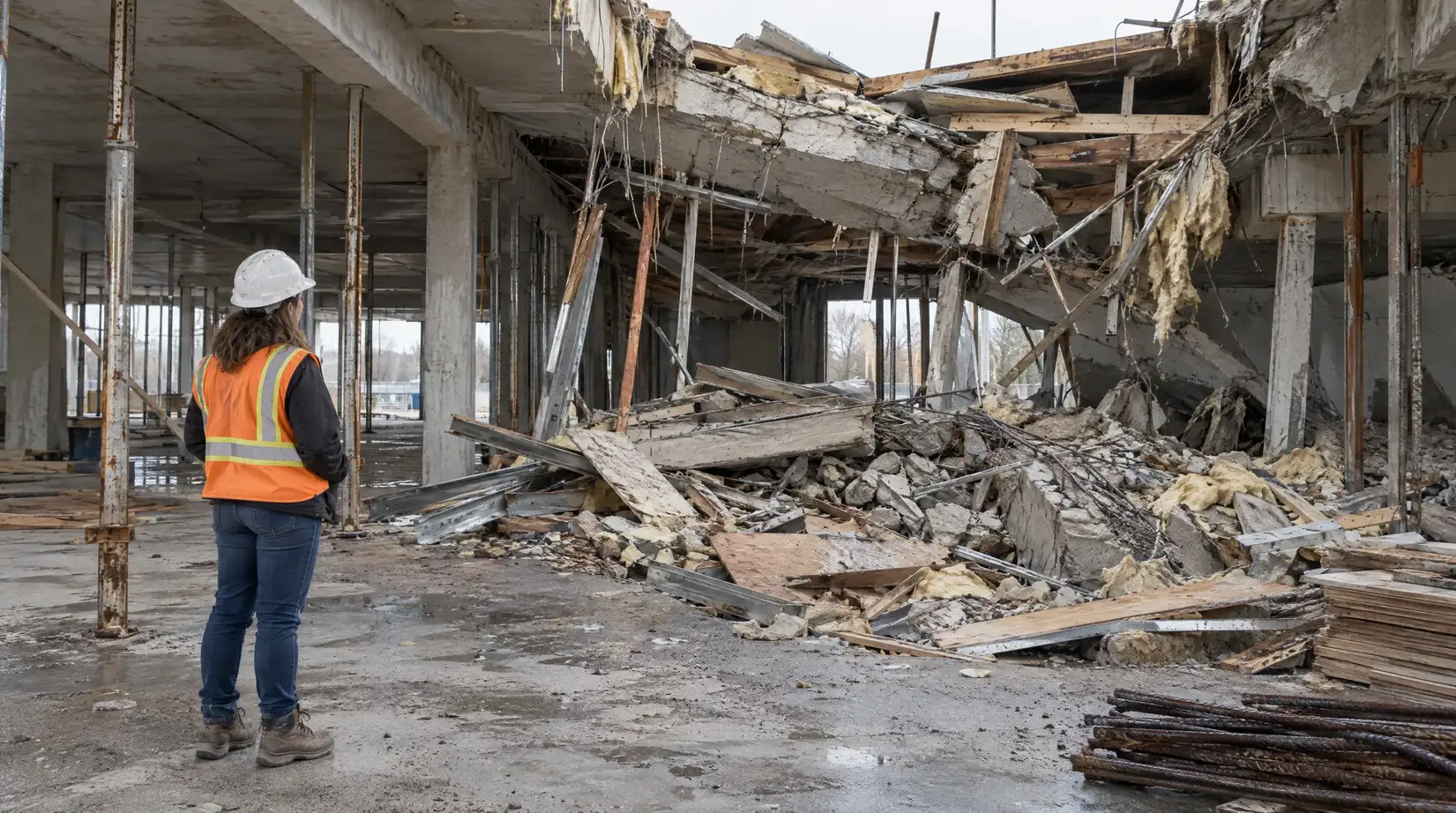
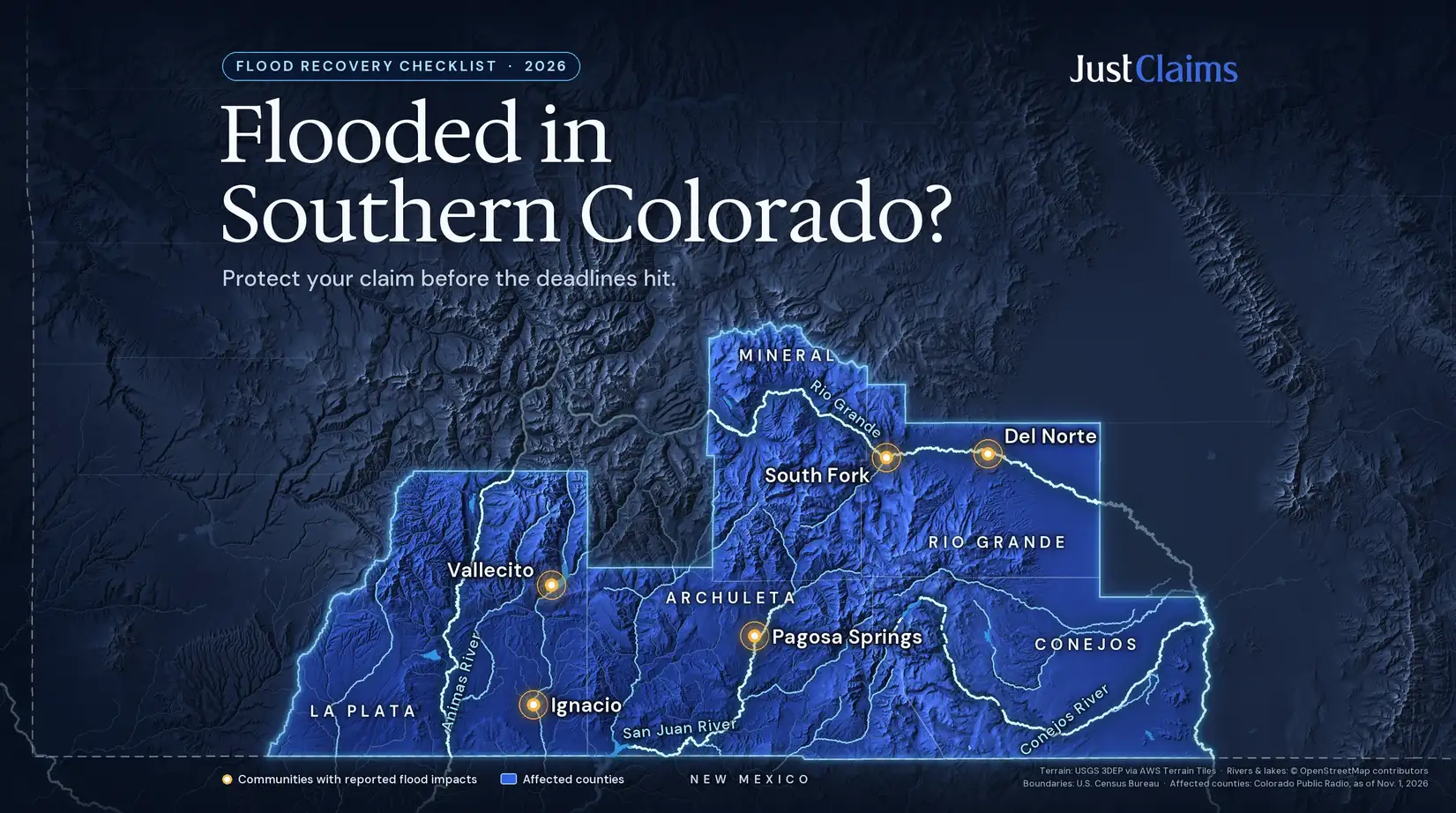
In late October and early November 2026, back-to-back storms sent the San Juan, Rio Grande, Conejos, Animas and other rivers in southern Colorado to historic levels in places. Pagosa Springs, South Fork, Del Norte, Ignacio, Vallecito and communities across the San Luis Valley and the San Juans saw evacuations, washed-out bridges, and damaged homes and roads. For some owners, this is the second flood in two weeks. For others in La Plata County, it’s the second in about a year.
If that’s you, we’re sorry. Recovery is exhausting, and the insurance side of it can feel like a second full-time job. We’re a Colorado-based team of licensed public adjusters that works with property owners nationwide. We wrote this checklist to help you get organized, protect your claim, and understand what your policy actually says. Use it whether or not you ever talk to us.
Key Takeaways
- Safety first: Return only when local officials clear the area, and treat floodwater as contaminated.
- Document before you clean: Photograph every room, the high-water line, serial numbers, and damaged contents.
- Mitigation can be reimbursable: Keep every receipt for pumps, plastic sheeting, and labor.
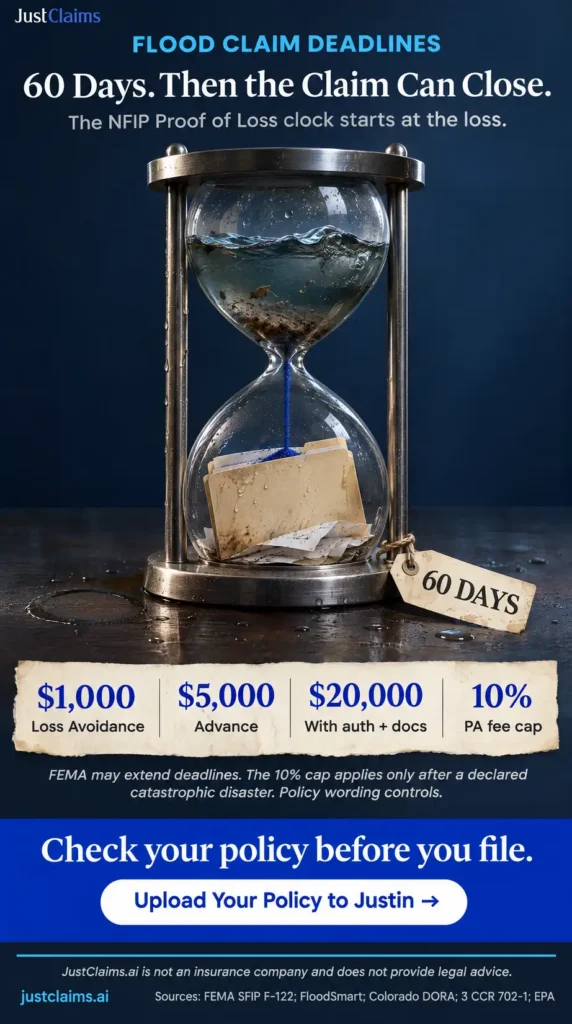
- NFIP deadlines are strict: A signed, sworn Proof of Loss is generally due within 60 days of the loss date.
- Flood policies are narrow: NFIP dwelling policies do not pay additional living expenses, and NFIP commercial policies do not pay business interruption.
- Know your Colorado protections: Public adjuster fees are capped at 10% after a declared catastrophic disaster, and you have 72 hours to rescind the contract in writing.
Jump to: Immediate Steps · Insurance Claim · Business & Rights
First: safety and the basics
Insurance can wait a day. Your safety can’t. Before you start on paperwork:
- Return only when local officials say it’s safe, and follow current evacuation and road-closure orders from your town or county.
- Treat floodwater as contaminated. Floodwater can contain sewage, chemicals and other hazards, so wear rubber boots, rubber gloves and goggles, and keep children out of floodwater [1].
- Have a professional check electrical and gas systems before you turn them back on.
- If you rely on a private well, follow boil-water advisories and get your water tested before drinking it.
- Check on neighbors, especially older residents and anyone cut off by road or bridge damage.
Step 1: Document everything before you clean up
Good documentation is the foundation of every claim, and it’s very hard to recreate later.
- Take wide photos and video of every affected room, building and outdoor area, then close-ups of specific damage.
- Photograph the high-water line on walls, fixtures and exterior surfaces. Measure it, and get the tape measure in the shot.
- Record serial and model numbers on damaged equipment, appliances, HVAC units and machinery.
- Photograph anything before you throw it away. If it’s safe and practical, keep a 1-square-foot sample of damaged materials (flooring, drywall, carpet and pad), and photograph the manufacturer markings on the back.
- Start a damage log: the date, what you found, and who you spoke with. Keep it going for the life of the claim.
- Back up photos and documents to the cloud or email them to yourself, in case a device is lost or damaged.
Step 2: Prevent further damage and keep every receipt
Most policies expect you to take reasonable steps to protect your property from more damage. Under the NFIP, the Dwelling Form requires you to protect the insured building from further damage, and those costs may be reimbursable if you document them [2].
- Tarp, board up, pump out and dry out where it’s safe to do so. If you have flood coverage through the National Flood Insurance Program (NFIP), it reimburses up to $1,000 for reasonable expenses to protect your insured property — sandbags, fill sand or soil, lumber, boxes, packing materials, water pumps, plastic sheeting and labor [3].
- If the damage is extensive, hire a reputable water mitigation company. The EPA advises drying water-damaged areas and items within 24 to 48 hours to prevent mold growth [4].
- Keep receipts for everything: pumps, fans, dehumidifiers, tarps, cleaning supplies, equipment rentals, mitigation invoices and materials.
- A hard truth about hotels and meals: Standard NFIP dwelling policies exclude Additional Living Expenses (ALE) and Loss of Use, the coverages that pay for a hotel and meals while you’re out of your home. Unless you bought a private flood policy with an ALE endorsement, an NFIP policy won’t reimburse those costs [5]. If a federal disaster is declared, you may qualify for temporary housing assistance through FEMA Individual Assistance [6].
- Hold off on permanent repairs until your insurer has had a chance to inspect, unless waiting would cause more damage. If you can’t wait, document thoroughly first.
Step 3: Get your full policy, not just the summary
Your declarations page tells you your limits. The full policy, including every endorsement, tells you what’s actually covered. Ask each carrier for the complete policy — not just the declarations page.
- Request a complete, certified copy of every policy that might apply: property, flood (NFIP or private), business owners, inland marine/equipment, and auto for flooded vehicles.
- Note your policy numbers, deductibles and the claim-reporting contact for each carrier.
- Ask for every endorsement, and look for ones that may matter here: sewer or drain backup, business income and extra expense, utility service interruption, spoilage, and ordinance or law coverage.
- Policies aren’t written for easy reading. Upload your flood policy to Justin for a free AI policy analysis. You’ll get a plain-English breakdown of what’s covered, what’s excluded, and what to watch for — no sales call required.
Step 4: Understand how insurers think about water
Here’s where flood claims get confusing. To an insurance company, not all water damage is the same, and the label on your loss can decide which policy pays, if any.
- Flood or surface water: Rising rivers and overland water are typically excluded from standard homeowners and commercial property policies. Flood coverage usually comes from a separate NFIP or private flood policy [7].
- Sewer or drain backup: A backup endorsement may cover water that comes up through drains or sewer lines, even when flood is excluded. The catch is something called an anti-concurrent causation clause. In plain English: if outdoor floodwater caused or contributed to the backup, an insurer may point to the flood exclusion and deny the backup claim as well [8].
- Mudflow and debris flow: The NFIP’s definition of flood includes mudflow [9]. Whether a standard property policy responds depends on its earth-movement wording, so read the exclusions closely.
- Damage that follows: Some policies pay for an ensuing loss — a separate, covered peril that follows an excluded event, such as a fire caused by flood-damaged wiring. Whether yours does depends on the policy’s ensuing-loss wording.
- Business interruption: Standard NFIP General Property policies don’t cover business interruption, lost income or extra expense [10]. Those coverages generally require a private commercial policy with a specific flood endorsement, or a standalone private flood policy built for it.
None of this means your loss is or isn’t covered. It means the details in your policy matter, and they’re worth reading carefully before you accept any coverage decision.
Step 5: Report your claim to every carrier that might apply
Notify each insurer promptly, even if you’re not sure coverage applies. If you have both a property policy and a flood policy, report to both.
- Get a claim number and the assigned adjuster’s name and contact information for each claim.
- Keep important communication in writing. After a phone call, send a short email summarizing what was said.
- If you flooded in both the October and November storms, ask each carrier whether it is treating them as one occurrence or two. That answer can affect how deductibles and limits are applied.
- Keep a copy of everything you send and receive.
Step 6: Know your deadlines
- For NFIP claims: reporting the loss isn’t enough. Under the Standard Flood Insurance Policy, your carrier must receive a formal, signed and sworn Proof of Loss, with an itemized estimate and supporting documentation, within 60 days of the loss date, or within any extension FEMA grants [2] [11]. Missing that deadline can cost you the right to full or further compensation, so don’t assume an extension applies until FEMA or your carrier confirms it in writing [12].
- Ask about an advance payment: NFIP policyholders can request up to $5,000 without an adjuster’s visit, official documentation or FEMA authorization. With authorization and documentation, the advance can go up to $20,000. The advance is deducted from the final claim payment [13].
- For property and business policies: check the policy conditions for notice requirements, proof-of-loss timelines, and the deadline to file suit.
- Put every deadline on a calendar, with a reminder a week before each one.
Step 7: Extra steps for business owners
NFIP policies pay for direct physical damage to buildings and contents, not lost income [10]. If you have a private commercial policy that includes flood business interruption, start gathering the following now:
- Financial records that show normal operations: profit and loss statements, tax returns, sales reports and payroll for the past 12 to 24 months.
- A running record of lost revenue, cancelled bookings and reservations, and every extra cost of staying open (temporary space, rental equipment, overtime, expedited shipping).
- A dated log of road closures, evacuation orders and utility outages that affected your ability to operate.
- An inventory of damaged stock and contents, with quantities, costs and photos.
- Your lease, if you rent your space, so you know who’s responsible for insuring and repairing what.
Step 8: Know your rights, and watch for bad actors
Disasters bring out good help and bad actors. Colorado law gives you real protections, and we’d rather you hear about them from us:
- Public adjuster fees are capped: For losses from a declared catastrophic disaster, Colorado law caps public adjuster fees at 10% of the claim [14]. You also have 72 hours after signing to rescind a public adjuster contract in writing to the adjuster and your insurer [15].
- Roofing contractors can’t act as your adjuster: Colorado law prohibits residential roofing contractors from claiming to be or acting as a public insurance adjuster when adjusting a claim for losses or damages. A residential roofing contractor also cannot advertise or promise to pay, waive or rebate any part of your insurance deductible [16].
- Be cautious of anyone who knocks on your door, pressures you to sign that day, or wants a large payment up front.
- Get written estimates from local, established contractors, and verify licensing and insurance where applicable.
- Read every contract before you sign, including any assignment of benefits or direction to pay your contractor directly.
- You never have to hire anyone to file a claim. Many owners handle their claims on their own.
Step 9: Lean on local resources
- Follow your town and county emergency management pages for re-entry, debris removal and recovery updates.
- Call or text 211 for shelter, food, housing and financial assistance, and other local resources [17].
- Look into community relief funds set up for residents and businesses in your county.
- Ask your county about state or federal assistance programs as they become available.
If your claim isn’t going the way you expected
Sometimes the first answer from an insurer is a denial, a partial payment, or an estimate that doesn’t come close to what it will cost to rebuild. That isn’t always the final answer. Ask for the decision in writing, including the specific policy language it relies on, and compare it with your own documentation and estimates.
If your insurer agrees the loss is covered but you disagree on the amount, check your policy for an appraisal clause. Standard form property policies often let either the insured or the insurer demand an appraisal when the dispute is over the amount of the loss [18]. The NFIP’s Standard Flood Insurance Policy works the same way: if you and the carrier can’t agree on the amount of loss, either party may demand one [2]. If your NFIP claim was denied or you disagree with the decision for another reason, you can use FEMA’s official Flood Insurance Claims Appeal Process within 60 days of the date of the decision [19].
We’re here if you need us
JustClaims pairs licensed Colorado public adjusters with technology built to make claims clearer and faster. If you’d like a licensed adjuster in your corner after that, we’re happy to talk. No pressure, no obligation.
Not sure what your flood policy covers? Get a free flood policy analysis with Justin — plain English, no sales call.
This content is for informational purposes only and does not constitute legal or insurance advice. Coverage decisions depend on the specific terms, conditions, and exclusions of each policy and the laws of the applicable jurisdiction; policyholders and contractors should consult with a qualified professional for advice on their particular situation. JustClaims is licensed as a public adjuster in Colorado. [License disclosure per compliance.]
Sources
[1] Safety Guidelines: Floodwater — Centers for Disease Control and Prevention
[2] Standard Flood Insurance Policy, Dwelling Form (F-122, October 2021) — FEMA
[3] Flood Loss Avoidance — National Flood Insurance Program (FEMA)
[4] A Brief Guide to Mold, Moisture and Your Home — U.S. Environmental Protection Agency
[5] Flood Insurance Claim Basics — United Policyholders
[6] Assistance for Housing and Other Needs — FEMA
[7] Flood Insurance — National Association of Insurance Commissioners
[8] Anti-Concurrent Causation Clauses in the Aftermath of Florence — United Policyholders
[9] Glossary — National Flood Insurance Program (FEMA)
[10] The Ins and Outs of NFIP Commercial Coverage — National Flood Insurance Program (FEMA)
[11] NFIP Claims Handbook (August 2024) — FEMA
[12] Flood Insurance Claim Deadlines — United Policyholders
[13] Start a Claim — National Flood Insurance Program (FEMA)
[14] Are You Disaster Ready? — Colorado Division of Insurance (DORA)
[16] Colorado Revised Statutes § 6-22-105: Waiver of Insurance Deductible Prohibited — Justia
[17] 2-1-1 Colorado — Mile High United Way
[18] Policyholders Can Win in Appraisal — United Policyholders
[19] 44 CFR § 62.20: Claims Appeals — Electronic Code of Federal Regulations

Taylor Bezek

As the General Manager at JustClaims, Taylor Bezek brings over a decade of experience managing complex residential, commercial, and large-loss claims. A licensed Public Adjuster in TX (#2125659), FL (#W455048), CO (#769172), and 10 additional states, Taylor founded his own firm before joining JustClaims to scale a tech-forward solution for the insured. He is committed to combining industry expertise with AI to enhance speed, clarity, and outcomes for every policyholder. Taylor's mission is to modernize the public adjusting profession and ensure owners get exactly what they are entitled to.