What Colorado Commercial Property Owners Need to Know Right Now About Wildfire Claims
July 03, 2026
Written by Taylor Bezek
Share


We’re writing this from our HQ in Denver, watching smoke settle over the Front Range. We are not observers of this wildfire season — we are Coloradans watching it happen to people we know, in places we love.
And because we work in commercial insurance claims, we also know what comes next for the property owners in these communities. The fires eventually stop. The claims process doesn’t. We also saw this coming. Back in May, we wrote about why 2026 was shaping up to be a historic wildfire year — record winter heat, snowpack at its lowest in 40 years, and drought covering virtually the entire state. The conditions were there. Now they’ve arrived.
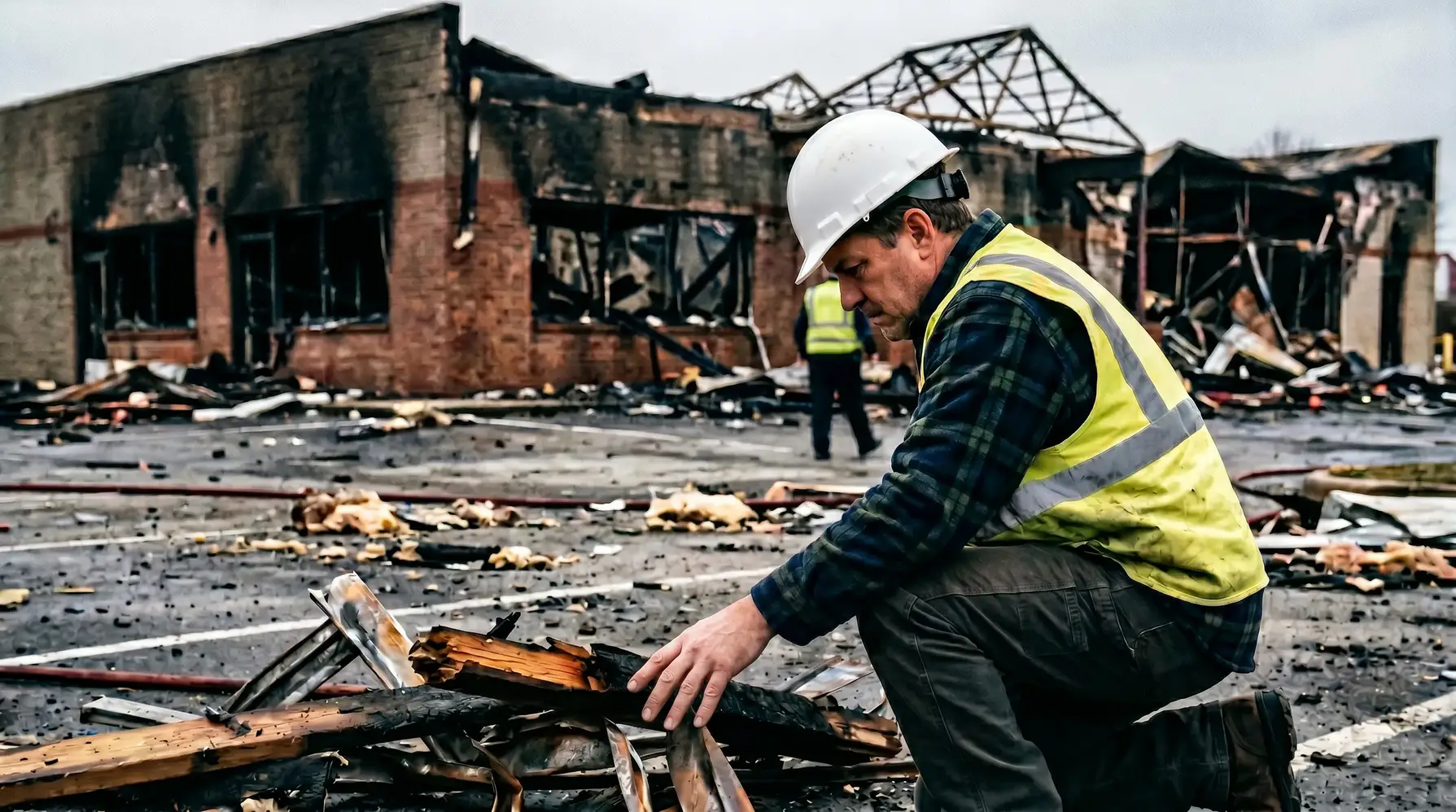
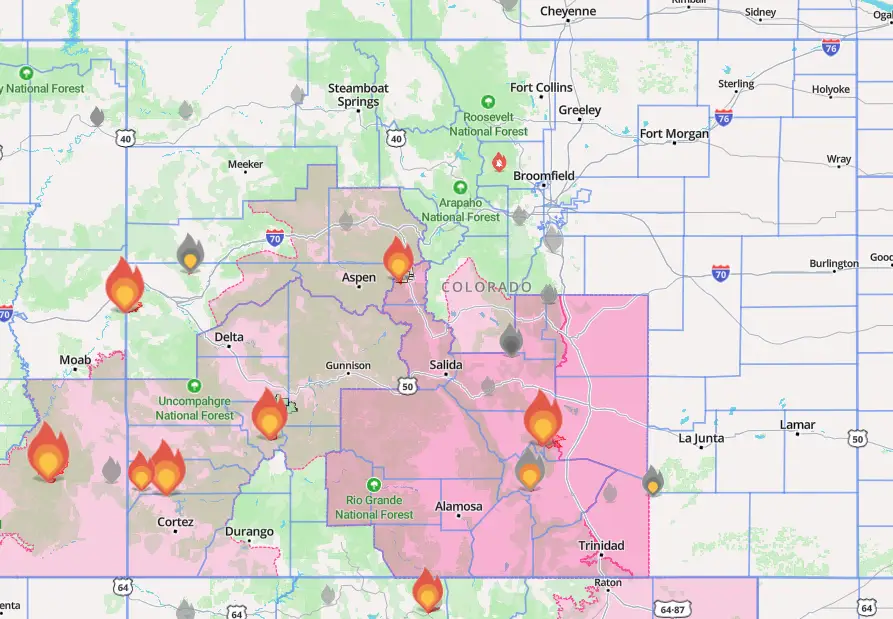
The Snyder Fire, the Aspen Acres Fire in Custer and Pueblo counties, the Willow Fire west of Leadville, the Gold Mountain Fire in Ouray County, and the Ferris Fire across Dolores and Montezuma counties have collectively burned over 120,000 acres in less than two weeks — a figure that continues to grow as several fires remain at or near 0% containment. Behind the acreage numbers are strip malls, warehouses, guest ranches, apartment complexes, restaurants, and mixed-use buildings — commercial properties whose owners are about to enter one of the most adversarial processes in American business: a large-loss wildfire claim.
This post is for those owners. Not a legal checklist. Not recycled advice. Just a straight look at what commercial wildfire claims actually involve, where they tend to go wrong, and how to protect yourself before the adjuster shows up.
The Commercial Wildfire Claim Is a Different Animal
Most wildfire content written for policyholders is aimed at homeowners. Commercial claims share some of the same DNA but involve layered policies, longer interruption timelines, higher replacement costs, and far more variables in how damage is measured and priced.
A commercial building that experiences a total loss isn’t just a structure to replace — it’s a revenue-generating asset. The claim involves not just rebuilding costs but business income, extra expense coverage, tenant displacement, ordinance and law upgrades, and potentially years of diminished revenue while the property is out of service.
Insurers know this. Their teams are more specialized. Their initial estimates are more deliberately conservative. And the negotiation gap between what they offer and what a commercial property actually costs to restore is often significant.
Smoke Damage Is Often Underestimated
Here is something most commercial property owners don’t know until it’s too late: you do not need to burn to have a serious, expensive loss.
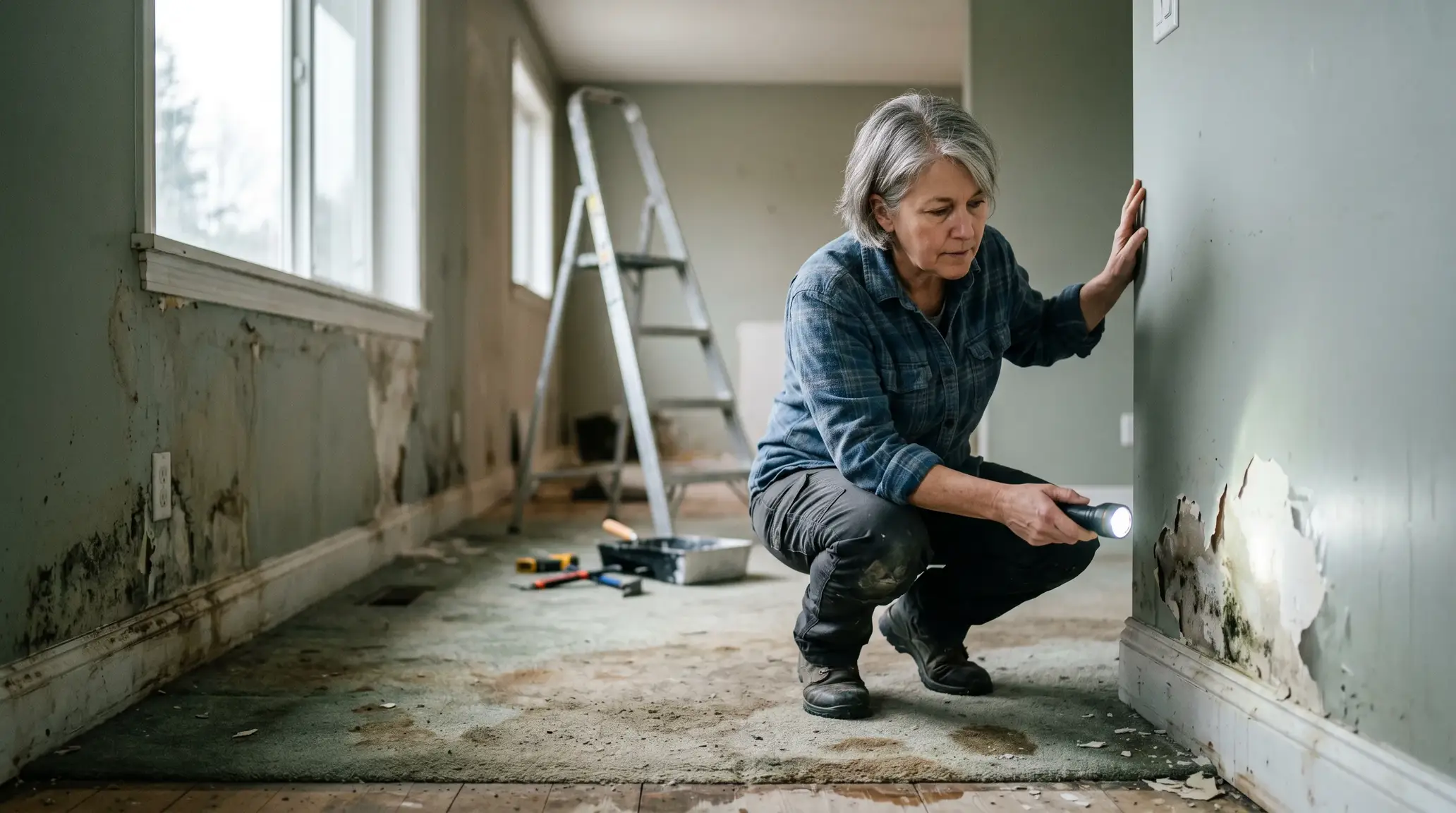
Smoke, soot, and ash can penetrate a commercial building’s envelope and leave lasting damage to HVAC systems, electrical components, insulation, inventory, food service equipment, and soft goods — everything from upholstered furniture in a hotel lobby to the product lining a warehouse shelf. Fine particulates from wildfire smoke are smaller than those from ordinary combustion, meaning they travel further, settle deeper, and are harder to remove.
When a carrier’s adjuster looks at a smoke-affected building that didn’t burn, the reflex is often to treat it as a cleaning job. It frequently isn’t. Without proper industrial hygiene testing and HVAC evaluation, damage goes undocumented, underpaid, and sometimes makes people sick.
The Marshall Fire exposed a crucial problem: standing buildings contaminated by smoke, soot, and ash had no clear testing or cleanup standards, and claims and cleaning processes were inconsistent.
In response, HB24-1315 (2024) required the Division of Insurance to conduct a study on remediation of residential premises damaged by smoke, soot, ash, and other contaminants from fire, with recommendations for establishing uniform standards, and a report due to the General Assembly by January 1, 2026.
The statute specifically required the study to consider existing remediation practices, existing testing and inspection standards including those from the IICRC, guidelines for determining whether property can be remediated to health-protective levels, indoor air quality and habitability standards, and the extent to which policies actually cover this type of damage.
DORA is now proceeding with publishing a report of “observations” for the legislature as it works on future legislation to develop smoke, soot, and ash remediation standards. The standard-setting effort is alive but reset — actual binding remediation regulations are still ahead of us, likely via a future legislative session.
If your property was in the smoke zone — even briefly, even miles from the fire perimeter — get it tested before you accept any insurance settlement related to air quality or content damage.
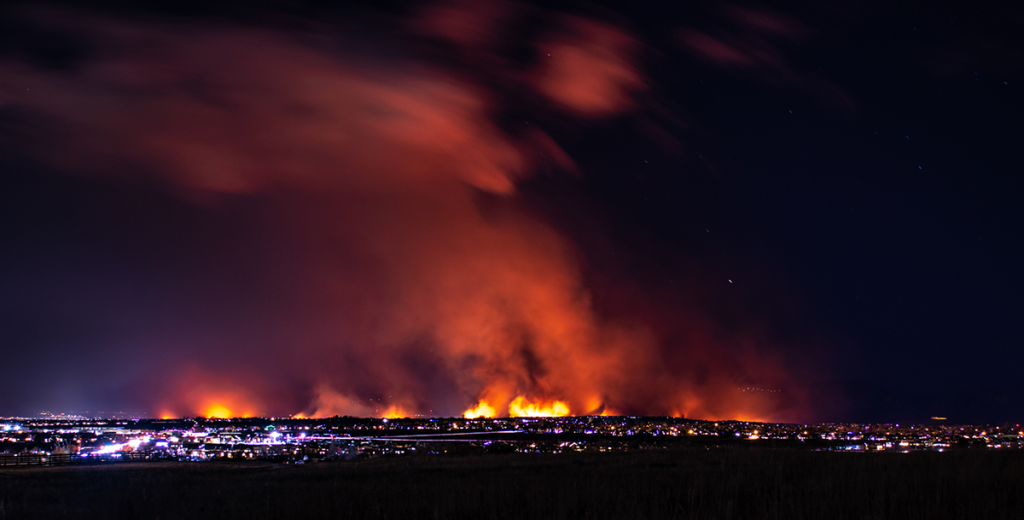
Colorado’s 2021 Marshal Fire destroyed at least 1,233 homes.
Business Income Coverage: The Clock Starts at the Wrong Time
Most commercial policies include Business Income (BI) coverage to compensate for lost revenue while a property is uninhabitable or under repair. What property owners often don’t realize:
The waiting period matters. Most policies have a 72-hour waiting period before BI kicks in. That clock starts from the time of the loss, not the time you file the claim. If you waited a week to notify your insurer, you may have already burned through that waiting period — and potentially created a documentation problem.
The period of restoration is often disputed. Insurers calculate BI based on their projected timeline to restore the property. If they underestimate how long rebuilding takes — and in a wildfire environment with labor shortages, supply chain delays, and permitting backlogs, they almost always do — the BI payout gets capped before the actual restoration is complete.
Extra Expense coverage is separate and frequently overlooked. If you moved operations to a temporary location, paid for expedited shipping to minimize downtime, or incurred any cost specifically to stay open during the loss period, that likely falls under Extra Expense — a distinct coverage bucket that requires its own documentation.
What the First 72 Hours Actually Look Like
The first three days after a wildfire loss set the tone for everything that follows. Not because of anything dramatic — because of documentation.
Start your loss log immediately. Note the date and time you first became aware of the loss, who you spoke to at your insurer, what was said, and what actions you took. Every phone call. Every email. Commercial claims last months or years; you will not remember the details without a log.
Photograph everything before any cleanup begins. Carriers have disputed losses where cleanup started before their adjuster arrived. Do what you must to preserve the property from further damage — that’s your duty — but document the original condition thoroughly first. Drone footage is increasingly useful for commercial roofing and structural documentation.
Do not sign anything from contractors yet. Post-disaster, contractors move fast. Assignment of Benefits agreements, broad authorizations, and cost-plus contracts can complicate your claim. Get estimates from multiple contractors, read everything before you sign, and loop in your PA or counsel before committing to major scopes of work.
Request an advance from your insurer. If your building is uninhabitable or your business is interrupted, ask immediately for an advance on Business Income and Extra Expense. You are entitled to it. Many property owners don’t ask and then spend months waiting for payment while absorbing the losses themselves.
The Underinsurance Problem Is Worse Than You Think
Colorado’s construction market has changed dramatically since most commercial property policies were written. Labor costs are up. Material costs are up. Code compliance requirements are stricter. According to industry data cited in the 2025 commercial property insurance outlook, 46% of commercial properties are underinsured, with an average coverage shortfall of approximately 40%. The math behind that gap isn’t hard to trace: commercial reconstruction costs rose 58.4% between 2014 and 2024, and the pace has accelerated since — with tariff-driven spikes pushing aluminum prices up roughly 30% and steel up 17% in 2025 alone, and overall construction input costs climbing nearly 10% year over year through May 2026, according to Engineering News-Record data. A policy written just a few years ago may now be meaningfully understated — without anyone having done anything wrong.
Review your policy for:
- Replacement Cost vs. Actual Cash Value: ACV policies depreciate everything. In a total loss, the difference can be hundreds of thousands of dollars.
- Ordinance or Law coverage: If your building has to be rebuilt to current code, upgrades aren’t automatically covered. O&L coverage pays for that gap.
- Agreed Value vs. Coinsurance clauses: Coinsurance penalties can drastically reduce your payout if your insured value was set too low relative to the actual property value.
- Inflation Guard: Does your policy automatically adjust for construction cost increases? Many don’t.
If you haven’t had your commercial property’s insured value independently assessed in the last two or three years, there’s a reasonable chance you’re underinsured — and a wildfire is the worst time to find that out. Maintaining accurate insurance to value on a commercial policy is what keeps the coinsurance clause penalties described above from eroding your payout when a total loss finally hits.
What We’re Building for this Exact Situation
Reading a commercial insurance policy is not intuitive. The language is dense, the exclusions are buried, and the coverages that matter most often require cross-referencing multiple endorsements and forms. For example, a protective safeguards endorsement can quietly condition your fire coverage on keeping sprinklers and alarm systems fully operational, so a lapse in that equipment may give the carrier grounds to reduce or deny a wildfire loss. We often hear this from property owners, and it’s one of the main reasons we’ve been building something to help.
We’re not quite ready to share it yet, but next week we’ll be launching a tool designed specifically to help commercial property owners make sense of their coverage before a claim becomes a crisis.
The Insurance Company Adjuster Is Not Your Adjuster
This is the thing commercial property owners most consistently underestimate. The staff adjuster or independent adjuster sent by your insurance company works for the insurance company. Their job is to quantify the claim accurately from the insurer’s perspective — which, under financial pressure, often means conservatively.
That is not a conspiracy. It’s just an incentive structure.
A public adjuster works exclusively for the policyholder. Their job is to document the full scope of loss, prepare estimates that reflect actual rebuilding and restoration costs, and advocate for a fair settlement throughout the process. In large commercial losses — the kind that wildfire routinely produces — the difference between a carrier’s initial offer and a well-documented, well-negotiated final settlement can be substantial.
If you own commercial property in or near Colorado’s active fire zones and you have any question about whether your claim is being handled fairly, we’re here to talk. No sales pitch — just straight answers about what your situation looks like and what options you have.
This One is Personal
Colorado has given a lot to the people who work at JustClaims. We’re not just here because it’s a good market. We’re here because our team has roots in this state — in its mountain towns, its Front Range neighborhoods, its ranches and resort communities. What’s burning right now isn’t an abstraction to us.
If you’re in an evacuated community, focus on your family and your safety first. When the time comes to navigate your claim, we’ll be ready to help.
JustClaims is a technology-forward commercial public adjusting firm based in Denver, CO, with offices in Dallas, TX. Our licensed public adjusters work exclusively on behalf of commercial property owners — never insurance companies.
If your property has been impacted by Colorado’s current wildfires, contact us here or reach out directly to speak with a licensed public adjuster at 720.657.8551.

Taylor Bezek

As the General Manager at JustClaims, Taylor Bezek brings over a decade of experience managing complex residential, commercial, and large-loss claims. A licensed Public Adjuster in TX (#2125659), FL (#W455048), CO (#769172), and 10 additional states, Taylor founded his own firm before joining JustClaims to scale a tech-forward solution for the insured. He is committed to combining industry expertise with AI to enhance speed, clarity, and outcomes for every policyholder. Taylor's mission is to modernize the public adjusting profession and ensure owners get exactly what they are entitled to.