2026 Colorado Fire Risk: What Red Flag Warnings Mean
May 06, 2026
Written by Taylor Bezek
Share


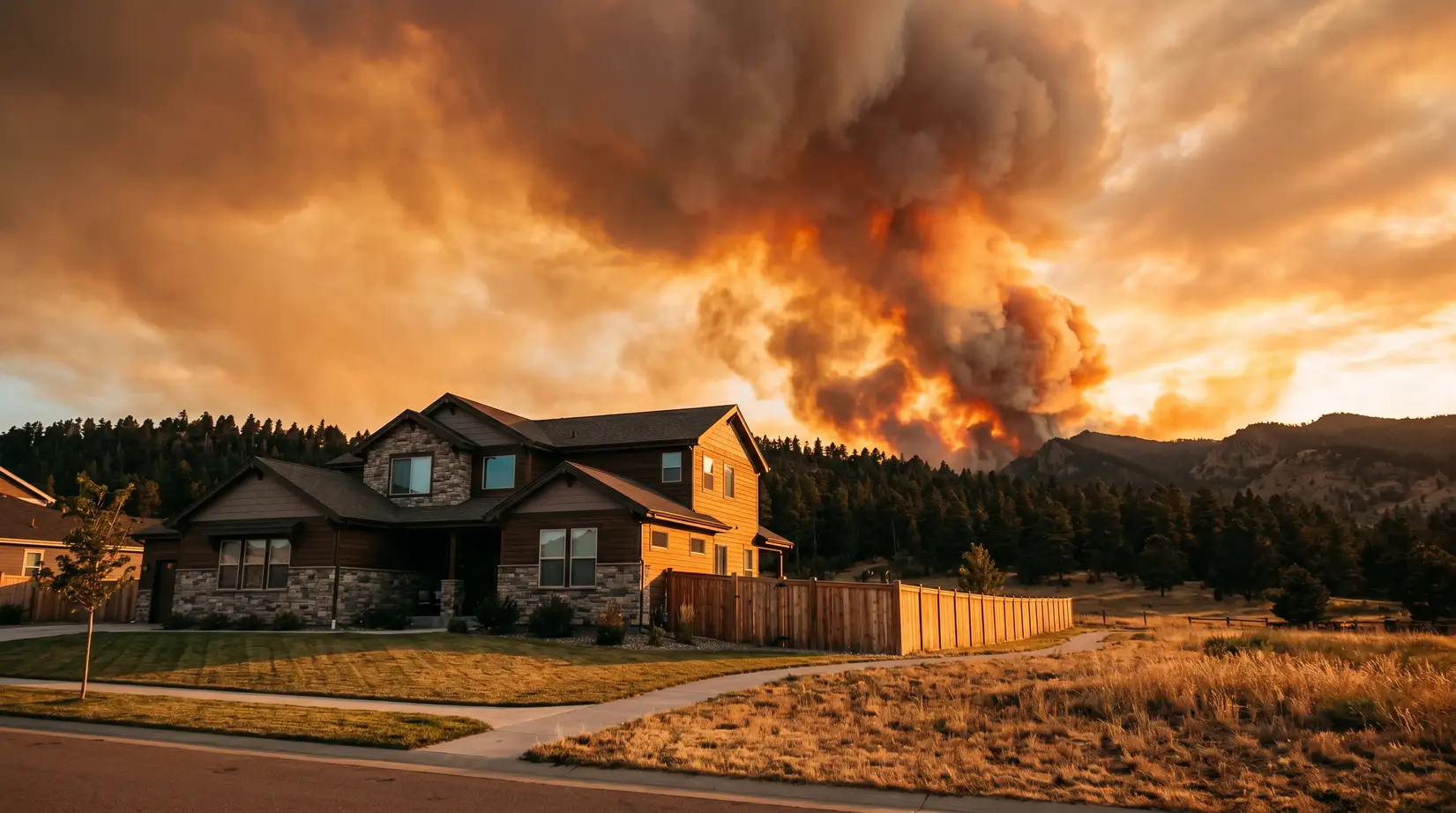
When relative humidity drops to 15% or less and winds gust over 25 mph, the National Weather Service issues a Red Flag Warning to signal extreme wildfire danger. For Colorado property owners facing the 2026 fire season, understanding these critical weather triggers is the first line of defense against catastrophic property loss. Knowing exactly how to interpret and respond to these alerts can mean the difference between a safe evacuation and a devastating tragedy.
Key Takeaways
- Humidity Threshold: A Red Flag Warning requires relative humidity to drop to 15% or less.
- Wind Threshold: Warnings are triggered when sustained surface winds or frequent gusts reach 25 mph or greater.
- Duration Requirement: Critical wind and humidity conditions must occur simultaneously for at least 3 hours.
- Time Window: The required weather conditions must take place within a 12-hour period.
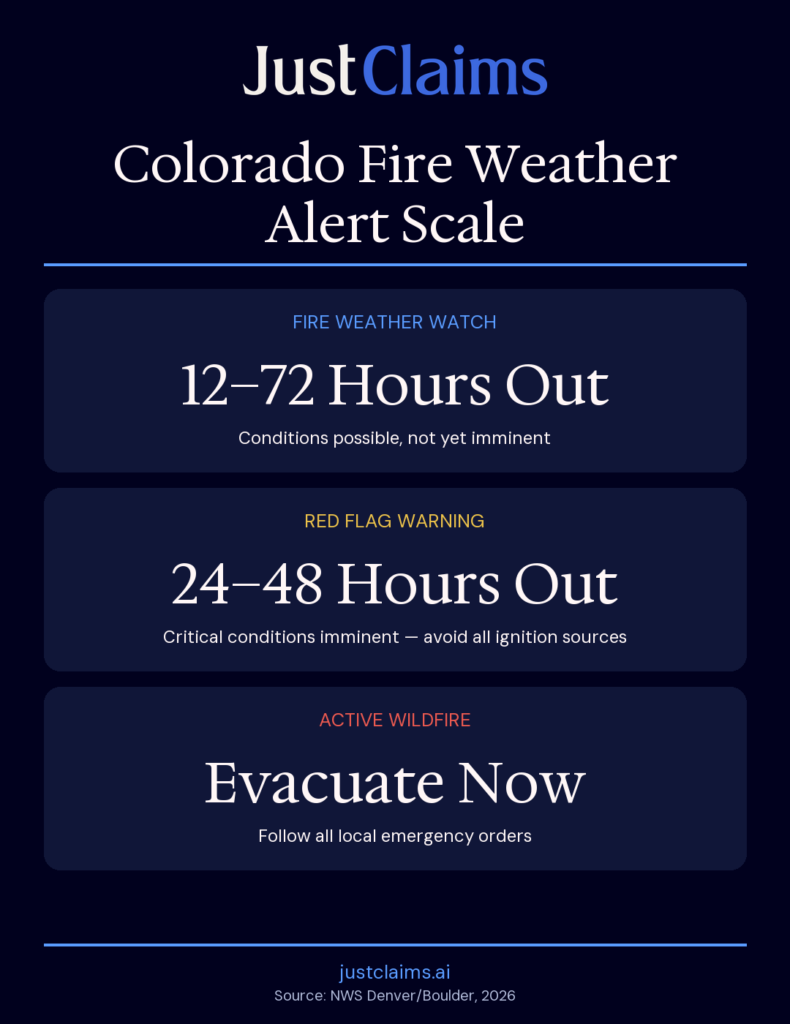
- Warning Timeline: A Red Flag Warning indicates critical conditions are expected within the next 24 to 48 hours.
- Watch Timeline: A Fire Weather Watch alerts officials to possible red flag conditions A Fire Weather Watch alerts officials to possible red flag conditions 12 to 72 hours in advance. in advance.
The Meteorological Criteria Behind Red Flag Warnings
Because extreme fire behavior directly threatens Colorado property owners, understanding the exact meteorological criteria that trigger a Red Flag Warning is essential for assessing your daily risk. The National Weather Service issues these warnings when specific atmospheric conditions align to create an environment where fires can ignite easily and spread rapidly. Recognizing these triggers allows communities to prepare before a spark ever occurs.
Wind and Humidity Thresholds
The primary criteria for a Red Flag Warning include relative humidity of 15% or less combined with sustained surface winds or frequent gusts of 25 mph or greater [1]. When the air becomes this dry, vegetation loses its moisture content rapidly, turning brush, timber, and grasses into highly combustible fuel. The addition of high winds means that if a fire does start, it will be pushed across the landscape at speeds that can easily outpace initial containment efforts.
For a warning to be issued based on wind and humidity, both conditions must occur simultaneously for at least 3 hours within a 12-hour period [1]. This sustained duration ensures that the environment is sufficiently primed for rapid and uncontrollable fire spread. Furthermore, Red Flag events require a combination of critical weather conditions and critical fuel conditions, which are determined by land management agencies when fuel characteristics are favorable for large fire growth [1].
Dry Thunderstorm Triggers
Beyond wind and humidity, lightning strikes in arid environments present a severe ignition threat to rural and suburban properties alike. Another primary trigger for a Red Flag Warning is the presence of widely scattered dry thunderstorms (15% or more coverage) that produce less than 0.10 inches of rainfall [1]. During these events, lightning can strike dry vegetation, but the accompanying rain evaporates before reaching the ground or is insufficient to extinguish the resulting sparks, leading to multiple simultaneous fire starts. When one of those starts becomes a claim, Colorado public adjusters handle the valuation dispute.
Red Flag Warning vs. Fire Weather Watch: Understanding the Escalation Scale
Since timing is critical when preparing a property for potential wildfire impact, distinguishing between a watch and a warning dictates how quickly you must act. Both a Fire Weather Watch and a Red Flag Warning are issued when the combination of dry fuels and specific weather conditions support extreme fire danger [3]. However, the key difference lies in the timeline of the threat and the level of immediate action required by the public.
Fire Weather Watch
A Fire Weather Watch is issued to alert fire officials and land managers of the possible development of red flag conditions in the near future, 12 to 72 hours in advance [1]. This extended notice provides property owners in vulnerable areas, such as Boulder or Larimer counties, time to review evacuation plans, clear debris from gutters, and secure their premises. A watch serves as a preparatory phase, signaling that the atmospheric ingredients for severe fire weather are coming together.
Red Flag Warning
A Red Flag Warning is issued by the National Weather Service when critical fire weather conditions are either ongoing or expected to occur shortly, generally within the next 12 to 24 hours [2]. When this warning is active, the threat is imminent. Property owners must shift from preparation to active vigilance, strictly adhering to all local burn bans and remaining ready to evacuate at a moment’s notice.
| Alert Type | Advance Notice Timeline |
|---|---|
| Fire Weather Watch | generally within the next 12 to 72 hours in advance |
| Red Flag Warning | 24 to 48 hours |
Tracking Colorado Fire Warnings and County Burn Restrictions
Because local regulations dictate exactly what activities are legally permissible during high-risk periods, Colorado property owners must know how to access real-time restriction data to prevent accidental ignition. The state’s diverse geography means that fire danger can vary wildly from one county to the next, making localized information vital for compliance and safety.
Navigating the State Map
The Colorado Division of Homeland Security and Emergency Management (DHSEM) provides a statewide map that displays current fire restrictions by county. On the DHSEM fire restriction map, counties highlighted in blue have reported fire restrictions, while those in gray have no reported restrictions [4]. This visual tool is an excellent starting point for residents planning outdoor activities or property maintenance.
However, jurisdictional boundaries can complicate restriction tracking. The state’s county-level map does not track federal fire restrictions; visitors to lands managed by the USFS, BLM, or NPS must check with those specific agencies [4]. Property owners living in the wildland-urban interface near federal lands must be particularly diligent in checking multiple sources.
Verifying Local Mandates
Because fire bans can change rapidly, the DFPC recommends always verifying the most current restriction status directly with the local County Sheriff or Fire Department [4]. During a rapidly evolving weather event, local authorities are the definitive source for emergency declarations and mandatory behavioral restrictions. Preparation has to be finished before that point, and our wildfire preparedness checklist covers the work that comes earlier.
Mandatory Prohibitions During Red Flag Events
To mitigate the severe risk of accidental ignition during critical weather windows, strict behavioral prohibitions are enforced for all residents and property owners. Human activity is a leading cause of wildfires, and eliminating potential ignition sources is the most effective way to protect communities when the environment is highly volatile.
Outdoor Burning and Grilling
During Red Flag Warnings, actual prohibitions on open flames are imposed through separate fire restriction orders (Stage 1 or Stage 2) issued by local land management agencies, county sheriffs, or fire districts. [5]. During Red Flag Warnings, all open burning is strictly prohibited, which includes campfires, portable propane or patio fireplaces, and charcoal BBQs [6]. A single ember from a charcoal grill can be carried by high winds into nearby dry brush, sparking a blaze that can consume a neighborhood in minutes. Local ordinances typically prohibit open outdoor fires, campfires, charcoal fires, and agricultural burning during Red Flag Warning conditions posted by the National Weather Service [7].
Equipment and Power Tool Restrictions
The danger extends beyond open flames to sparks generated by mechanical equipment and property maintenance activities. The use of certain power tools, such as operating chainsaws, is often restricted or completely prohibited during extreme fire danger or Red Flag conditions [8]. Striking a rock with a mower blade or generating sparks from welding equipment can easily ignite dry grasses, making it imperative to postpone all non-essential outdoor mechanical work until the warning expires.
Evacuation Readiness: Preparing Your Vehicle and Property
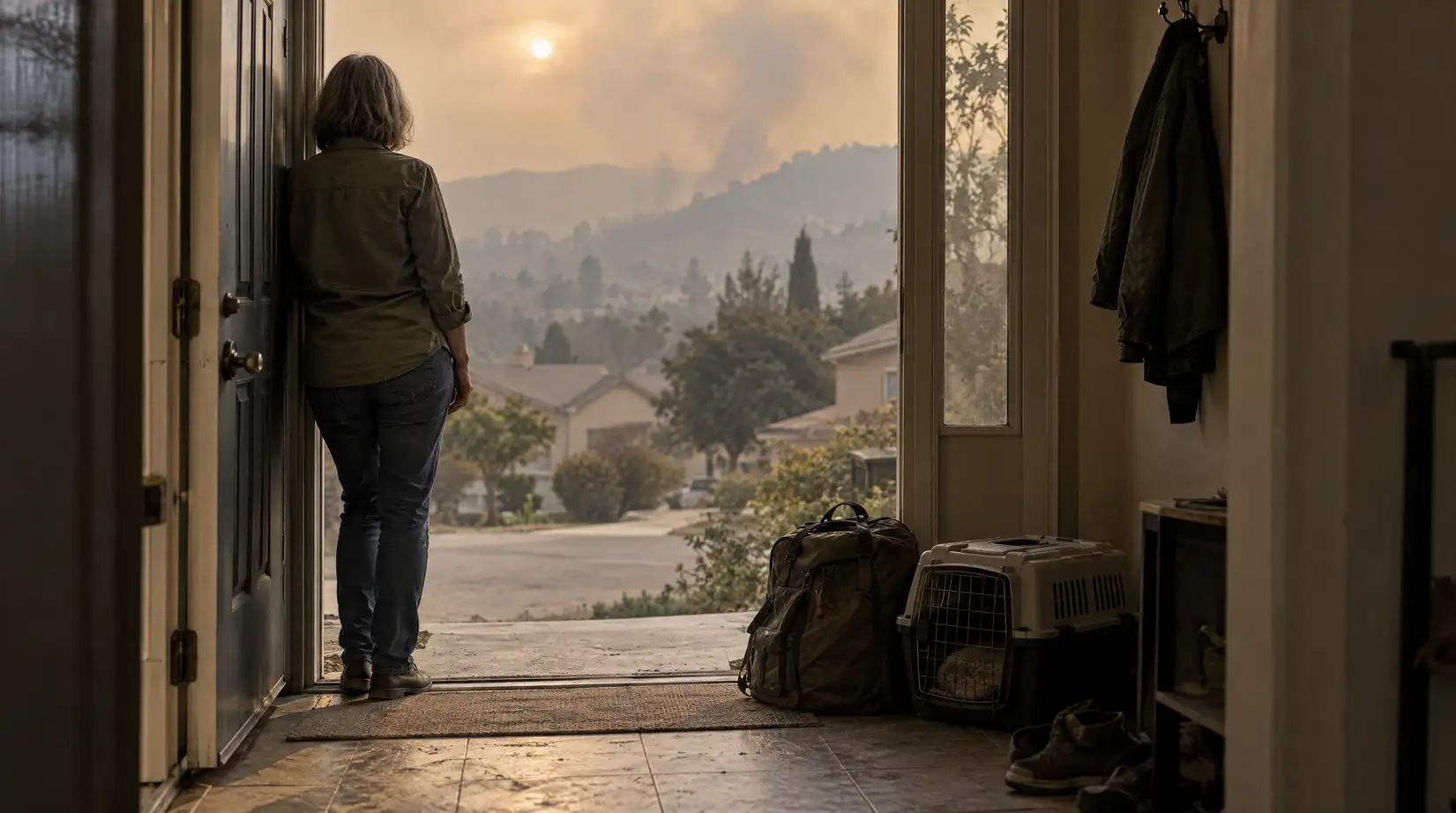
When a Red Flag Warning escalates into an active wildfire, the survival of property owners often depends on immediate and efficient evacuation readiness. Preparing your vehicle ahead of time eliminates critical delays when evacuation orders are issued, ensuring a safe and orderly departure from the hazard zone.
Vehicle Positioning and Access
Park your car facing the direction you plan to evacuate or toward the street to ensure a quick departure [9]. Park your car in the garage facing out, with the windows closed and keys in the ignition. Visibility is often severely compromised by thick smoke during a fire, making backing out of a driveway incredibly dangerous. Keep your car keys easily accessible or leave them in the ignition so you do not have to search for them during an emergency [10].
Protecting the Vehicle Interior
Close all car doors and roll up the windows to prevent smoke and embers from entering the vehicle while it is parked [11]. Embers can easily blow into an open window, igniting the upholstery and rendering the vehicle useless just when it is needed most.
| Preparation Step | Required Action |
|---|---|
| Vehicle Positioning | Park facing the street or evacuation direction |
| Garage Parking | Back the car in or park facing the escape route |
| Key Management | Keep keys easily accessible or in the ignition |
| Interior Protection | Close all doors and roll up windows |
Frequently Asked Questions
What does a Red Flag Warning mean in Colorado?
A Red Flag Warning is issued by the National Weather Service when humidity falls below 15% and winds exceed 25 mph, creating conditions for extreme fire behavior. Colorado residents should check burn restrictions at dfpc.colorado.gov and avoid all outdoor ignition sources.
How long do Red Flag conditions typically need to last to trigger a warning?
For a warning to be issued based on wind and humidity, both conditions must occur simultaneously for at least 3 hours within a 12-hour period. This sustained duration ensures that the environment is sufficiently primed for rapid and uncontrollable fire spread before an official alert is broadcast to the public.
Where can I check if my Colorado county has active fire restrictions?
The Colorado Division of Fire Prevention and Control (DFPC) provides a statewide map managed by the Division of Homeland Security and Emergency Management (DHSEM) that displays current fire restrictions by county. Because fire bans can change rapidly, the DFPC recommends always verifying the most current restriction status directly with the local County Sheriff or Fire Department.
Can I use a charcoal grill during a Red Flag Warning?
No, you cannot use a charcoal grill when these warnings are active. During Red Flag Warnings, all open burning is strictly prohibited, which includes campfires, portable propane or patio fireplaces, and charcoal BBQs.
Conclusion
Navigating the 2026 Colorado fire season requires property owners to maintain strict vigilance over local weather alerts and county burn restrictions. A Red Flag Warning is not merely a suggestion; it is a critical meteorological alert indicating that the environment is primed for catastrophic fire behavior. By understanding the specific wind and humidity thresholds that trigger these warnings, residents can make informed decisions about property maintenance, outdoor activities, and evacuation readiness. The same forecasting discipline applies to hail in Denver, where the window to act is even shorter.
Preparation is the most effective strategy for mitigating the devastating impacts of a wildfire. Adhering to mandatory prohibitions on open flames and power tools, while simultaneously staging vehicles for immediate departure, significantly reduces the risk to life and property. When extreme weather conditions align with dry fuels, proactive safety measures are essential for community resilience.
Even with the best preparation, wildfires can cause severe damage that leads to complex insurance disputes over rebuilding costs and smoke remediation. Upload your claim documents to JustClaims to see in minutes if your insurer missed coverage you’re owed.
This content is for informational purposes only and does not constitute legal or insurance advice.
Sources
[1] https://www.weather.gov/gjt/firewxcriteria
[2] https://www.weather.gov/bou/RFW_Definitions
[3] https://www.weather.gov/lot/firewx_definition
[4] https://dfpc.colorado.gov/sections/wildfire-information-center/fire-restriction-information
[6] https://mcminnvillefiredistrict.gov/burning-information/
[7] https://www.navajocountyaz.gov/Archive.aspx?ADID=330
[9] https://www.cityofmillvalley.gov/2142/Evacuation-Tips-Tools
[10] https://adacounty.id.gov/emergencymanagement/ready-set-go/
[11] https://des.mt.gov/Preparedness/Wildfire-Season-Resources
[12] https://www.cavecreekaz.gov/583/Wildland-Fire-Prevention

Taylor Bezek

As the General Manager at JustClaims, Taylor Bezek brings over a decade of experience managing complex residential, commercial, and large-loss claims. A licensed Public Adjuster in TX (#2125659), FL (#W455048), CO (#769172), and 10 additional states, Taylor founded his own firm before joining JustClaims to scale a tech-forward solution for the insured. He is committed to combining industry expertise with AI to enhance speed, clarity, and outcomes for every policyholder. Taylor's mission is to modernize the public adjusting profession and ensure owners get exactly what they are entitled to.