2026 Wildfire Preparation Checklist for Colorado Homes
May 08, 2026
Written by Taylor Bezek
Share


As Colorado faces escalating wildfire threats in 2026, property owners must prioritize structural hardening and defensible space to prevent catastrophic losses. Creating a strict 0-5 foot noncombustible buffer zone around your property is the single most critical step to stop ember ignition. Taking immediate action to retrofit vents and clear vegetation can mean the difference between a total loss and a surviving structure.
Key Takeaways
- How do I protect my property from wildfires in Colorado?: Protect your property by creating defensible space within 0–100 feet of the structure, clearing gutters of pine needles, installing ember-resistant vents, and checking your county’s current Colorado burn restrictions. Establishing a strict noncombustible zone immediately around your structure is the most critical step for survival.
- Immediate Zone: The 0-5 foot area around a property requires the most vigilant work to prevent direct flame contact.
- Vent Screening: The Colorado State Forest Service recommends screening all vents with 1/8-inch metal mesh to prevent ember intrusion.
- Defensible Space: Zone 3 extends 30–100 feet from the property on relatively flat ground.
- Fire Restrictions: The Colorado Division of Homeland Security and Emergency Management maintains a public fire restriction map for all counties.
Zone 1: The Immediate Noncombustible Area
The 0-5 foot area around a property, known as the Noncombustible or Immediate Zone, is the most vulnerable to embers and requires the most vigilant work to prevent direct flame contact [1]. Property owners must remove all vegetation and flammable mulch to create a strict five-foot noncombustible buffer zone around the entire structure [1]. This zero-tolerance approach to fuel near the foundation is the foundation of modern wildfire mitigation.
Combustible materials should never be stored on or under decks within this 5-foot zone [1]. Furthermore, any combustible fencing or gates attached to the house should be replaced with noncombustible materials for at least the first 5 feet extending from the home [2]. To further reduce structural ignitability, property owners should create at least 6 inches of vertical clearance between the ground and the home’s siding [2].
Zone 1 and 2: Expanding Your Defensible Space
Because creating a noncombustible perimeter is only the first step in preventing catastrophic wildfire losses, property owners must expand their mitigation efforts outward into the surrounding landscape. If mitigation fails and a claim follows, public adjusters near Denver can document the loss properly. According to the Colorado State Forest Service, Zone 1 is the 0-5 foot area nearest the home requiring the most vigilant hazard reduction, such as removing all pine needles and flammable debris [3]. Moving further out, Zone 2 covers the area 5–30 feet from the home, serving as a transition zone where fuels must be reduced [3].
Zone 3 extends 30–100 feet from the home on relatively flat ground, completing the 100-foot defensible space recommendation [3]. Within the defensible space, property owners should mow grass and weeds to a height of 4 inches or less [4]. Additionally, firewood and aboveground propane tanks must be kept at least 30 feet away from the home [4].
| Defensible Space Zone | Distance from Structure | Required Action |
|---|---|---|
| Zone 1 | 0-5 feet | Remove all pine needles and flammable debris |
| Zone 2 | 5–30 feet | Reduce fuels in this transition area |
| Zone 3 | 30–100 feet | Complete the defensible space recommendation |

Retrofitting for Ember Resistance
While clearing vegetation reduces direct flame contact, hardening the physical structure of your property is equally vital to survive wind-driven ember storms. Class A fire-rated roofing products, such as composite shingles, metal, concrete, and clay tiles, offer the best protection against wildfires [5]. Upgrading your roof is one of the most effective investments you can make in your property’s long-term survivability.
Ventilation points are another major vulnerability during a wildfire. The Colorado State Forest Service recommends screening all attic, roof, eaves, and foundation vents with 1/8-inch metal mesh to prevent ember intrusion [4]. Larger mesh sizes, such as 1/4-inch or greater, are ineffective at preventing ember incursion during a wildfire event [6]. As one local example, the Colorado Springs Fire Department requires that all attic vents be screened with wire mesh or hardware cloth having openings no larger than 1/8-inch to properly harden a home [7].
Monitoring Colorado Burn Restrictions
Beyond physical property modifications, staying informed about local environmental hazards is a critical component of your overall wildfire defense strategy. Hardening the structure is only half the equation; the other half is making sure the people doing the work are properly credentialed, which is exactly what Colorado’s anti-managed repair laws protect — your right to choose that contractor. The Colorado Division of Fire Prevention and Control (DFPC) provides a comprehensive list of fire bans in counties and parks throughout the state [8]. Because fire restrictions and bans can change rapidly, property owners should verify the most current information directly with their local County Sheriff, Fire Department, or the relevant Federal land agency [9].
The Colorado Division of Homeland Security and Emergency Management (DHSEM) maintains a public fire restriction map that displays current fire bans and restrictions specifically for Colorado counties [10]. County-level fire restrictions are reported directly by county emergency managers to the DHSEM to keep the statewide map updated [10]. Checking these resources regularly ensures you remain compliant with local safety mandates during high-risk periods.
Preparing Your Evacuation Plan and Go-Bag
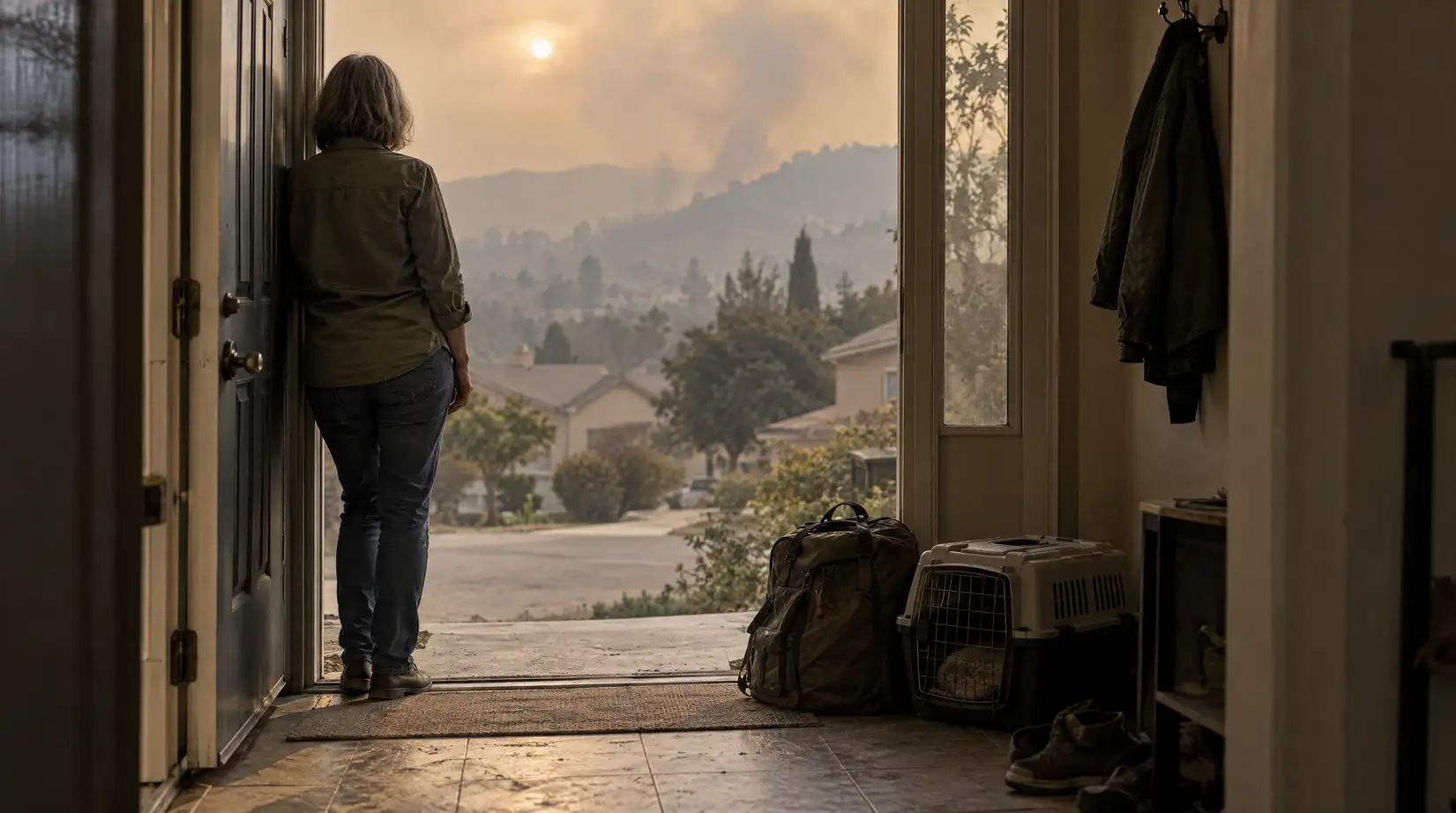
Even with the most rigorous property hardening and defensible space measures in place, extreme wildfire conditions may still force an immediate evacuation. Property owners in high-risk areas like El Paso, Larimer, and Boulder counties should establish a pre-assigned evacuation route well before smoke appears. That route should be chosen long before a red flag warning in Colorado is issued. Keep copies of insurance documents, identification, and financial records in a secure digital backup or waterproof container [11].
Pack an emergency go-bag with essentials including medications, important documents, a phone charger, water, snacks, clothing, and pet supplies [11]. Organize and protect prescription medications, over-the-counter drugs, and vitamins, as emergencies can make it difficult to refill prescriptions or find an open pharmacy [12]. Save important family documents such as copies of insurance policies, identification, and bank account records electronically or in a waterproof, portable container [12].
Frequently Asked Questions
What is the most effective roofing material for wildfire resistance?
Class A fire-rated roofing products offer the best protection against wildfires. These materials include composite shingles, metal, concrete, and clay tiles, which are specifically tested to withstand severe fire exposure.
How far away should I store firewood from my property?
Firewood and aboveground propane tanks must be kept at least 30 feet away from the home. This distance prevents intense radiant heat from igniting the primary structure if the fuel source catches fire.
What size mesh should I use for my attic vents?
The Colorado State Forest Service recommends screening all attic, roof, eaves, and foundation vents with 1/8-inch metal mesh. Larger mesh sizes, such as 1/4-inch or greater, are ineffective at preventing ember incursion.
Where can I check current fire restrictions in my county?
The Colorado Division of Homeland Security and Emergency Management (DHSEM) maintains a public fire restriction map that displays current fire bans. You should also verify the most current information directly with your local County Sheriff or Fire Department.
Before the Next Fire Season
Preparing your Colorado property for the 2026 wildfire season requires a comprehensive approach that combines structural hardening with rigorous landscape management. By establishing a strict noncombustible zone immediately around your foundation and expanding your defensible space outward, you significantly reduce the risk of direct flame contact. Retrofitting vulnerable points like vents and roofing materials further ensures your property can withstand wind-driven ember storms.
Equally important is your family’s readiness to evacuate safely when conditions deteriorate. Maintaining an updated go-bag with essential medications, digital backups of critical documents, and a pre-planned evacuation route ensures you can leave quickly without leaving vital resources behind. Upload your claim documents to JustClaims to see in minutes if your insurer missed coverage you’re owed.
This content is for informational purposes only and does not constitute legal or insurance advice.
Sources
[1] https://wildfirerisk.org/reduce-risk/ignition-resistant-homes/
[2] https://www.southmetrocrr.org/prepare-for-a-wildfire
[3] https://csfs.colostate.edu/wildfire-mitigation/protect-your-home-property-from-wildfire/
[6] https://wildfirepartners.org/screening-vents/
[7] https://www.coswildfireready.org/harden-your-home
[8] https://csfs.colostate.edu/wildfire-mitigation/current-wildfire-information-fire-restrictions/
[9] https://dfpc.colorado.gov/sections/wildfire-information-center/fire-restriction-information
[10] http://www.coemergency.com/p/fire-bans-danger.html
[11] https://coloradosprings.gov/CSFDPreparednessGuide
[12] https://slvemergency.colorado.gov/plan-prepare/build-a-kit

Taylor Bezek

As the General Manager at JustClaims, Taylor Bezek brings over a decade of experience managing complex residential, commercial, and large-loss claims. A licensed Public Adjuster in TX (#2125659), FL (#W455048), CO (#769172), and 10 additional states, Taylor founded his own firm before joining JustClaims to scale a tech-forward solution for the insured. He is committed to combining industry expertise with AI to enhance speed, clarity, and outcomes for every policyholder. Taylor's mission is to modernize the public adjusting profession and ensure owners get exactly what they are entitled to.