Lubbock Hail Damage Claims 2026: Fight Cosmetic Denials
September 15, 2026
Written by Stephane Elias
Share


A single supercell thunderstorm tore through Lubbock and damaged an estimated 3,000 homes in one event, according to NOAA’s Storm Events Database — yet Lubbock property owners who file hail claims every storm season are often told their roof damage is merely “cosmetic.” Understanding when that denial actually applies under Texas insurance rules, and when it doesn’t, can be the difference between a full roof replacement and thousands of dollars paid out of pocket.
Key Takeaways
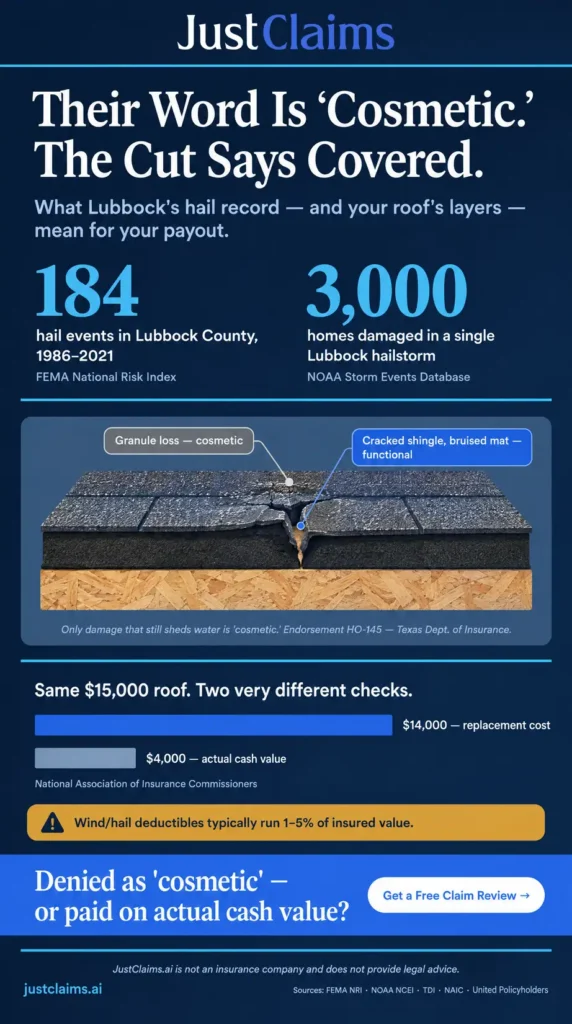
- Recurring hail exposure: FEMA’s National Risk Index counts roughly 5.4 hail events per year in Lubbock County — 184 hail events logged from 1986 through 2021.
- Cosmetic exclusion rule: TDI-approved Endorsement HO-145 defines “cosmetic loss” as damage that does not cause water penetration or functional roof failure.
- Deductible structure: Wind/hail deductibles are commonly a percentage of the home’s insured value — typically 1 to 5% — rather than a flat dollar amount.
- Public adjuster fee cap: Texas caps public adjuster fees at up to 10% of the total claim settlement.
West Texas Hail Season: A Recurring Regional Risk
FEMA’s National Risk Index — built on NOAA storm-event records — counts roughly 5.4 hail events per year in Lubbock County, with 184 hail events logged from 1986 through 2021 [1]. More than five recorded hail events in an average year makes hail a recurring seasonal risk that Lubbock property owners should factor into roof inspections and claim preparation before storm season begins.
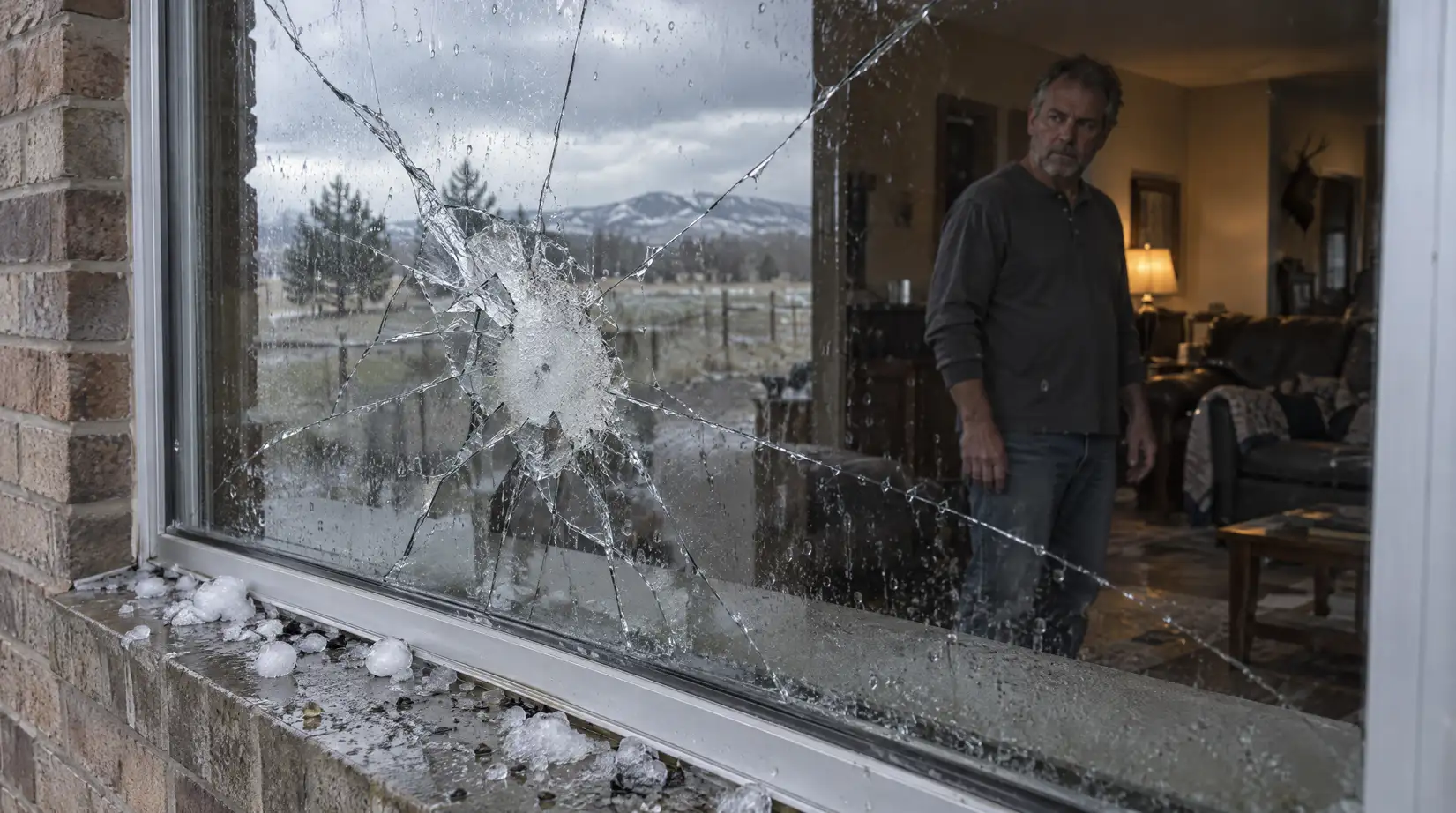
On June 5, 2025, the National Weather Service Lubbock office documented severe thunderstorms across West Texas producing hail up to 1.75 inches near Tulia in Swisher County, hail large enough to break windows in town [2].
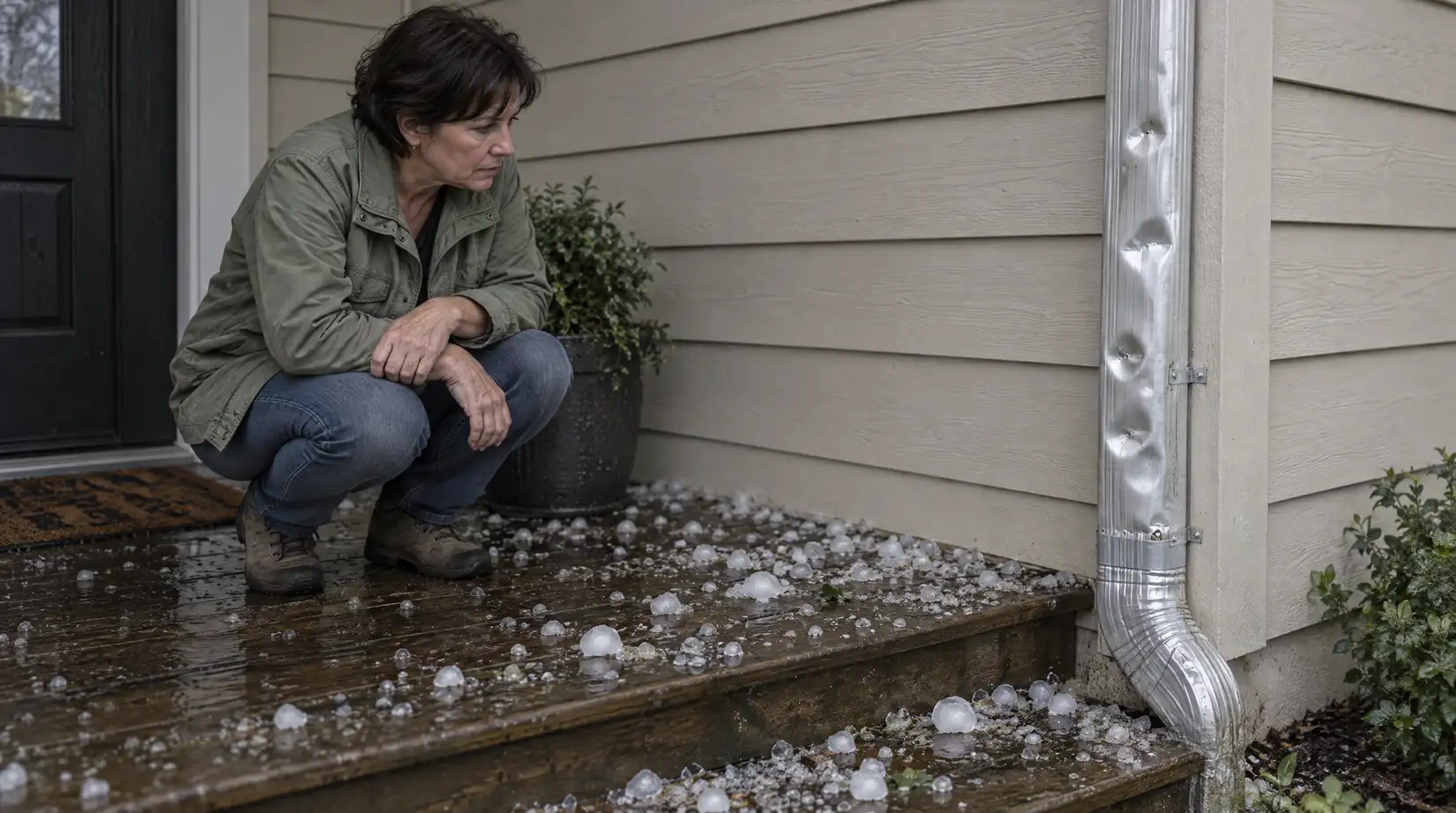
NOAA’s Storm Events Database also documents a case in which two supercell thunderstorms struck Lubbock County, with one producing a destructive hail swath through the city that damaged an estimated 3,000 homes in a single event [3] — illustrating that Lubbock hail damage can be widespread and severe rather than isolated or minor.
The ‘Cosmetic Damage’ Denial — What It Means and Why It’s Often Wrong
Because Lubbock roofs face this recurring hail exposure, many claims run into a specific insurer response: the “cosmetic damage” denial. Property owners should know this label does not apply automatically to every policy or every roof — it is a narrow, regulated exception, not a blanket insurer defense.
The Texas Department of Insurance approved Endorsement HO-145 (homeowners forms) and TDP-022 (dwelling forms) in 1998, titled “Exclusion of Cosmetic Damage to Roof Coverings Caused by Hail” [4].
Insurers may only attach this endorsement to policies where the roof is eligible for, and receiving, a premium credit for an impact-resistant covering rated UL 2218 [4]. Property owners can ask their agent directly whether this endorsement is on their policy and whether their roof carries the associated premium credit — if it does not, a blanket cosmetic denial may not hold up.
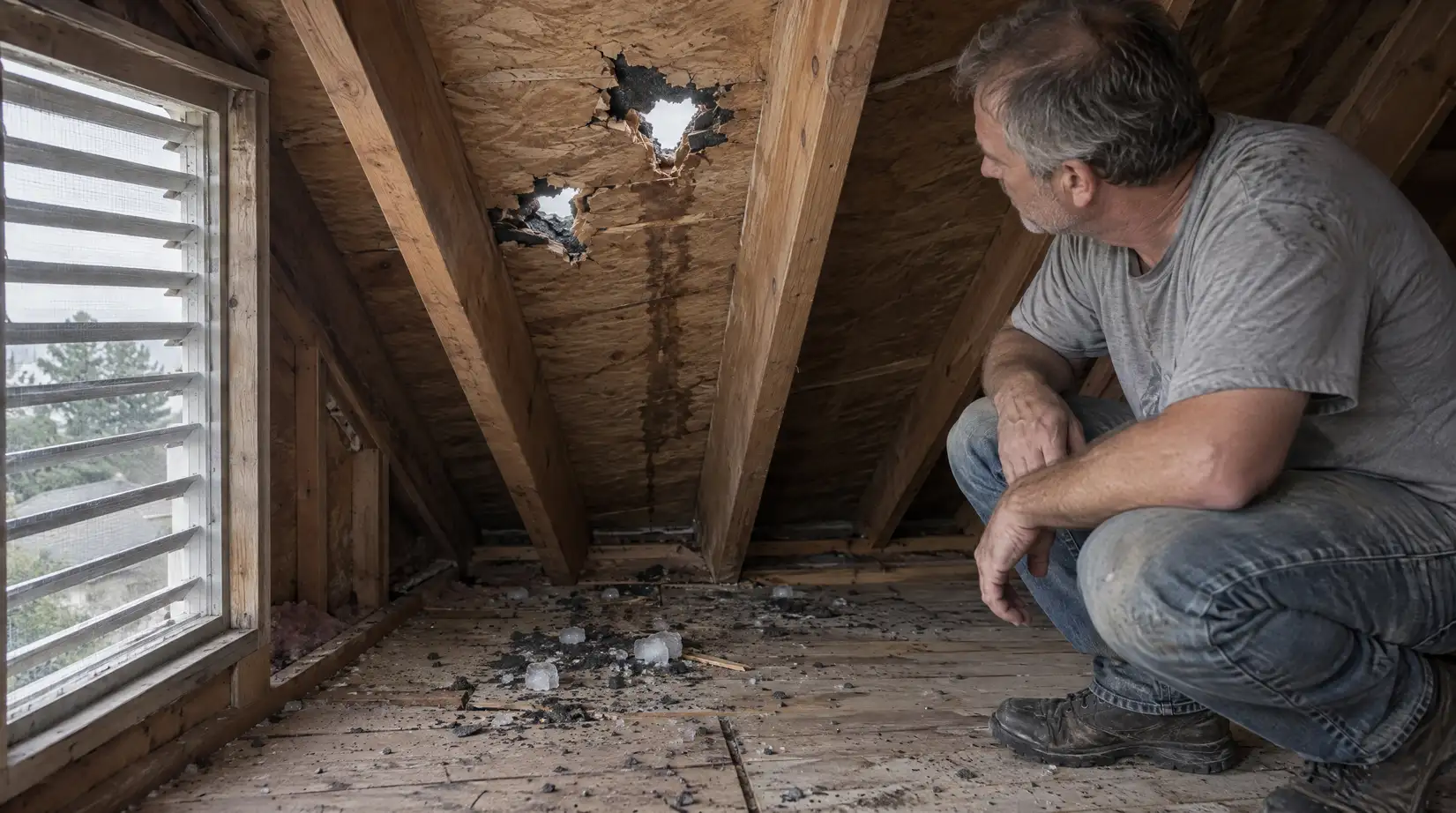
The TDI-approved endorsement language defines “cosmetic loss or damage” narrowly: damage that alters the roof’s physical appearance but does not allow water penetration and does not cause the roof to fail at keeping out the elements over an extended period[4]. The same endorsement language explicitly states that hail damage resulting in water penetration or functional failure of the roof covering remains covered [4]. In practice, this means a cosmetic denial is only valid when the damage is purely visual — dents, granule loss, or discoloration that does not compromise the roof’s ability to shed water.
TDI rules also require insurers to disclose the possibility of a cosmetic exclusion before or at the time the hail-resistant roof premium credit is applied [4] — the exclusion cannot be added unilaterally without that disclosure and the associated credit. Property owners insured through the Texas Windstorm Insurance Association face a similar standard: TWIA’s own cosmetic damage exclusion (TWIA-420, effective June 15, 1999) carries the same title and scope — exclusion of cosmetic damage to roof coverings caused by hail [5].
What a Lubbock Hail Claim Should Pay
Once hail damage is confirmed to be functional rather than purely cosmetic, the next question is how much a Lubbock claim should actually pay — and that depends heavily on the type of coverage on the policy. Under TDI guidance, replacement cost value (RCV) coverage pays the full current cost to repair a hail-damaged roof, typically issued as two checks — an initial partial payment, then the remainder once repairs begin [6].
Actual cash value (ACV) coverage pays less as a roof ages, since the payout is reduced for depreciation, and insurers can move a policy to ACV coverage or decline to cover an aging roof at all, provided they notify the property owner of the change [6].
Deductibles are the second major variable. A deductible may be a specific dollar amount or a percentage of the insured value — TDI’s own example shows how quickly percentage deductibles grow: a 5% deductible on a $150,000 dwelling equals $7,500 out of pocket [7].
United Policyholders notes that homeowners commonly pay a wind/hail deductible calculated as a percentage of the home’s insured coverage — typically between 1 and 5 percent [8]. On a $300,000 insured dwelling, even a 2% deductible means $6,000 out of pocket before any hail payout begins. NAIC guidance urges property owners to ask their insurer whether a separate deductible applies to wind or hail damage, since those special deductibles change what a hail claim actually pays [9].
The gap between RCV and ACV can be significant in dollar terms: the National Association of Insurance Commissioners illustrates a $15,000 hail-damaged roof claim with a $1,000 deductible paying $14,000 under an RCV policy, versus only about $4,000 under an ACV policy that subtracts $10,000 in depreciation for age and condition [9].
Property owners should review their declarations page for both the coverage type and the deductible structure before assuming what a hail claim is actually worth.
Documentation and the Supplement Cycle
Texas courts put the burden on the policyholder to show which storm caused which damage: when concurrent causes are in play, the insured must present evidence giving a reasonable basis to allocate the damage [10]. That makes thorough, dated documentation essential before repeated hailstorms in a single season make causation difficult to untangle.
TDI’s own storm-recovery guidance recommends property owners take photos and video of damage right away, avoid discarding damaged materials until the adjuster has inspected them, keep a list of repairs with receipts, and hold off on permanent repairs until after the adjuster’s visit[11].
Many hail claims also go through a supplement cycle — a request for additional payment submitted after the initial adjuster estimate, often triggered when hidden damage surfaces during repairs. The same TDI storm-recovery guidance supports any request for more payment: photos and video of the damage, a running list of repairs, and saved receipts [11].
Property owners should also know that Texas law makes it illegal for contractors or roofers to offer to waive a deductible, and insurers are permitted to request proof — a receipt or canceled check — that the deductible was actually paid [11].
When to Get Help
When documentation gaps or a cosmetic-damage dispute stalls a Lubbock hail claim, property owners have several formal paths forward. TDI’s storm-recovery guidance tells property owners to report damage to their insurance company promptly, keep damaged items until the adjuster has seen them, and hold proof that the deductible was paid — and the agency’s storm help desk handles questions and complaints when a claim stalls [11].
TDI’s general after-storm guidance also recommends taking pictures and video of all damage, making a list of damage inside and outside the home, and not throwing away damaged items until the insurance company confirms it’s acceptable to do so — steps worth revisiting before deciding whether to escalate a dispute [12].
One option is hiring a state-licensed public insurance adjuster to negotiate a denied or underpaid claim. Texas caps public adjuster fees at up to 10% of the total claim settlement, and property owners can ask for the fee to be stated as a flat dollar amount instead of a percentage [13].
Texas law also draws a firm line between roles: a public adjuster hired to work a claim cannot also serve as the property owner’s contractor, and contractors are barred from advertising that they will handle a homeowner’s insurance claim[13].
Property owners who suspect a public adjuster or insurer is acting improperly, or who cannot resolve a dispute through normal channels, can file a complaint with the Texas Department of Insurance by phone at 800-252-3439 or online — a step that can prompt a state review of how the claim was handled [13].
Frequently Asked Questions
How often does Lubbock get hail?
Often enough that hail is a recurring risk, not a freak event: FEMA’s National Risk Index counts roughly 5.4 hail events per year in Lubbock County, with 184 hail events logged from 1986 through 2021[1]. Recent NWS Lubbock event logs confirm the pattern continues — severe thunderstorms in June 2025 dropped golf-ball-size hail that blew out windows near Tulia [2]. Property owners should treat every storm season as a prompt to document their roof’s condition before the next event.
What does a “cosmetic damage” denial mean on a Texas hail claim?
A cosmetic denial refers to a specific, TDI-regulated policy endorsement that excludes coverage for hail marks that change a roof’s appearance but do not let water in or affect how the roof performs [4]. The exclusion only applies to policies that received a premium credit for an impact-resistant roof covering, so it is not automatically valid on every policy.
What’s the difference between replacement cost and actual cash value for a roof claim?
Replacement cost coverage pays the full current cost of repairing or replacing a hail-damaged roof, usually in two payments, while actual cash value coverage reduces the payout based on the roof’s age and condition [6]. The NAIC illustrates this gap with an example where the same $15,000 roof claim pays $14,000 under replacement cost coverage but only $4,000 under actual cash value coverage [9].
Can a public adjuster help with a denied or underpaid Lubbock hail claim?
Yes — Texas allows property owners to hire a state-licensed public adjuster to negotiate a hail claim, and state law caps that adjuster’s fee at a set percentage of the total settlement[13]. A public adjuster cannot also act as the repair contractor on the same claim, since Texas law separates those two roles [13].
What if my insurer says my roof damage is from an older storm, not the recent one?
Texas courts require the policyholder to present evidence allocating damage between covered and non-covered causes, so this kind of dispute often comes down to documentation [10]. Dated photos, video, and storm records gathered close to the event give property owners the strongest basis for showing which storm is responsible for which damage.
What to Do Before You File Your Hail Claim
West Texas hail season arrives early and often, and a Lubbock property owner facing a “cosmetic damage” denial is not automatically out of options. The Texas-approved endorsement language draws a clear line between appearance-only damage and damage that lets water in or keeps the roof from doing its job, and that distinction — not the adjuster’s initial characterization — is what should determine whether a claim is paid. Careful documentation, an accurate read on whether the policy carries replacement cost or actual cash value coverage, and a clear understanding of the wind/hail deductible all shape what a fair payout looks like.
Property owners who feel a denial or underpayment does not match the actual condition of their roof can review TDI’s dispute-resolution guidance, consider a licensed public adjuster, or file a state complaint. Not sure what your policy’s cosmetic-damage endorsement or wind/hail deductible actually says? Upload your policy to Justin for a free coverage analysis and see in minutes whether your coverage says what you think it says.
This content is for informational purposes only and does not constitute legal or insurance advice. Coverage decisions depend on the specific terms, conditions, and exclusions of each policy and the laws of the applicable jurisdiction; policyholders and contractors should consult with a qualified professional for advice on their particular situation.
Sources
[1] National Risk Index: Lubbock County, Texas — FEMA
[2] Rounds of severe thunderstorms impact West Texas (5 June 2025) — National Weather Service, Lubbock
[3] Storm Events Database — Event Details — NOAA National Centers for Environmental Information
[4] Commissioner’s Bulletin B-0030-98 (Endorsements HO-145 & TDP-022) — Texas Department of Insurance
[5] TWIA Policy Forms and Endorsements (TWIA-420) — Texas Department of Insurance
[7] What to know about deductibles — Texas Department of Insurance
[8] Homeowners: How to understand a wind/hail deductible — United Policyholders
[9] Rebuilding After a Storm: Know the Difference Between Replacement Cost and Actual Cash Value — NAIC
[11] Help after a storm — Texas Department of Insurance
[12] Hail damage to your home or car? What to do next — Texas Department of Insurance

Stephane Elias

A seasoned insurance professional with nearly a decade of experience, Stephane Elias is currently serving as a Senior Claims Professional and Public Adjuster with JustClaims. Throughout his career, Stephane has represented policyholders through leading public adjusting firms and served as a loss consultant for law firms specializing in insurance litigation, giving him extensive expertise in complex property insurance claims. A licensed public adjuster in TX (#2645032), FL (#W564547), and six other states, he specializes in commercial and residential property claims, claims management, appraisals, mediation, and strategic partnerships. Stephane is passionate about helping policyholders overcome delayed, denied, and underpaid insurance claims, ensuring they receive the full recovery they’re entitled to under their policy.