The Supplement That Carriers Hate Most: Code Upgrades and Why You’re Entitled to Them

March 12, 2026
Written by Taylor Bezek
Share


IRC code compliance isn’t optional. But carriers will act like it is—right up until you cite the specific section, the local adoption date, and the installation delta.
- Building codes change over time. When a property is rebuilt after a covered loss, it must be rebuilt to current code—and that upgrade cost is covered under the vast majority of property policies.
- Carriers routinely exclude or minimize code upgrade line items because they require specific documentation to justify.
- Knowing which codes apply in which jurisdictions—and how to cite them in a supplement—is a high-value skill for contractors doing claims work.
- JustClaims includes code upgrade analysis in every estimate review we conduct.
What Are Code Upgrades in an Insurance Context?
When a property suffers a covered loss and must be repaired or rebuilt, the work must meet the building codes that are currently in effect—not the codes that were in effect when the property was originally built. This is not a gray area: it’s a construction law requirement in virtually every U.S. jurisdiction.
Property insurance policies account for this through what’s typically called an “Ordinance or Law” provision, sometimes labeled “Code Upgrade Coverage.” This provision pays the additional cost of bringing the repaired or rebuilt structure into compliance with current codes—costs that wouldn’t exist if the property were simply being rebuilt as-was.
The gap between “what it costs to replace it as it was” and “what it costs to replace it to current code” is the code upgrade. On a roofing claim alone, that gap can range from a few hundred to several thousand dollars per project—and on commercial properties with complex systems, it can reach tens of thousands.
Why Carriers Routinely Exclude Them
Code upgrade supplements are consistently among the most challenged and undervalued line items in property claims for several reasons:
They require specific justification. Unlike a shingle replacement (which is visible and quantifiable), a code upgrade requires knowledge of the applicable code, the local jurisdiction’s adoption date, and the specific installation delta. Adjusters who don’t have this information default to exclusion.
Policy language creates confusion. Not every policy’s ordinance or law provision covers every type of upgrade equally. Some have sublimits. Some exclude specific categories. Carriers exploit this ambiguity by applying the exclusion broadly and waiting to see if it gets challenged.
Proof burden falls on the policyholder. Because the policyholder (or contractor on their behalf) must demonstrate that the code requirement exists and applies, carriers can delay by demanding documentation they expect won’t be provided. The right response is to provide it.
“We added $4,200 in code upgrade line items to a residential roofing supplement in Colorado. The carrier said they didn’t apply. We sent the IRC adoption date, the county’s local amendment, and the specific section. They paid within ten days.”
The Building Codes That Matter Most in Hail and Wind Claims
For contractors working primarily in residential and light commercial roofing, these are the code categories most frequently relevant to supplement work:
| Code Item | IRC Reference | Where It Applies | When to Supplement |
|---|---|---|---|
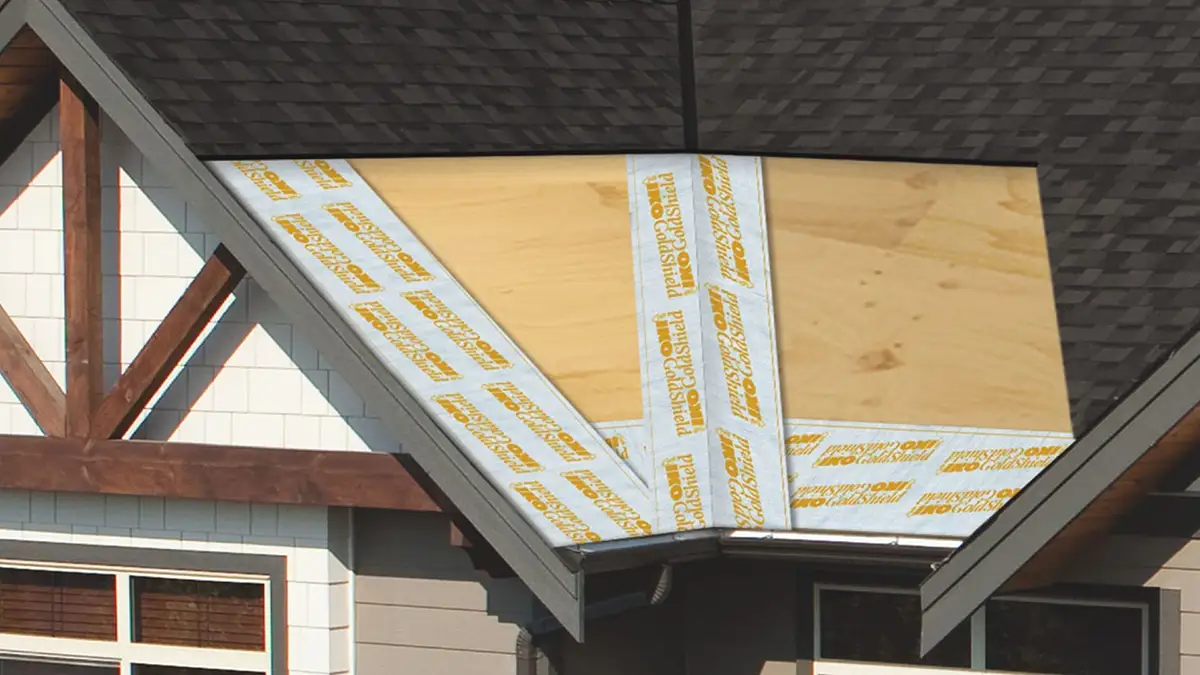
| Ice & Water Shield | IRC R905.1.2 | Cold climates, eaves, valleys | Original roof lacked it; current code requires it |
| Drip Edge | IRC R905.2.8.5 | All sloped roofs | Adopted post-2012; original roof predates adoption |
| Synthetic Underlayment | IRC R905.2.7 | All sloped roofs | Upgrade from felt to synthetic required by code or AHJ |
| Attic Ventilation | IRC R806 | All insulated assemblies | Existing ventilation ratio is non-compliant |
| Starter Course | Manufacturer/IRC | Roof eaves | Required by manufacturer warranty; missing from estimate |
The key to using this table in a supplement is specificity. You can’t write “ice and water shield per code.” You write: “Ice and water shield at eaves per IRC R905.1.2, as adopted by [County] effective [date]. Original installation did not include ice and water shield at eaves—confirmed by field inspection dated [date]. See photo set, images 14-19.”
That level of specificity turns a contestable supplement item into an indefensible one.
How to Document and Submit Code Upgrade Supplements
The supplement submission process for code upgrades follows a specific protocol that separates wins from rejections:
Step 1: Identify the applicable jurisdiction. Code adoption is local. Colorado has adopted the 2021 IRC statewide, but individual counties and municipalities may have local amendments. Texas has no statewide adoption—local jurisdiction governs. Know which code applies before you cite it.
Step 2: Document the existing non-compliance. Photograph the existing condition that doesn’t meet current code. A photo of eaves without ice and water shield—with a clear label and reference point—is your exhibit.
Step 3: Calculate the upgrade cost using Xactimate. Pricing the code upgrade in the same software as the carrier estimate removes the pricing dispute and focuses the conversation on scope, where you have the stronger argument.
Step 4: Submit with citation. Include the specific code section, the local adoption date, and your documentation in the supplement submission. Request written acknowledgment and a written response to each line item.
Step 5: If denied, go to appraisal. Code upgrade denials on documented, applicable requirements are exactly the type of dispute the appraisal process was designed to resolve. Don’t accept a denial as final.
In Summary
Code upgrades are not a contractor’s wishlist—they are a legal construction requirement, and the cost of meeting them is covered under the policies your clients pay for. Knowing how to document and argue them is one of the highest-ROI skills in the contractor-claims partnership. JustClaims includes code upgrade analysis in every estimate review we conduct for our contractor partners.
💬 Have a supplement that keeps getting rejected? Let’s review it and find the code language that makes it stick.

Taylor Bezek

As the General Manager at JustClaims, Taylor Bezek brings over a decade of experience managing complex residential, commercial, and large-loss claims. A licensed Public Adjuster in TX (#2125659), FL (#W455048), CO (#769172), and 10 additional states, Taylor founded his own firm before joining JustClaims to scale a tech-forward solution for the insured. He is committed to combining industry expertise with AI to enhance speed, clarity, and outcomes for every policyholder. Taylor's mission is to modernize the public adjusting profession and ensure owners get exactly what they are entitled to.