Emergency Board Up: Cost & Insurance Coverage
November 17, 2026
Written by Collin Corcoran
Share


Emergency board-up and tarping are among the first repairs regulators tell policyholders to make after a loss, and policies may not cover ensuing damage when reasonable protective steps are skipped. For contractors, the paper trail behind that work often decides whether the cost is reimbursed or disputed. This guide covers what public records show about pricing, the policy language that governs reimbursement, and the documentation adjusters expect.
Key Takeaways
- What it is: Board-up and tarping are temporary seals — plywood over broken windows and doors, tarps over roof openings.
- Coverage risk: California’s insurance regulator warns that policies may not cover ensuing damage if the policyholder did not take reasonable steps to secure the property.
- Receipts: California’s guide ties reimbursement to proof — reasonable costs to protect the property are reimbursed as long as receipts are saved.
- Adjuster first: Minnesota’s commerce department says to get the adjuster’s instructions before arranging repairs, and to make only temporary repairs until the adjuster inspects.
- Per-opening price: Public board-up contracts price openings at $85 to $125 each, with a call-out charge of $30 to $175.
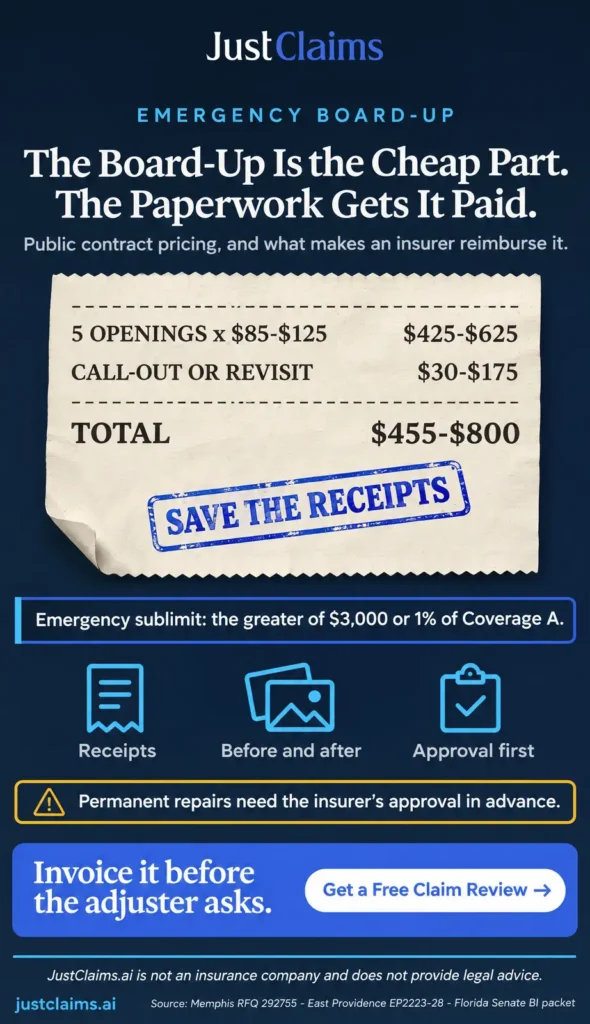
- Sublimits: Some forms cap emergency measures at the greater of $3,000 or 1% of Coverage A, unless the insurer approves more in advance.
- Permanent repairs: The NAIC says an insurer may not pay for permanent repairs it did not authorize.
What Board-Up and Tarping Cover
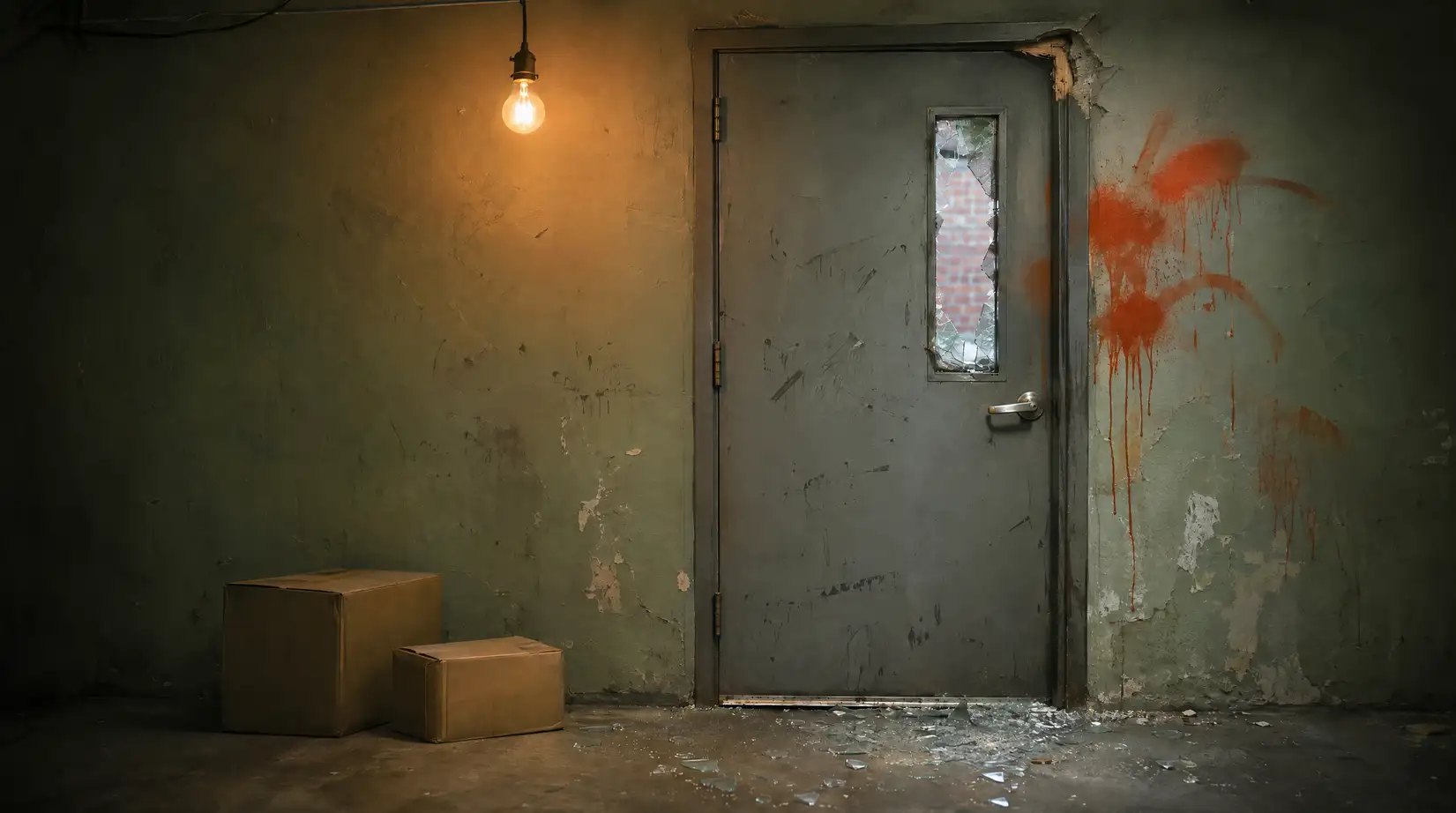
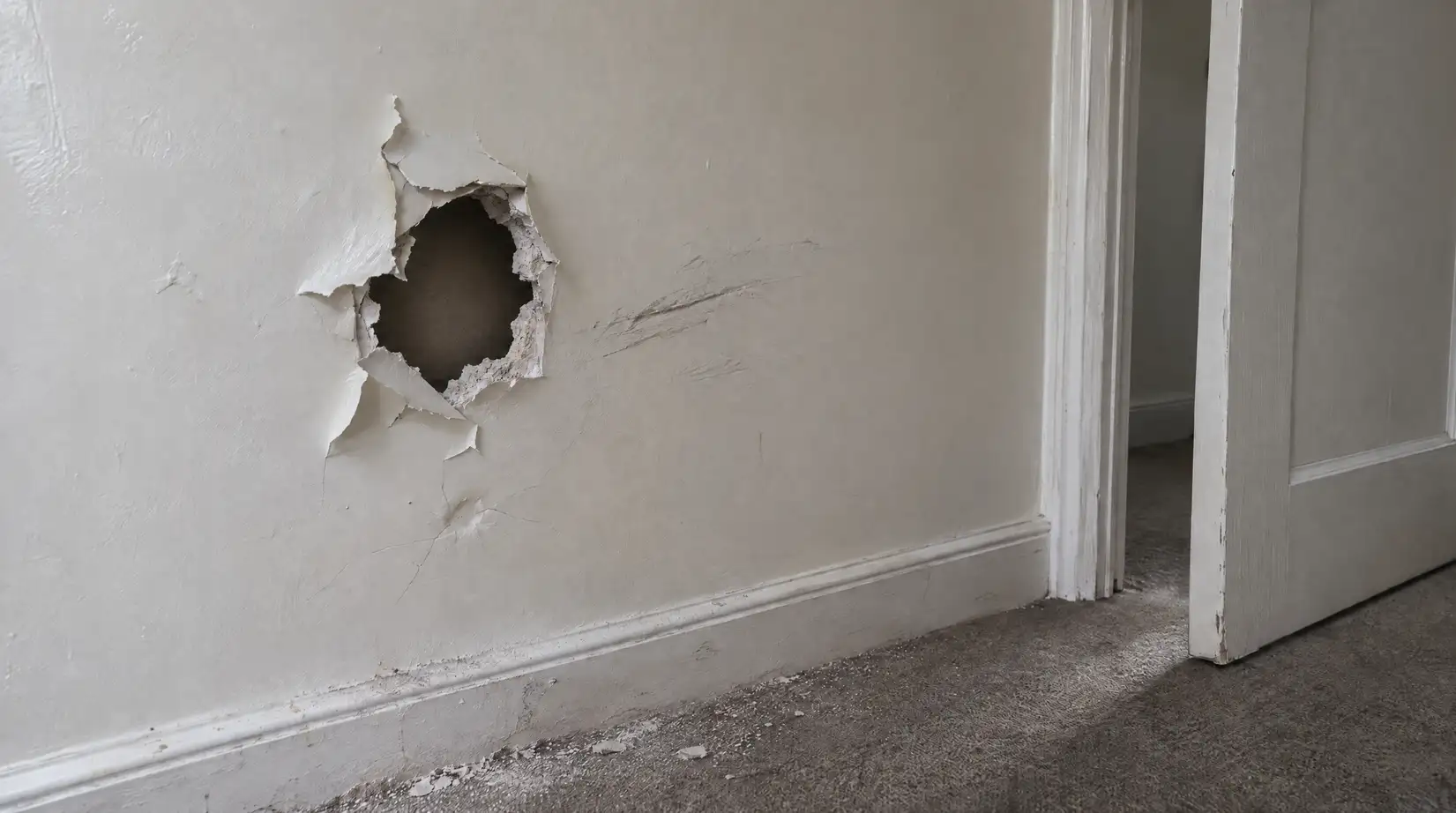
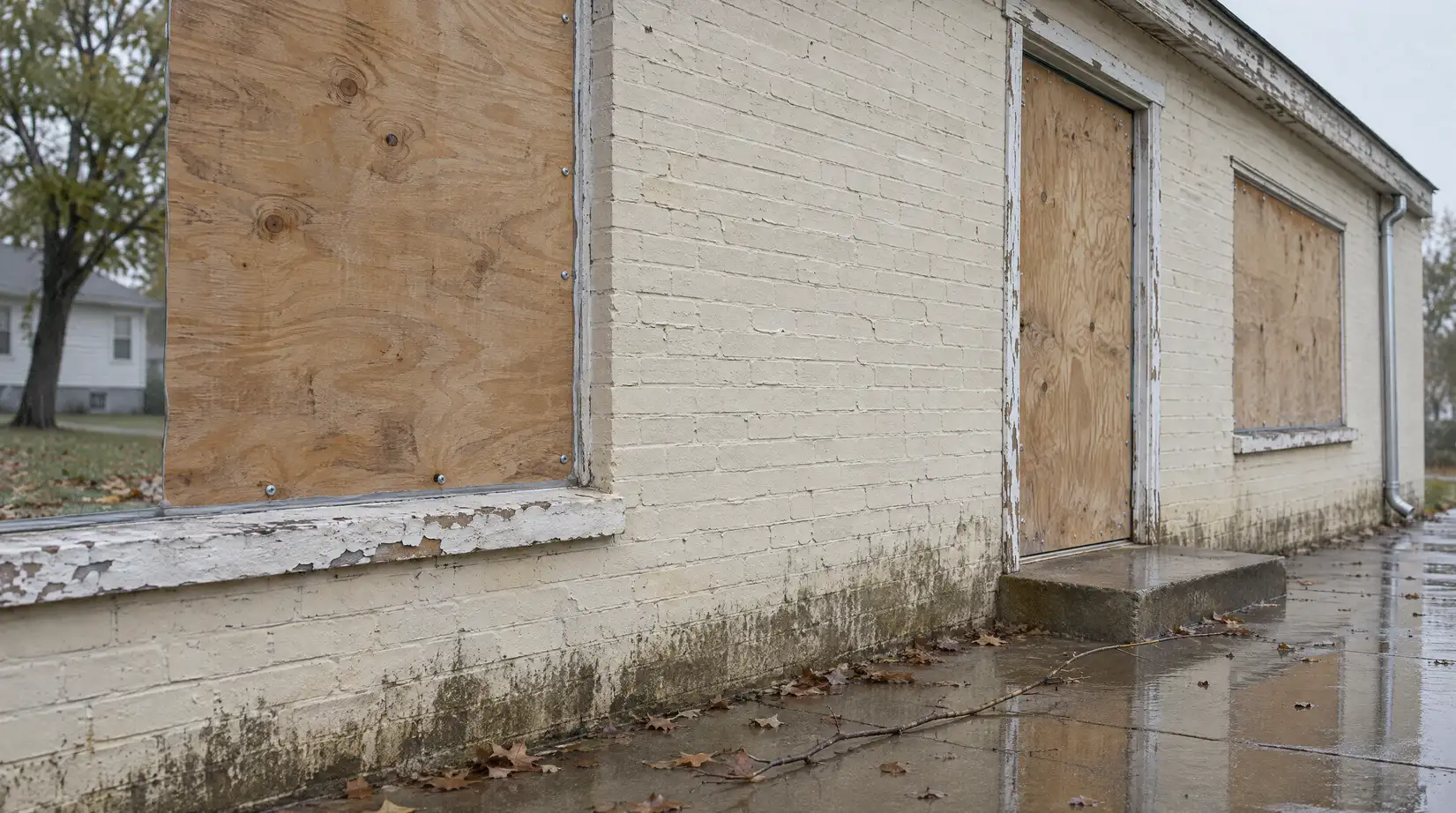
The NAIC’s Post-Disaster Claims Guide gives the instruction in its shortest form: if windows are broken, board them up; if the roof has a few holes, cover it with a tarp to prevent water damage [1]. The California Department of Insurance is more specific — cover damage to the roof, walls, doors and windows with plastic sheeting or plywood [2]. That is the whole scope: plywood over openings, sheeting over roof breaches. For the roof claim itself, see how a roof insurance claim is documented and adjusted.
This work is a stopgap, not the permanent repair. It still matters to the claim. California’s guide warns that homeowners policies may not cover ensuing damage if the policyholder has not taken reasonable steps to secure the property, and it states that the insurer will reimburse all reasonable costs to protect the property as long as receipts are saved [2]. The NAIC’s consumer guide to home insurance puts the duty in one line: you are also required to protect your home from further damage [3]. For a contractor, the seal protects the structure, and the record of the seal protects the payment.
Board-Up and Tarping Costs: What Public Records Show
Regulators publish procedure, not price. The most defensible benchmarks are the rates governments themselves contract for, and two municipal procurement records bracket the per-opening price.
| Scope | Reported figure | Basis |
|---|---|---|
| Any external opening | $85 per opening | Memphis, TN board-up contract [4] |
| Window or door opening | $125 each | East Providence, RI board-up contract [5] |
| Emergency call-out | $30 flat revisit; $175 site visit and board-up | Memphis [4]; East Providence [5] |
| Skilled labor rate | $58.20/hr daytime; $86.80/hr overnight | East Providence [5] |
Across the two contracts the per-opening rate sits between $85 and $125, so a five-opening board-up lands between $425 and $625 before the call-out, which adds $30 to $175. Treat them as administrative benchmarks, not a quote — both documents separate the visit charge from the openings, and East Providence prices the hour as its own line. USDA Rural Development’s 2025 property-preservation schedule sets a maximum of $1,000 per property for temporary roof repair and tarping; that is a program allowance, not a market rate [6].
If an invoice lands above these bands, the fix is on the invoice itself. Itemize openings, square footage, access equipment, debris removal and after-hours labor so the adjuster can see what drove the number.
Why Insurers Pay: Duty to Mitigate and Loss-Mitigation Language
The Maryland Insurance Administration states that most homeowners insurance policies require policyholders to protect the property from further loss or damage, to keep a record of temporary repairs and save all receipts, and it uses buying plywood and nails to board up broken windows as its example [7]. The NAIC’s consumer guide says the same thing in a line [3], and the NAIC’s post-disaster guide pairs the instruction with a warning to keep all receipts for emergency repairs for the insurer [1].
That is why board-up sits inside the claim rather than beside it: it is a policy duty, and the cost of performing it is a mitigation expense when the underlying loss is covered.
The duty is also where claims go wrong. California’s guide warns that policies may not cover ensuing damage when reasonable steps to secure the property are not taken [2], and New York’s Department of Financial Services warns that an insurer can refuse to pay for damage repaired before inspection [8]. Read the actual policy language on each job; forms differ by insurer and state.
Documentation Pack: Dated Photos, Scope, Invoice, Adjuster Coordination
The duty to mitigate is only as strong as the proof behind it. United Policyholders puts the stakes plainly: credible documentation increases negotiating power, and a credible detailed scope makes it harder for an insurer to underpay the claim [9]. The pack has three parts.
Dated Photos and Logs
Minnesota’s Department of Commerce advises taking pictures or video of the damage before cleanup begins [10], and the NAIC guide says to photograph or video the damaged areas and personal property [1]. Minnesota also says to keep a log of expenses incurred and contacts made with the insurance company [10]. That log is the spine of the file: it shows what was spent and who was spoken to.
Scope, Invoice and Receipts
The NAIC guide is explicit: keep all receipts for emergency repairs to give to the insurance company, because the insurer needs them to reimburse you [1]. California’s guide ties reimbursement to the same condition — reasonable costs to protect the property are reimbursed as long as receipts are saved [2]. Minnesota repeats it and adds the expense log [10].
A dated invoice that matches the photo log is the cleanest version of this record. If the loss is large enough to need a full scope, see commercial restoration claims documentation.
Adjuster Coordination
Minnesota’s guidance is specific: do not call anyone to repair or replace the loss without first getting instructions from the insurer’s adjuster, because the insurer may need to inspect first; make only temporary repairs until the adjuster arrives; and keep a log of expenses and contacts [10]. New York adds the consequence: no permanent repairs until the company or its representative has inspected the property, and the company can refuse to pay for damage repaired before inspection [8]. A contact log keeps the story consistent across handoffs.
Common Disputes and How to Avoid Them
Many disputes over emergency work can trace back to gaps in authorization, scope or paperwork. Each has a practical fix.
Permanent Repairs Before Authorization
The NAIC guide warns that the company may not pay for repairs it did not authorize [1], and New York’s regulator says the company can refuse to pay for any damage repaired before inspection [8]. Keep the emergency scope limited to sealing and protecting. Put any permanent work in a separate estimate.
Scope and Price Disagreements
The NAIC says differences over how much a repair should cost are what the appraisal process is for: it resolves cost, not coverage, and where a policy has an appraisal clause the insured must go through appraisal before suing [1]. Read the appraisal section of the policy before you rely on it; policy language and state law govern how it applies.
Assignment-of-Benefits Pitfalls
The NAIC warns that an assignment of benefits transfers your rights under the policy and your claim to a third party, most often your contractor, and that you may be giving up some, most, or even all of your rights — including having a lawsuit filed without your approval or knowledge [1]. Review any AOB carefully before signing.
Contractor Checklist Before You Leave the Site
- Photograph or video the damage before cleanup [10].
- Photograph the damaged areas and personal property for the claim file [1].
- Keep every receipt for emergency repairs and materials [1][2].
- Keep a log of expenses incurred and contacts made with the insurer [10].
- Get the adjuster’s instructions before arranging any repair [10].
- Limit work to temporary repairs until the adjuster inspects [8][10].
- Leave permanent repairs for a separate, authorized scope [1].
Frequently Asked Questions
Does insurance pay for emergency board-up?
Regulators treat board-up as part of protecting the property after a loss. California’s guide states that the insurer will reimburse all reasonable costs to protect the property as long as receipts are saved [2], and Maryland’s says most homeowners policies require the policyholder to protect the property and keep receipts [7]. Some forms also cap it: a Florida Senate committee summary of a revised homeowners policy contract limits reasonable emergency measures to the greater of $3,000 or 1 percent of Coverage A, unless the policyholder gets advance approval to exceed that amount [11]. Coverage depends on the policy, any sublimit, and whether the underlying loss is covered.
What happens if board-up is skipped?
California’s guide warns that homeowners policies may not cover ensuing damage if the policyholder has not taken reasonable steps to secure the property [2]. A missed tarp can turn a covered loss into a dispute over what caused the additional damage.
Should a contractor wait for the adjuster before starting?
Minnesota’s guidance says to get the adjuster’s instructions before calling anyone to repair or replace the loss, and to make only temporary repairs until the adjuster arrives [10]. New York adds that no permanent repairs should be made until the property has been inspected [8].
What documents does the insurer usually want?
Dated photos or video of the damage, receipts for emergency repairs and materials, and a log of expenses and contacts are the core items [1][2][10].
What You Should Document Before You Leave
Emergency sealing protects the structure, and the documentation protects your scope and your payment. Dated photos, an expense and contact log, receipts and a clear line between temporary and permanent work give a carrier little reason to question the charge. Upload your board-up invoice, photos and the policy’s loss-mitigation language to JustClaims, where our team, accelerated by our bespoke AI, will review the file and flag gaps before you go back to the carrier. Start with a free AI coverage analysis for your commercial property policy.
This content is for informational purposes only and does not constitute legal or insurance advice. Coverage decisions depend on the specific terms, conditions, and exclusions of each policy and the laws of the applicable jurisdiction; policyholders and contractors should consult with a qualified professional for advice on their particular situation.
Sources
[1] Post-Disaster Claims Guide — National Association of Insurance Commissioners (NAIC)
[2] Residential Property Claims Guide — California Department of Insurance
[3] A Consumer’s Guide to Home Insurance — National Association of Insurance Commissioners (NAIC)
[4] RFQ 292755, Demolition Services Specifications — City of Memphis, Tennessee
[5] Emergency Board-Up Services, Contract EP2223-28 — City of East Providence, Rhode Island
[6] Maximum Property Preservation Allowances, effective October 1, 2025 — USDA Rural Development
[7] Homeowners Insurance Guide — Maryland Insurance Administration
[8] Managing and Mitigating Losses — New York State Department of Financial Services
[9] The Scoop on “Scope” (of Loss) — United Policyholders
[11] Banking and Insurance Committee Meeting Packet — The Florida Senate

Collin Corcoran

Experienced Public Adjuster and Property Claims Specialist, Collin is licensed in New York (#1603393), New Jersey (#3003700204), and Connecticut (#19820270). With 20+ years of hands-on construction and property damage experience, he specializes in residential and commercial claims, complex loss inspections, policy review, detailed estimating, and strategic negotiation. Collin’s background in construction, asset management, emergency response, and claims documentation allows him to accurately identify damage, understand repair requirements, and advocate effectively for policyholders. He works with homeowners, business owners, contractors, and insurance professionals to move claims forward with clarity, accuracy, and confidence. Collin is committed to transparency, technical precision, strong communication, and securing fair outcomes for policyholders.