The offer came in low?
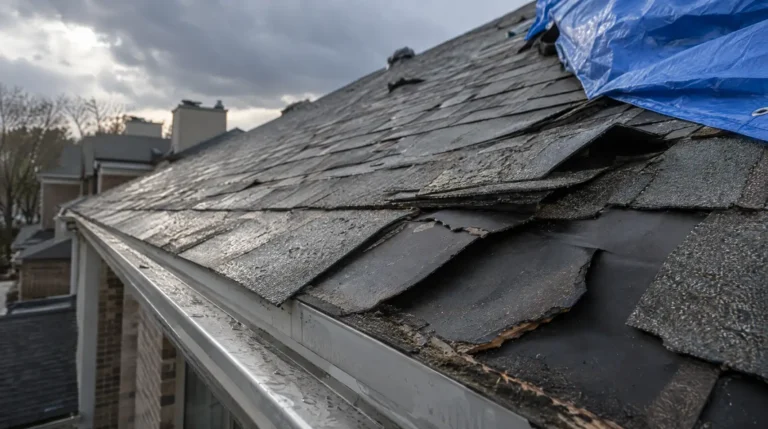
Carrier estimates price the visible room and skip the party-wall spread.
In Queens, damage rarely stays inside one property line: a neighbor's fire moves through the party wall, a broken riser floods the storefront below the apartments, and wind-driven rain hides in the wind-versus-flood split. We document the full loss — every connection — and negotiate directly with the carrier for what you are rightfully owed. No recovery, no fee.
 Licensed by the NY Dept. of Financial Services — JustClaims, LLC #PA-1994667
Fee capped by NY law at 12.5% — in writing before work starts
Multi-family & mixed-use claim experience
We only get paid when you do.
Tell us about your property and damage. We'll review at no cost.
Three steps. One dedicated public adjuster. No upfront cost.
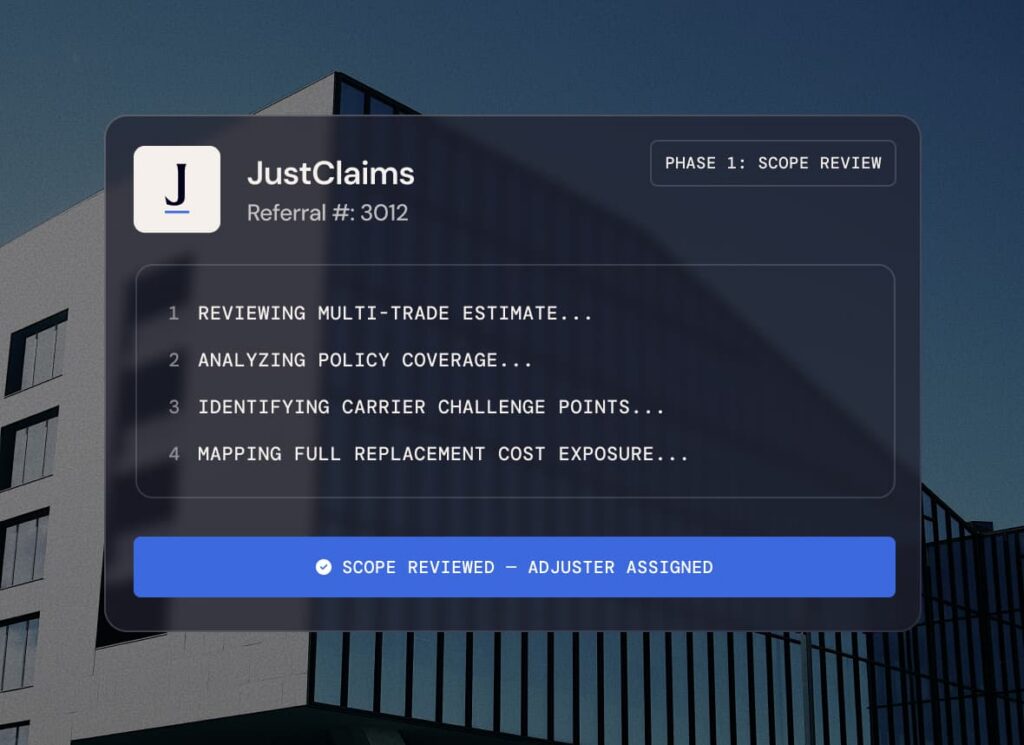
What happened, when you noticed it, and what the carrier has said so far. Photos of the affected units and common areas are enough to start.
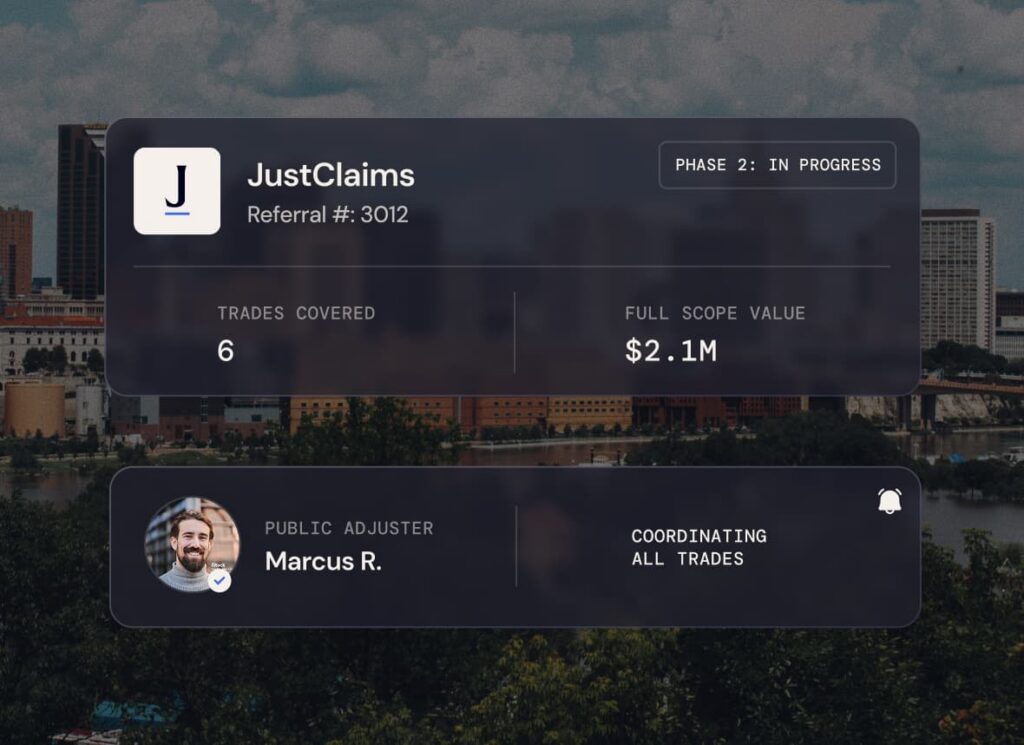
A dedicated public adjuster inspects and documents the loss independently, reads your policy against the building's master/landlord split, and builds the estimate the carrier should have written.
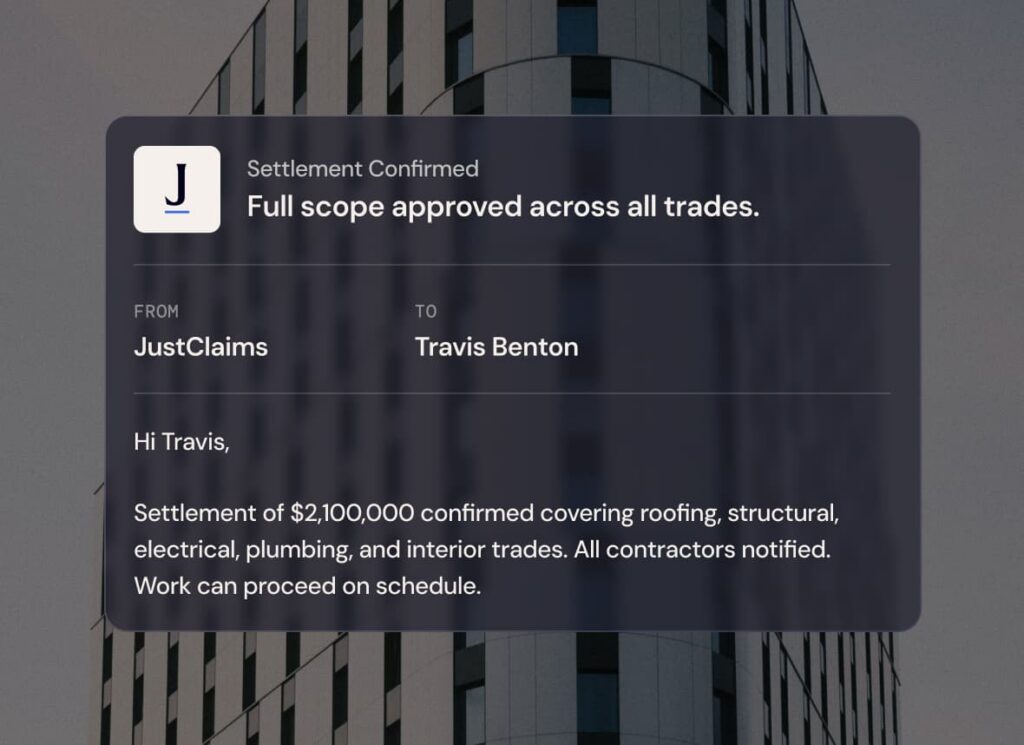
We present the documented scope, answer the carrier's requests, hold them to Regulation 64 deadlines, and negotiate until the settlement reflects the actual loss.
Six claim families — each priced on the building, not a template photo.

Party-wall spread, the landlord/tenant split, kitchen fires, flat roofs — the standard Queens attached-home problem.

One loss, multiple coverages: storefront below, apartments above. Business-interruption counts too.

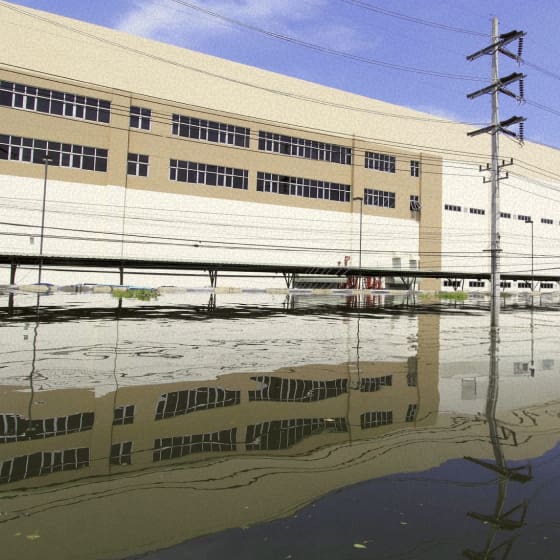
Rockaway coastal exposure after Ida and Sandy: NFIP treatment versus the wind-driven-rain regime.
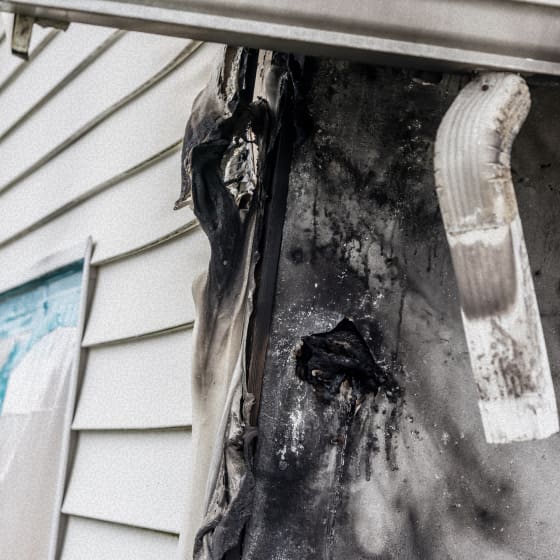
A neighbor's fault travels through the party wall — burn, soot, and extinguishing water in one scope.
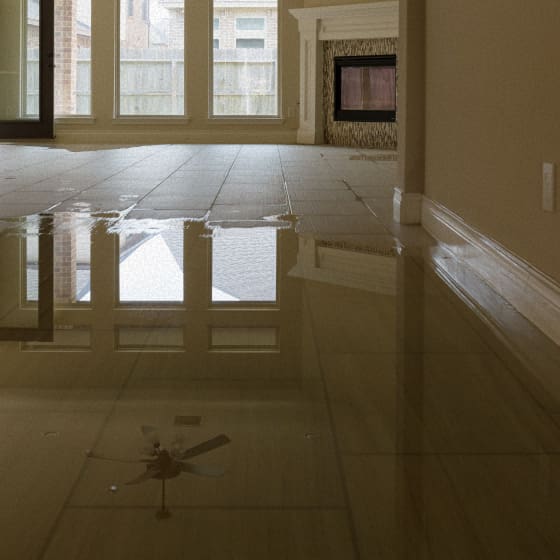
Burst risers, radiator leaks, ice dams — damage that crosses floors and parties.
Wear-and-tear reclassification, late reporting, pre-existing — we challenge the denial with evidence.
Licensed public adjusters — multi-family/commercial Queens claims
Party-wall and adjacent-building loss documentation
Wind-driven-rain vs rising-water causation
Full-loss scope: structure + contents + business interruption
Policyholders only — never the insurance company
Carriers run three plays on Queens claims. New York's rules say otherwise.
Carrier estimates price the visible room and skip the party-wall spread.
Weeks of silence, then one more photo request. Regulation 64 sets the deadlines.
Wear and tear, late reporting, pre-existing — a denial is a position, not a verdict.
Attached 2–4 Family
Multi-Family
Mixed-Use & Storefront
Co-op & Condo
Retail & Restaurants
Office Buildings
Coastal & Flood-Zone (Rockaway)
Landlord & Tenant Splits
These are the DFS rules that set the clock, cap the fee, and let only licensed adjusters represent you.
Regulation 64 gives the carrier 15 business days after your proof of loss to accept or reject the claim in writing — and 5 business days to pay once a settlement is agreed. Silence past that owes you a written explanation, every 90 days. We clock every deadline.
New York regulation (11 NYCRR §25.7) caps public adjuster fees at 12.5% of the recovery — and the exact fee goes in a signed written agreement before work starts. The recovery grows for you, not for us. No recovery, no fee.
Only DFS-licensed public adjusters may legally negotiate with your carrier. An unlicensed contractor or 'helper' negotiating your claim breaks that rule — and hands the carrier a reason to stall or discount the file. JustClaims, LLC License #PA-1994667 — choose licensed representation.
A 'wear and tear' or 'pre-existing' denial is an opening position — we answer with new evidence: covered causation, independent scope, weather data — and press the carrier to re-engage on the merits.
This page describes DFS rules in plain language and is not legal advice.

Experienced Public Adjuster and Property Claims Specialist
Collin Corcoran is an experienced public adjuster and property claims specialist, licensed in New York (#1603393), New Jersey (#3003700204), and Connecticut (#19820270). With 20+ years of hands-on construction and property damage experience, he specializes in residential and commercial claims, complex loss inspections, policy review, detailed estimating, and strategic negotiation.
In Queens, his work centers on the attached housing stock — attached 2–4 family buildings and mixed-use storefront properties — plus Rockaway's coastal flood/wind exposure: party-wall spread, landlord-tenant splits, and wind-versus-flood causation.
He is committed to transparency, technical precision, strong communication, and securing fair outcomes for policyholders.
Three building classes, three price logics. The card underneath prices the type you actually own.
Attached housing means a shared roof and a shared party wall — one failure travels from your building into the neighbor's, and back. The carrier prices one address; we document the whole envelope, plus the landlord-tenant split that comes with it.
When apartments sit above your storefront, one loss triggers the master policy, the commercial policy, and business interruption. We run all three together — and chase code-upgrade costs and lost income, the line items most often left off the estimate.
After Ida and Sandy, the wind-versus-flood argument decides who pays. Wind-opened openings live under your standard carrier; rising water goes to NFIP. We separate the two regimes and document each with evidence that holds.
If your neighborhood is not listed, call anyway — we cover Queens end to end.
We negotiate with the carrier. You run the restoration. Clean split, full documentation, faster approval to builder.
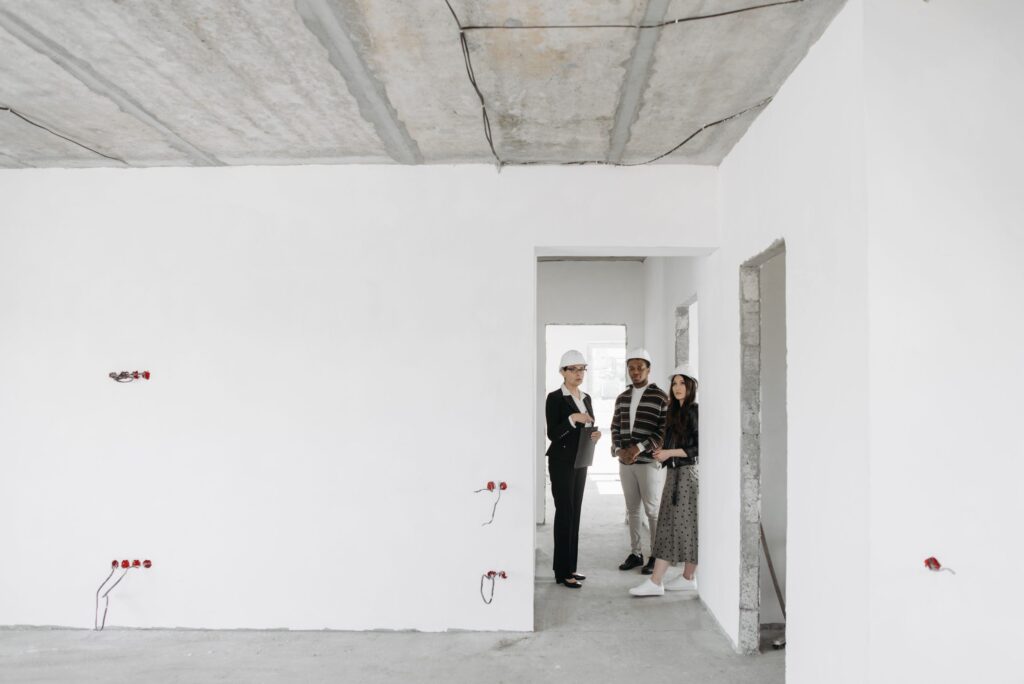
Water, fire, mold, and flood mitigation — documented to supplement-ready level.

Full rebuild and repair scope on anything we have approved — no scope-fight delays.
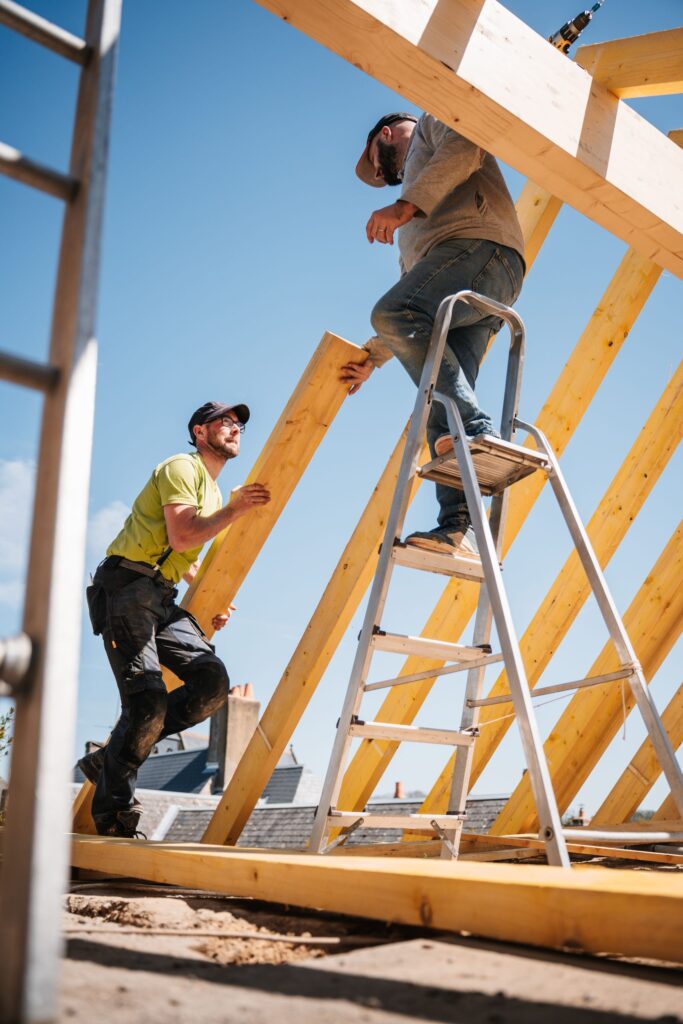
Roof, membrane, and attached facade repair seen through a supplement lens, not a price shop.
Usually your own policy responds for your building, and your neighbor's policy responds for theirs — coverage follows each building's envelope, not whoever the membrane above the party wall belongs to. A storm-created opening on that shared roof system is a sudden loss, not "maintenance."
We document the cause and date of loss with an independent inspection, weather data, and roof photographs, so the carrier can't reclassify it as wear and tear.
If the neighbor is a co-op or landlord, their master policy may govern the roof. We sort that out and pursue your claim on your own policy either way.
The first place we usually look is the building owner's commercial or master policy — typically the board's or landlord's policy — because the building itself was damaged. The storefront tenant's renters policy covers their own contents and equipment, not the structure.
The upstairs apartment owner's policy comes into play only if that owner is legally liable for where the leak came from. In Queens mixed-use buildings, the master and commercial pieces often sit with different carriers.
We run the building envelope and the business-interruption piece together, so your repairs and lost income don't fall between carriers.
Often the carrier is technically right on the coverage position — rising groundwater that came in as flood is excluded under a standard property policy; flood belongs to NFIP, FEMA's National Flood Insurance Program.
But during Hurricane Ida, many Queens basements were hit by a mix: wind tore an opening, rain came in through it, then groundwater rose. Rain admitted through a wind-created opening is generally treated as windstorm damage under your standard policy (wording and exclusions vary), while true rising flood goes to NFIP.
We separate the two claims, document each cause, review your actual policy wording, and recover what your coverage supports.
Two different regimes, two different playbooks.
An NFIP flood claim under FEMA's National Flood Insurance Program carries a proof-of-loss deadline of 60 days from the loss, unless FEMA grants an extension — FEMA did extend the deadline for Hurricane Ida claimants, for example.
A wind-driven-rain or storm-opened-opening claim runs under your standard carrier's policy conditions: notice, proof of loss, appraisal rights, and New York's claim-handling timelines.
We map which policy responds to which damage and make sure the right paperwork reaches the right carrier on time, so an administrative mix-up doesn't cost you coverage.
A denial is a position, not a verdict — and New York requires carriers to explain a denial in writing, which gives us the exact target.
"Pre-existing maintenance" is one of the most common opening moves on a Queens party-wall spread. We tie the cause to a sudden event with weather data for the date of loss, interior moisture mapping, and an independent inspection of the party wall itself, then re-submit with that documented evidence.
If the reclassification still doesn't move, we exercise your policy's appraisal route or escalate through the DFS complaint channel.
Often yes, through the business-interruption (BI) coverage embedded in many commercial policies. BI typically covers lost net income and ongoing operating expenses while the storefront is down after a covered property loss.
On the ground-floor retail rows in Queens, that often makes the difference between being closed for months or weeks.
We run the building, contents, and BI pieces as one integrated claim, document the interruption window and the income baseline, and support the property and BI numbers together — so the recovery reflects the actual interruption, not just the repair bill.
It takes a few minutes to find out. No upfront cost — we only get paid when you do.
Licensed by the New York Department of Financial Services — JustClaims, LLC License #PA-1994667 · Contingency fee capped at 12.5% · No upfront cost