HO-6 Condo Insurance: Coverage, Claims & Who Pays (2026)
October 28, 2026
Written by Taylor Bezek
Share


On a condo claim, the first question is often whether the HO-6 or the master policy owns the scope, not what the repair costs. Under a bare walls master policy, the association insures the structure up to the uncovered sheetrock and subfloor, and the unit owner is responsible for the community deductible and the interior finishes. Scoping those items against the wrong policy can stall a payment.
Key Takeaways
- What it is: An HO-6 is the policy a condo or co-op owner buys. It covers the unit’s interior, personal property, liability and additional living expenses.
- Bare walls exposure: Under a bare walls master policy, the association stops at the uncovered sheetrock and subfloor. Interior finishes belong to the unit owner.
- Deductible exposure: Across the common master-policy structures, the unit owner is responsible for the community master policy deductible.
- Policy limit: Check the limit on the declarations page against your scope before you price the job. An outdated limit can leave the owner paying the difference.
- Loss assessment limit: Many HO-6 policies cap loss assessment coverage at $1,000 toward the association’s deductible.
- Trigger date: Insurers differ. Some pay based on the date of loss; others use the date of assessment. Switching carriers between those dates can leave no coverage.
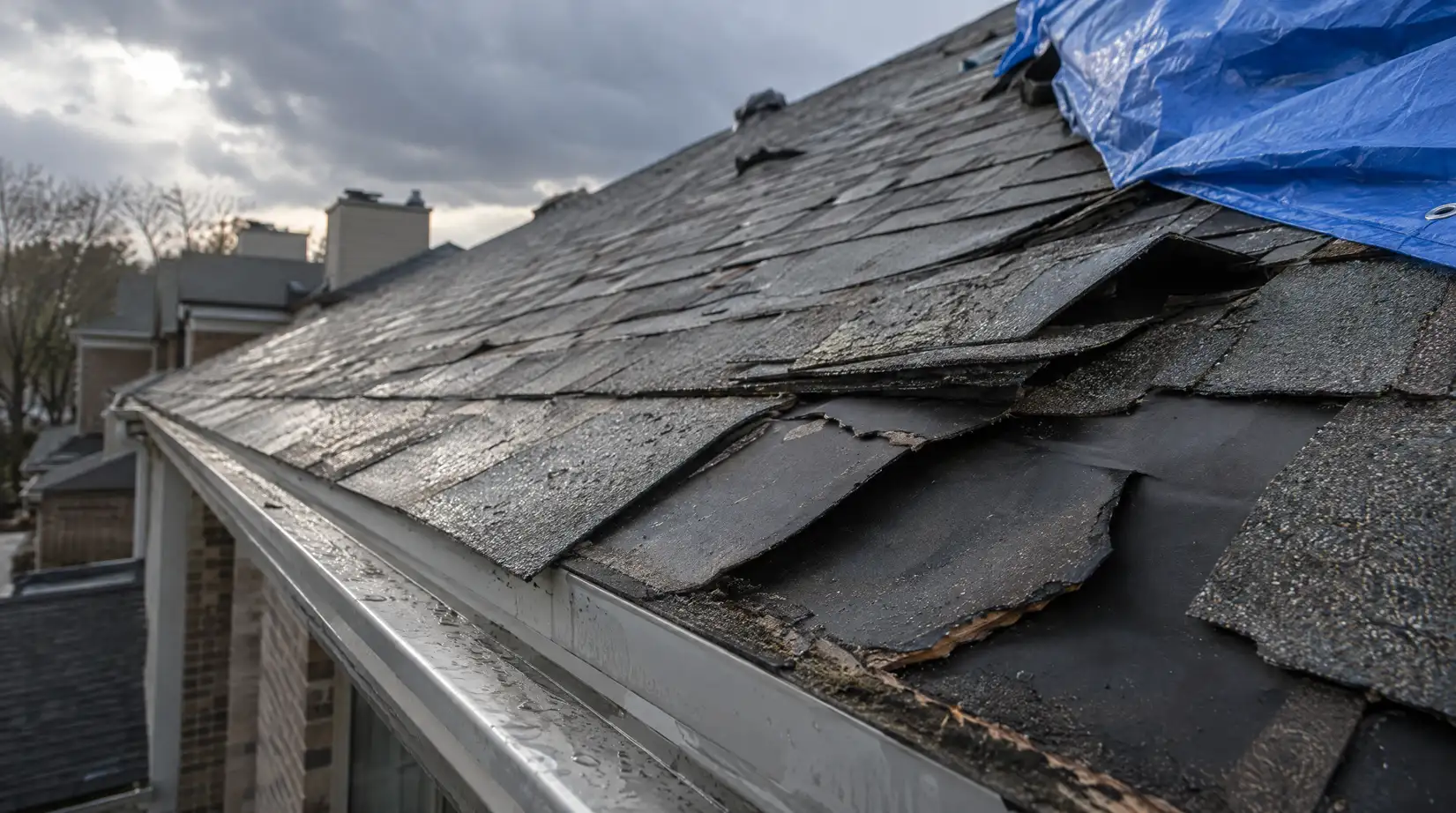
- Roof damage: The master policy typically covers roofs and exterior walls.
What an HO-6 Policy Covers Inside the Unit
An HO-6 policy is the policy a condo unit owner buys [1]. Colorado’s insurance regulator notes that HO-6 coverage also extends to co-op owners [2]. It typically covers the unit’s interior structure, personal property, personal liability and additional living expenses after a covered loss [1]. The association’s master policy typically covers common areas and the building structure, including roofs and exterior walls [2]. That split determines which policy owns the scope you are pricing.
Dwelling Coverage for Additions and Alterations
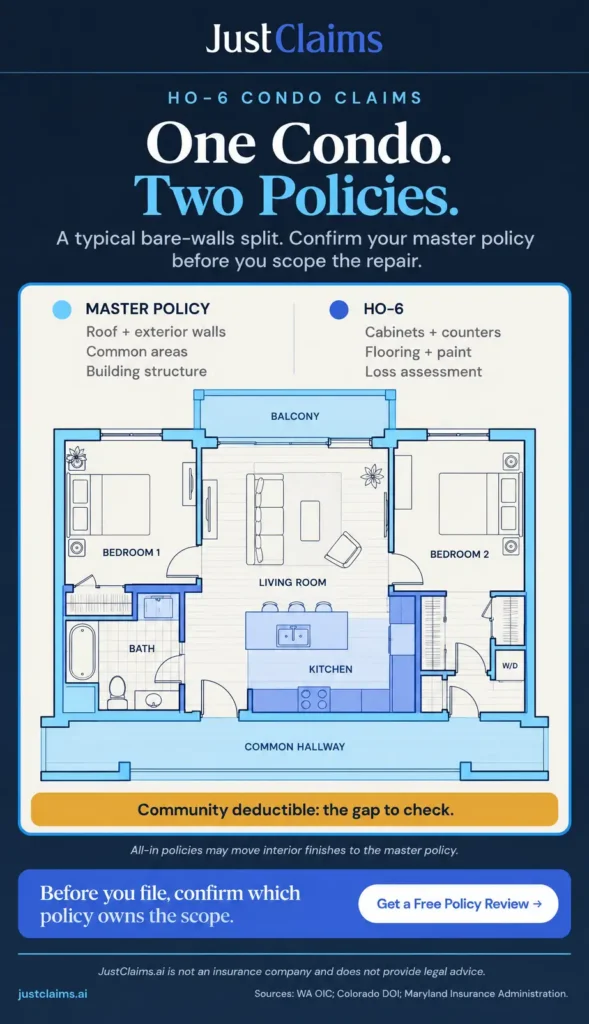
Master policies divide responsibility differently. Under a bare walls (or walls-out) policy, the association covers damage up to the uncovered sheetrock and subfloor — including the roof and common areas — and the unit owner is responsible for the community deductible and all interior finishes, such as cabinets, paint, trim, light fixtures and floor coverings [1]. Under an all-in policy, the master policy covers exterior and interior finishes. An all-in policy that excludes improvements or betterments covers the unit as originally built but not owner upgrades [1].
The Maryland Insurance Administration puts the same split in practical terms: the master policy generally pays to repair the unit as it was originally built, and the unit owner’s policy pays the additional cost to return it to its pre-loss condition [3]. Past remodel work, such as upgraded finishes, usually falls to the owner’s policy for that reason.
Personal Property and Loss of Use
Personal property and additional living expenses are separate parts of the HO-6, not part of the dwelling repair budget [1]. Additional living expenses are time-based, so keep the repair schedule documented separately from the dwelling estimate.
Personal Liability
Personal liability is a separate coverage on the HO-6 [1]. It does not change how you price interior work, but it is part of the policy package the owner is paying for.
Master Policy Types and Who Owns the Scope
Because scope ownership decides which policy pays, the master policy’s type matters before you write a single line item. The Washington Office of the Insurance Commissioner groups community master policies into three common structures [1]:
- All-in: The master policy covers the exterior and all interior finishes, including doors, windows, shower/tub, vanity/cabinets, paint, baseboards/trim, light fixtures and floor coverings [1].
- All-in, excluding improvements or betterments: The master policy covers the unit to its original interior and exterior finishes but not owner changes or upgrades, such as granite countertops replacing laminate or tile replacing original carpet [1].
- Bare walls (or walls out): The master policy covers damage up to the uncovered sheetrock and subfloor, including the roof, possibly the windows, fencing and common areas. The owner is responsible for all interior finishes [1].
In all three structures, the unit owner is responsible for the community master policy deductible [1]. Labels vary by carrier. Read the actual master policy and the association’s governing documents rather than relying on the name [1].
Setting Coverage Limits for Interior Finishes
Once you know which items belong to the owner’s policy, check the policy limit on the declarations page. The Maryland Insurance Administration notes that a unit owner’s policy covers additions, alterations and betterments [3]. If the limit was set years ago, it can fall short of today’s rebuild cost, and the difference can land on the owner.
Questions to raise with the unit owner before you finalize an estimate:
- What is the current building-property limit on the declarations page?
- When was that limit last reviewed against current rebuild costs?
- Which finishes are original to the building, and which are owner upgrades?
- Does your estimate separate the two so each can be matched to the right policy?
Loss Assessment Coverage and Roof Exposure
Scope ownership and limits are not the only gaps. Loss assessment and roof damage also shift costs between the association and the unit owner.
Loss Assessment Limits and Timing
A loss assessment is the association’s charge to unit owners for costs the master policy does not fully cover, such as the deductible [2]. Many HO-6 policies limit loss assessment coverage to $1,000 toward that deductible [2]. Not all HO-6 policies offer loss assessment coverage up to the amounts now needed, and not all allow the limit to be increased outside renewal [2]. Timing also matters: some insurers pay based on the date of loss, while others pay based on the date of the assessment. If the owner changes insurers between those dates, the result can be no coverage [2].
Drywall and Roof Responsibility
Whether the master policy or the HO-6 pays for drywall depends on the master policy’s scope. Under a bare walls policy, the association stops at the uncovered sheetrock and subfloor, so the owner’s HO-6 has to cover drywall and other interior finishes [1]. Under an all-in policy, the master policy reaches interior finishes [1]. Roof damage is generally the association’s responsibility because the master policy typically covers roofs and exterior walls [2]. For leaks and similar disputes, confirm which policy owns the damaged component before you scope the repair.
Documenting an HO-6 Claim Scope
Because policy layers and limits shape what gets paid, documentation works best when organized around those same lines. Practical steps for contractors working with a unit owner:
- Request the master policy and the declarations page. The master policy’s type and the owner’s coverage for additions and betterments frame the estimate [1][3].
- Separate original finishes from upgrades. The split can decide which policy responds [1][3].
- Photograph existing conditions before demolition. Photos help show what was in the unit and its condition.
- Flag any assessment notice from the association. Because timing can turn on the assessment date, record that date and the date of loss [2].
- Compare your total scope to the policy limit. If the estimate approaches or exceeds it, tell the owner early so they can address the gap with their carrier.
Claim rules, notice deadlines and public adjuster roles vary by state, so confirm local requirements before advising an owner.
Frequently Asked Questions
What does an HO-6 condo policy cover?
It is the policy a condo unit owner buys, and Colorado’s insurance regulator notes that it also covers co-op owners [2]. It generally pays for the unit’s interior, personal belongings, personal liability, extra living costs and loss assessment after a covered loss [1]. The association’s master policy typically handles the exterior, roofs and common areas [2].
Does an HO-6 policy cover drywall?
Often yes, but the answer depends on the master policy [1]. Under a bare walls policy, the association stops at the uncovered sheetrock and subfloor, so the HO-6 has to cover drywall and other interior finishes [1]. Under an all-in policy, the master policy reaches interior finishes [1].
How much loss assessment coverage do HO-6 policies include?
Many policies cap it at $1,000 toward the association’s deductible, and not all policies allow the limit to be raised outside renewal [2]. Insurers also differ on whether they use the date of loss or the date of assessment [2].
Who pays for condo roof damage?
The association’s master policy typically covers roofs and exterior walls [2]. Owners should still confirm this against the specific master policy language.
Why does the building-property limit matter to a contractor?
The unit owner’s policy covers additions and betterments [3]. Check the limit on the declarations page; an outdated limit can leave a shortfall between the repair estimate and what the policy pays, so contractors benefit from knowing it before finalizing scope.
How You Can Protect Your Claim Scope
Condo claims turn on three questions: which policy owns each line item, whether the policy limit is high enough, and whether loss assessment coverage is adequate. A scope that separates original finishes from upgrades and cites the master policy’s type puts you in a stronger position when a carrier assigns items to the wrong layer.
JustClaims is a claims-policy resource for condo owners and contractors, not an insurance seller. If the association and the carrier are still disputing the scope, see how our homeowner insurance claim help works.
Upload your HO-6 policy for a free HO-6 coverage review with Justin, then compare the result to your scope estimate to see how line items map to each policy layer and flag gaps before you submit.
This content is for informational purposes only and does not constitute legal or insurance advice. Coverage decisions depend on the specific terms, conditions, and exclusions of each policy and the laws of the applicable jurisdiction; policyholders and contractors should consult with a qualified professional for advice on their particular situation. Public adjuster disclosure: this article is prepared from the perspective of a licensed public adjuster. Public adjuster licensing requirements and permitted activities vary by state, and nothing here promises a specific settlement or claim outcome.
Sources
[1] Learn How Condo Insurance Works — Washington Office of the Insurance Commissioner
[2] Toolkit for Homeowners and HOAs on Insurance — Colorado Division of Insurance
[3] Condominium Insurance — Maryland Insurance Administration

Taylor Bezek

As the General Manager at JustClaims, Taylor Bezek brings over a decade of experience managing complex residential, commercial, and large-loss claims. A licensed Public Adjuster in TX (#2125659), FL (#W455048), CO (#769172), and 10 additional states, Taylor founded his own firm before joining JustClaims to scale a tech-forward solution for the insured. He is committed to combining industry expertise with AI to enhance speed, clarity, and outcomes for every policyholder. Taylor's mission is to modernize the public adjusting profession and ensure owners get exactly what they are entitled to.