Insurance Claim Management: 7 Tips for Success 2026
August 11, 2026
Written by Collin Corcoran
Share


A commercial property claim is won or lost in the first two weeks. What you photograph before the cleanup crew arrives, what you write down after each adjuster call, and whether you catch your policy’s period-of-restoration cap all decide what your carrier ultimately pays. This guide walks through seven steps that keep a large loss from quietly becoming an underpaid one — and the response deadlines your insurer is legally required to meet in Texas, Colorado, Illinois, and Minnesota.
Key Takeaways
- Document before you clean up: Photograph and video all damaged property, and keep damaged items, before any debris is removed or repairs are made.
- Period of restoration is capped: Business interruption coverage typically stops paying Business interruption coverage typically stops paying at a set maximum period — often one or two years — no matter how long the rebuild actually takes.
- Written denials must name the policy language: In Minnesota and Illinois, a carrier cannot deny a claim on a policy provision, condition, or exclusion without referencing that provision in a written denial.
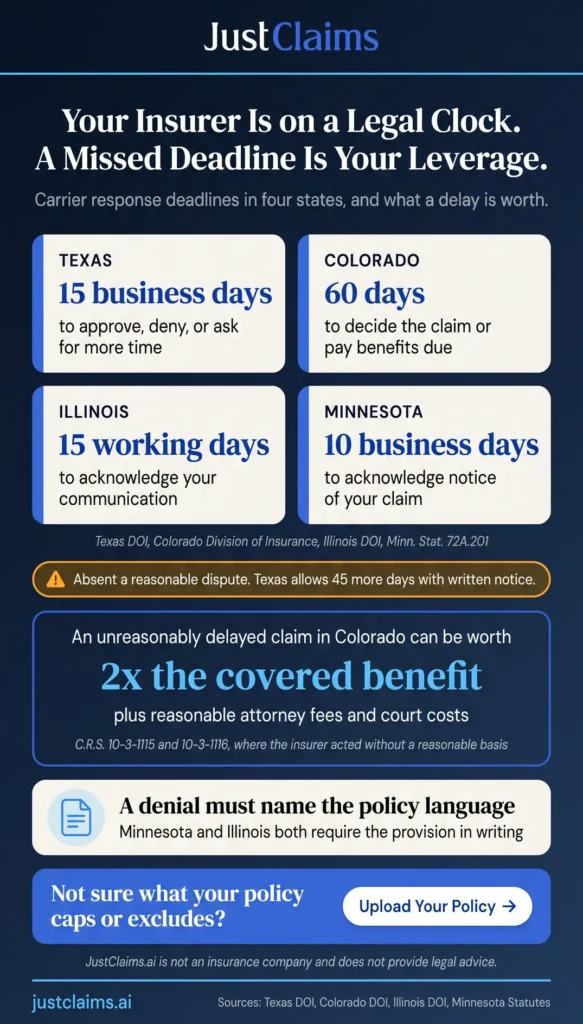
- Carriers are on a clock: Texas requires an approve, deny, or extend notice within 15 business days of receiving all requested information; Colorado requires a claim decision within 60 days of a valid and complete claim.
Immediate Post-Loss Documentation
1. Photograph Everything Before the Cleanup Crew Arrives
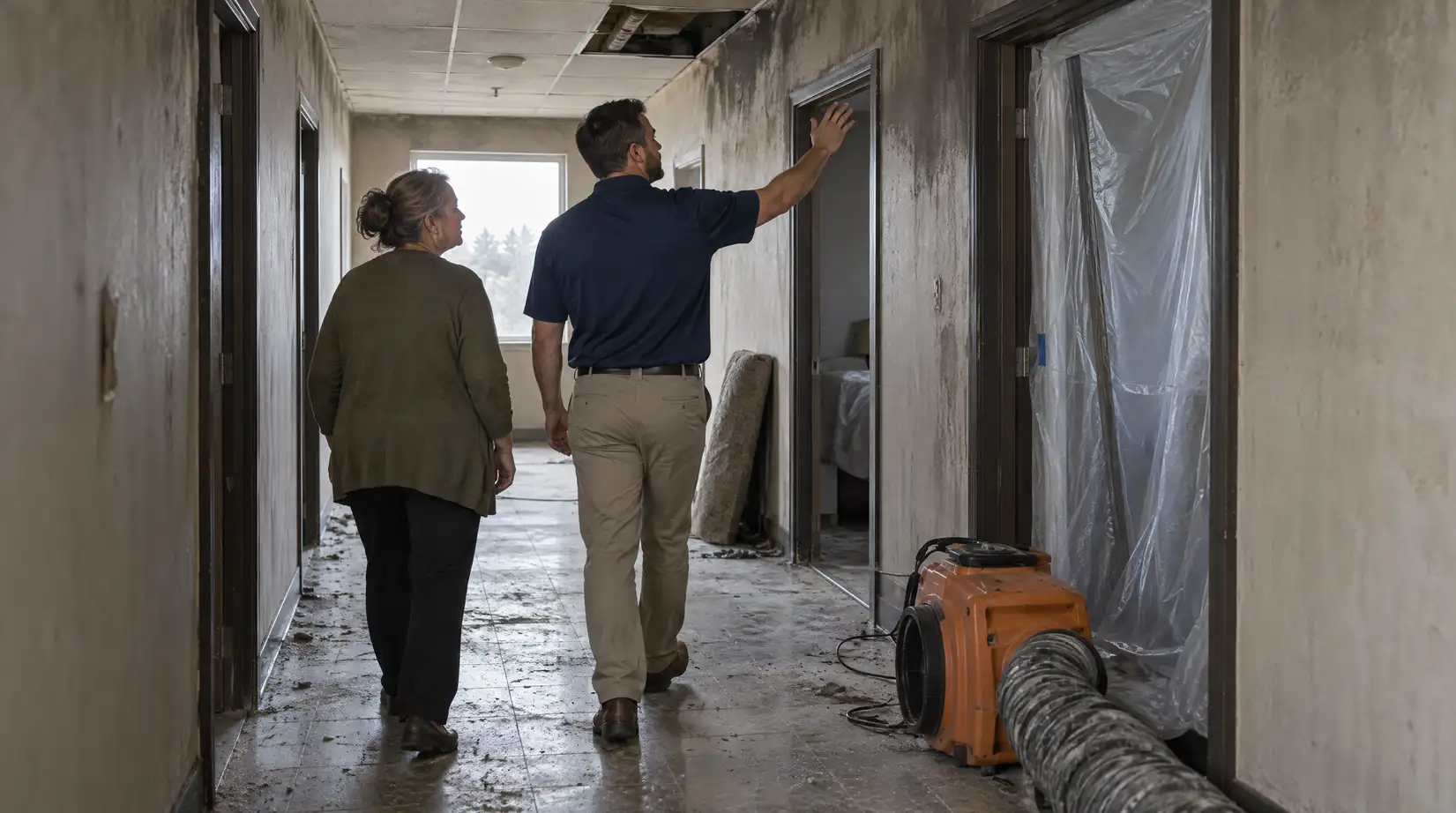
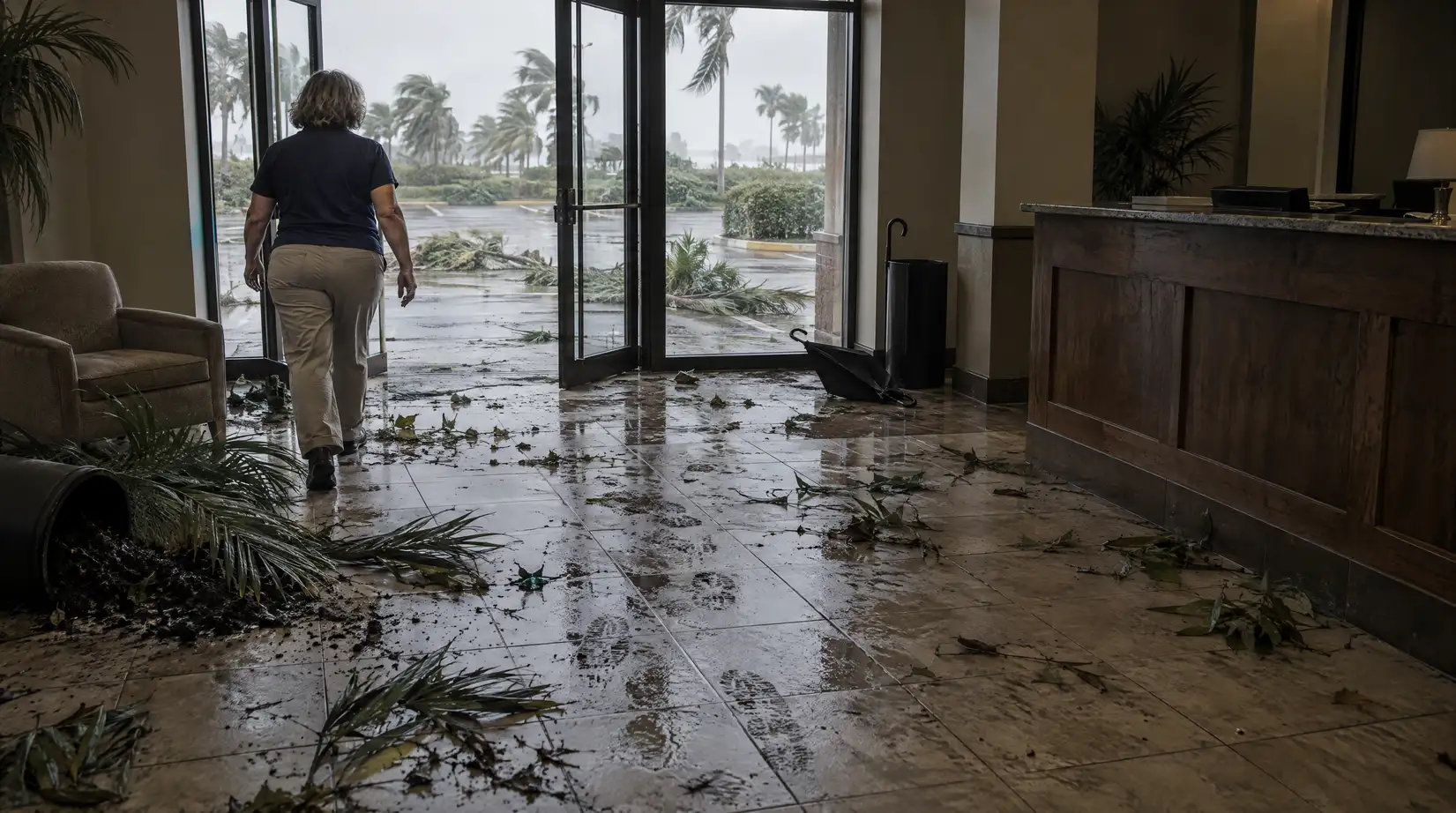
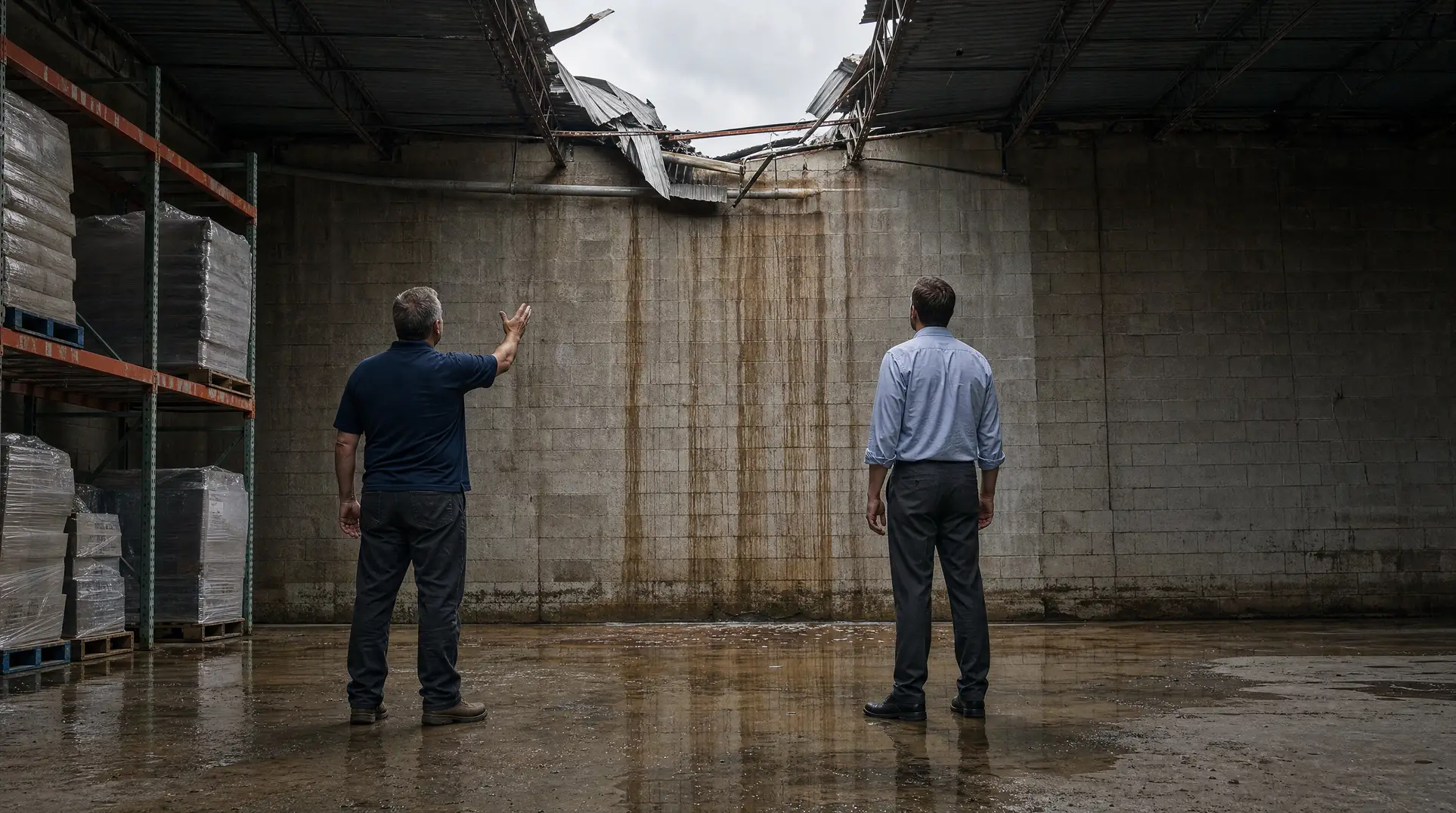
The instinct after a loss is to start clearing debris. Resist it. Regulators are explicit: “Before removing any debris or belongings, document all losses. Take photos or video and make a list of the damages and lost items. If possible, save damaged items so your insurer can inspect, if necessary” [1]. Texas regulators add the operational rule that follows from it: do not make permanent repairs until the adjuster has inspected the damage, and keep the damaged property for that inspection [2].
That documentation is the raw material for a Proof of Loss — a signed, sworn statement of the amount you are claiming, supported by documentation of the loss and the amount requested [3]. On a commercial claim, a formal Proof of Loss is often required only when the insurer asks for one; when that request comes, confirm the filing deadline immediately, because 60 to 90 days is common [4].
2. Keep a Dated Claim Log and Save Every Receipt
Memory does not survive a complex commercial loss. Keep a daily journal tracking recovery progress, problems, and the claim itself, and “document all communications with insurance company representatives, dates, names, phone numbers, and what people tell you”, confirming in writing anything you and the adjuster agree to [4]. Texas regulators frame the same discipline as keeping copies of all documents and notes on every call, including the date, the subject, and the name and title of the person you spoke with [2].
Then protect the property. After documenting the damage, take reasonable steps to avoid further destruction — policies call this mitigation — and make temporary repairs such as covering a hole in the roof or boarding up broken windows; insurance will typically reimburse the cost of those repairs as part of the claim, assuming the loss was covered.[1] Keep a record of all receipts, including for any repairs you make to damaged property [1][2].
Policy Review and Coverage Analysis
3. Audit Your Period of Restoration Before You Need It
Business interruption coverage does not pay until your doors reopen. It pays for a defined window. “A critical provision in any business interruption policy is the length of time for which the policy will pay benefits immediately after the loss. This is called the ‘period of restoration'” [5]. Most policies cap that window — commonly one or two years — and extensions can usually be purchased for additional premium [5].
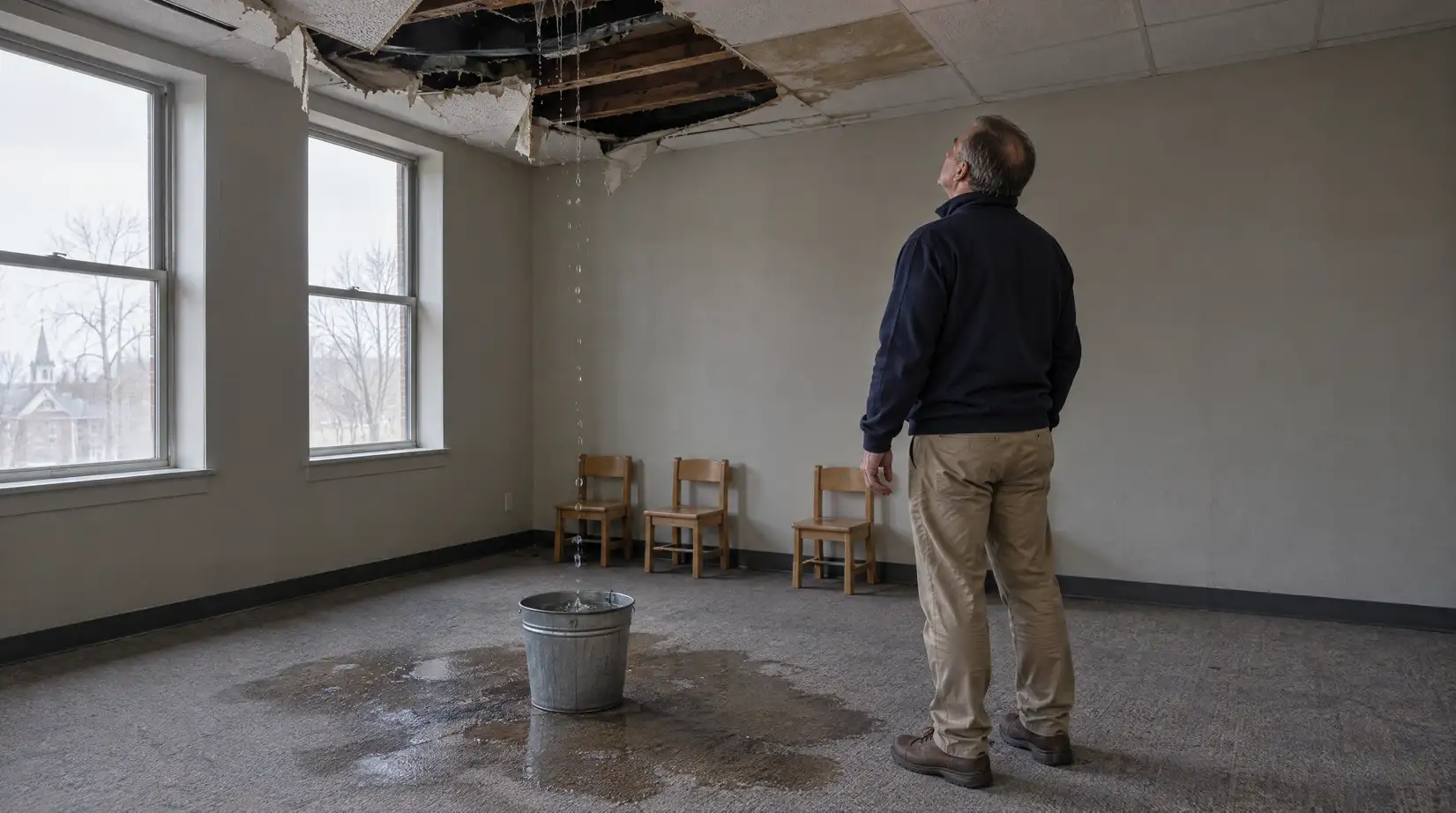
The cap is where the money is lost, because rebuilding projects routinely run longer than projected, and disputes over what counts as a reasonable period to rebuild are common between insureds and insurers [5]. Know your number before a loss, not after month fourteen. If your number and the carrier’s stay far apart, the insurance claim appraisal process exists to settle the amount without litigation.
4. Find the Exclusions and Close Them With Endorsements
An exclusion is not a coverage question you can argue after the fact. Business interruption coverage does not typically cover losses from flooding, earthquakes, and mudslides, though additional coverage for those specific perils can be purchased [6]. The same gap sits on the property side: basic business policies exclude flood and earthquakes, and the fix is the add-ons and endorsements that plug those exclusions before a loss [7].
While you are in the policy, check whether your limits still reflect what it would cost to rebuild today. Be aware of co-insurance provisions and the penalties for underinsuring property, and treat code-upgrade coverage as essential rather than optional — it is the endorsement that covers the difference between what your policy pays and what a current building code requires [7].
Communication Strategies With Adjusters
5. Put Every Claim Communication in Writing
A phone call is not a record. Keep copies of all correspondence and notes on every call with the insurer, including dates and who you spoke with, and when you and an adjuster reach an agreement, confirm it in writing [2][4]. If the claim later turns on who asked for what and when, the written trail is the only version that survives.
6. Walk the Adjuster Through the Damage — and Bring Your Own Estimate
Be there for the inspection. Regulators put it bluntly: “Try to be there when the adjuster inspects the damage to your home, car, or property. Make sure they don’t miss anything” [8]. Prepare a list of all structural damage you want brought to the adjuster’s attention before the walkthrough begins [9].
Then bring a competing number. If you disagree with the adjuster’s estimate, tell the insurer why and send supporting documentation such as a contractor’s estimate for the repairs — the carrier may have overlooked something and may adjust [10]. Written bids from reliable, licensed contractors carry the most weight when they detail the materials to be used and prices on a line-by-line basis [9].
7. Protect Yourself Before Statements, Releases, and Final Payments
An Examination Under Oath provision appears in virtually every property insurance policy sold today: in the contract, your insurer gives itself the right to question you under oath about the details of the loss [11]. United Policyholders’ guidance is that a policyholder who makes a claim must cooperate when the insurer makes a reasonable request to examine them under oath, or risk losing the right to recover the funds they are entitled to — and that you should get legal advice from an experienced policyholder attorney before agreeing or refusing to be examined, and before signing a confidentiality agreement [11].
Be equally careful with paperwork that closes the file. An insurer cannot legally require you to sign a release or confidentiality agreement when it is only paying benefits already owed under your policy [11]. Illinois regulations go further and do not permit a check or draft to indicate “final payment” or “release of claim” unless policy limits have been paid or the claim is being disputed — and it is not unusual for an insurer to reopen a claim for additional payment [9].
Tracking Deadlines and Paperwork
Your policy sets your filing deadlines. State law sets your carrier’s response deadlines. Track both — a missed carrier deadline is leverage, and in some states it carries a penalty. The requirements below apply to commercial property claims in JustClaims’ core markets.
| State | Requirement | Timeframe |
|---|---|---|
| Texas | Insurer must notify you that the claim is approved, denied, or needs more time | No later than 15 business days after receiving all needed information [12] |
| Texas | Payment after approval | No later than 5 days after the notice is sent [12] |
| Colorado | Decision on the claim or payment of benefits due | Within 60 days after receipt of a valid and complete claim, absent a reasonable dispute[13] |
| Colorado | Written explanation of why more time is needed, if unpaid past 60 days | Every 30 days thereafter [13] |
| Illinois | Acknowledge a communication from an insured or claimant | Maximum 15 working days [14] |
| Illinois | Written explanation for delay on a fire and extended coverage claim | 75 calendar days from report, or 25 calendar days after proof of loss — whichever is less [14] |
| Minnesota | Acknowledge receipt of notice of claim | Within 10 business days [15] |
| Minnesota | Complete the investigation and inform you of acceptance or denial | Within 30 business days of notice of claim, unless the investigation cannot reasonably be completed in that time [15] |
| Minnesota | Advise you of acceptance or denial after a properly executed proof of loss | Within 60 business days [15] |
Texas allows the carrier to extend its deadline by 45 more days if the notice states why, and 30 days apply where arson is suspected [12]. In Colorado, the Commissioner of Insurance may, after notice and hearing, assess a civil penalty against the insurer of $100 per day for each day benefit payments are delayed more than 60 days after a valid and complete claim filing, absent a reasonable dispute [13].
Avoiding Common Denial Triggers
A denial letter is not the end of a claim. It is a document with legal requirements attached — and denials that fail those requirements are the ones worth challenging first. Knowing how to negotiate insurance settlement is what turns that challenge into a number the carrier will actually move to.
Demand a Denial That Names the Policy Language
A carrier cannot deny your claim on a provision it will not identify. Minnesota law is direct: “No insurer shall deny a claim on the grounds of a specific policy provision, condition, or exclusion unless reference to the provision, condition, or exclusion is included in the denial. The denial must be given to the insured in writing with a copy filed in the claim file” [15]. Minnesota also requires a denial to include the basis for the denial, the claim and policy numbers, and the contact information for the insurer’s claim service office [15].
Illinois imposes a parallel duty: on a first-party claim, where a settlement is less than the amount claimed or the claim is denied, the insurer must provide a reasonable written explanation within 30 days after the investigation and determination of liability is completed, and “this explanation shall clearly set forth the policy definition, limitation, exclusion or condition upon which denial was based” [14].
Challenge Denials Built on Aerial Imagery Alone
Carriers increasingly close claims from a desk. Maryland’s regulator addressed this directly, and its bulletin covers insurers writing any line of property insurance: satellite or aerial images that are “low-resolution, out-of-focus, or blurry do not accurately represent the condition of the property, and cannot reasonably justify the denial of a property damage claim,” and denying a claim on unclear or imprecise imagery “constitutes an unfair claim settlement practice” [16]. The Administration’s position is that imagery supports a denial only where it “provides a clear, accurate, and current view of the property” [16]. If your denial rests on an aerial photo, ask for the image, its capture date, and its resolution in writing. When a carrier will not produce the image its denial rests on, the public adjuster vs attorney question is worth asking early.
Know What an Unreasonable Delay Is Worth
Colorado law prohibits a person engaged in the business of insurance from unreasonably delaying or denying payment of a claim for benefits owed to a first-party claimant, and defines a first-party claimant to include a corporation, association, or partnership — so commercial policyholders are covered [17]. A delay or denial is unreasonable where the insurer acted “without a reasonable basis,” and a first-party claimant whose claim was unreasonably delayed or denied may bring an action to recover reasonable attorney fees, court costs, and two times the covered benefit [17].
Frequently Asked Questions
How should I document commercial property damage before cleanup?
Take photos or video of all damaged property and make a list of damages and lost items before removing any debris or belongings, and keep damaged items so the insurer can inspect them. Do not make permanent repairs until the adjuster has inspected the damage.
How long does my insurer have to accept or deny my commercial claim?
It depends on the state. In Texas, the insurer must send written notice approving, denying, or extending the claim no later than 15 business days after receiving all needed information. Minnesota requires the insurer to complete its investigation and inform you of acceptance or denial within 30 business days of notice of the claim. Colorado requires a decision within 60 days of a valid and complete claim, absent a reasonable dispute.
Can an insurer deny my claim based on satellite or aerial photos?
Maryland’s insurance regulator has stated that images which are low-resolution, out-of-focus, or blurry cannot reasonably justify denying a property damage claim, and that denying a claim on unclear or imprecise imagery is an unfair claim settlement practice. If your denial relies on aerial imagery, request the image, its capture date, and its resolution in writing.
Why do I need to review my business interruption coverage?
Business interruption coverage pays for a defined “period of restoration,” and most policies cap that period — commonly at one or two years — regardless of how long the rebuild actually takes. Because construction projects frequently run past projections, knowing your cap in advance tells you how much of the recovery timeline you are actually funding.
How to Protect Your Commercial Settlement
A commercial property claim rewards preparation and punishes improvisation. Photograph the loss before anything is moved. Log every call and confirm every agreement in writing. Read your period of restoration and your exclusions before you need them, not after. And hold your carrier to the response deadlines your state actually imposes — in Texas, Colorado, Illinois, and Minnesota, those deadlines come with written-notice requirements and, in Colorado, a penalty attached.
Not sure what your policy caps, excludes, or endorses? Upload it to JustClaims — we’ll identify your period of restoration, flag the exclusions that apply to your loss, and tell you what to document next.
This content is for informational purposes only and does not constitute legal or insurance advice. Coverage decisions depend on the specific terms, conditions, and exclusions of each policy and the laws of the applicable jurisdiction; policyholders and contractors should consult with a qualified professional for advice on their particular situation.
Sources
[2] Tips for Filing a Claim With Your Insurance Company — Texas Department of Insurance
[4] Post-Disaster Insurance FAQs for Small Businesses — United Policyholders
[5] Getting (Back To) Business Interruption Insurance — United Policyholders
[7] Disaster Resiliency Tips for Small Businesses — United Policyholders
[8] Working With an Insurance Adjuster — Texas Department of Insurance
[9] Disasters — Illinois Department of Insurance
[10] What If My Insurance Isn’t Paying Enough? — Texas Department of Insurance

Collin Corcoran

Experienced Public Adjuster and Property Claims Specialist, Collin is licensed in New York (#1603393), New Jersey (#3003700204), and Connecticut (#19820270). With 20+ years of hands-on construction and property damage experience, he specializes in residential and commercial claims, complex loss inspections, policy review, detailed estimating, and strategic negotiation. Collin’s background in construction, asset management, emergency response, and claims documentation allows him to accurately identify damage, understand repair requirements, and advocate effectively for policyholders. He works with homeowners, business owners, contractors, and insurance professionals to move claims forward with clarity, accuracy, and confidence. Collin is committed to transparency, technical precision, strong communication, and securing fair outcomes for policyholders.