Hurricane Damage Insurance Claims: 2026 Filing Guide
October 05, 2026
Written by Stephane Elias
Share


Most property insurance excludes flood damage but typically covers wind damage, so how a hurricane loss is classified can decide whether a commercial claim gets paid. Documentation, policy language, and adjuster preparation each affect how much of the loss is recognized. This guide walks commercial property owners through each stage, from the first hours after the storm to appeals.
Key Takeaways
- Wind vs. Flood: Most property insurance, including business policies, excludes flood damage but typically covers wind damage.
- Flood waiting period: Flood insurance typically takes up to 30 days to take effect.
- FEMA Helpline: The FEMA Helpline number is 1-800-621-3362.
- Wind threshold: Damage from winds below 74 mph would most likely be covered under a residential property policy.
- Before cleanup: Ready.gov advises photographing and listing all damage before you clean up.
- Florida mediation: Florida’s Department of Financial Services offers non-binding claim mediation, including a commercial residential program for condo, co-op, and homeowners’ associations.
Immediate Steps After the Storm: Safety and Documentation
The first decisions after a hurricane affect how much of your loss an adjuster can later verify. Three actions are especially important: protecting the property, recording its condition, and reporting the claim.
Secure the Property and Keep Every Receipt
The North Carolina State Historic Preservation Office advises securing the property against further damage. Examples include covering the roof, removing trees, and preventing trespass or vandalism. It also says to keep receipts for temporary repairs, because insurance should cover them [1].
For a commercial building, that means invoices for tarping, board-up services, and debris removal belong in the claim file from day one.
FEMA’s preparedness guide adds that you should keep records and receipts of extra expenses if you should stay elsewhere during repairs. It advises keeping receipts for all disaster-related expenses, including additional living expenses [2].
Business owners facing displacement can apply the same habit to any additional costs the storm creates.
Document Before You Clean Up
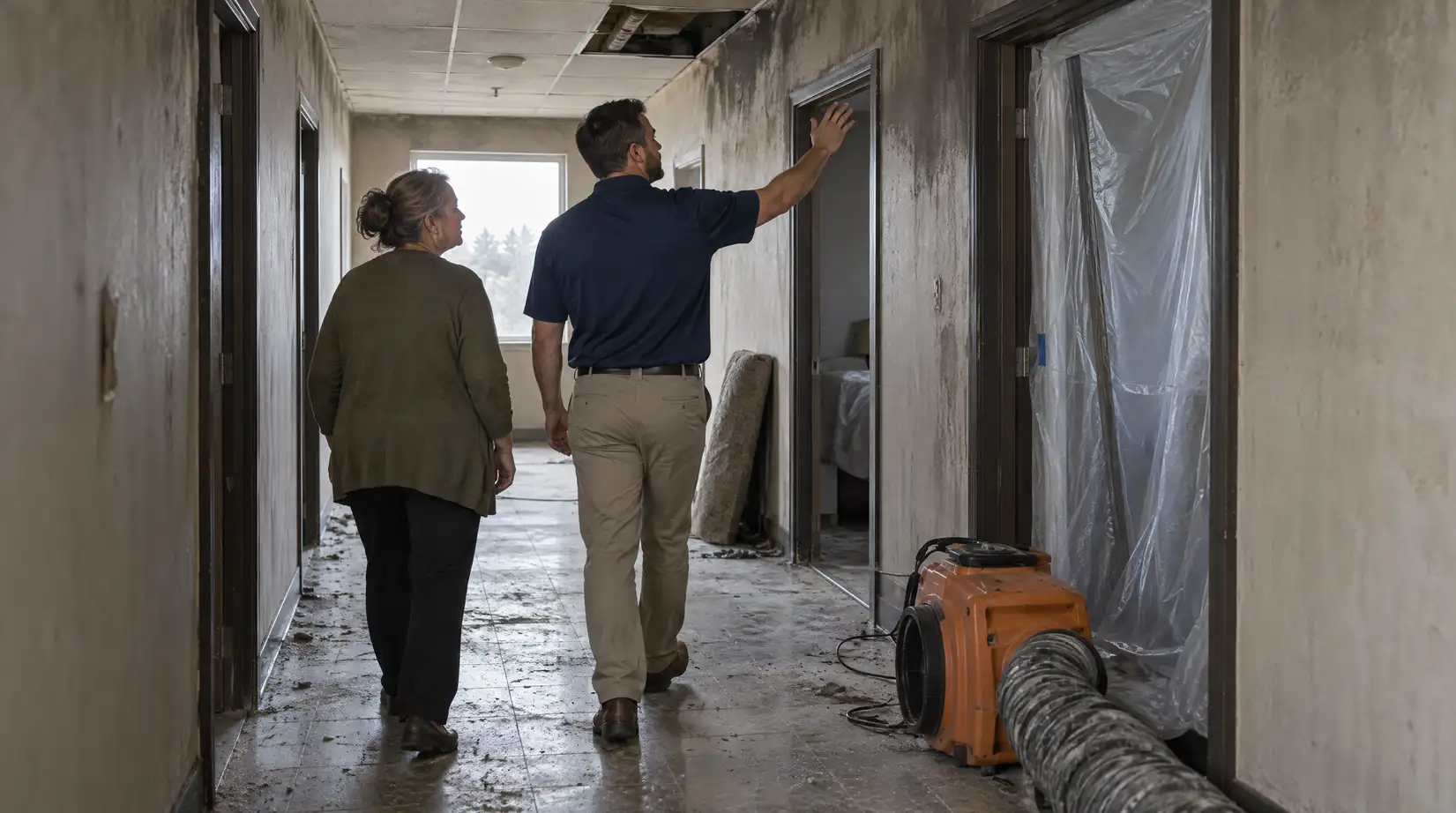
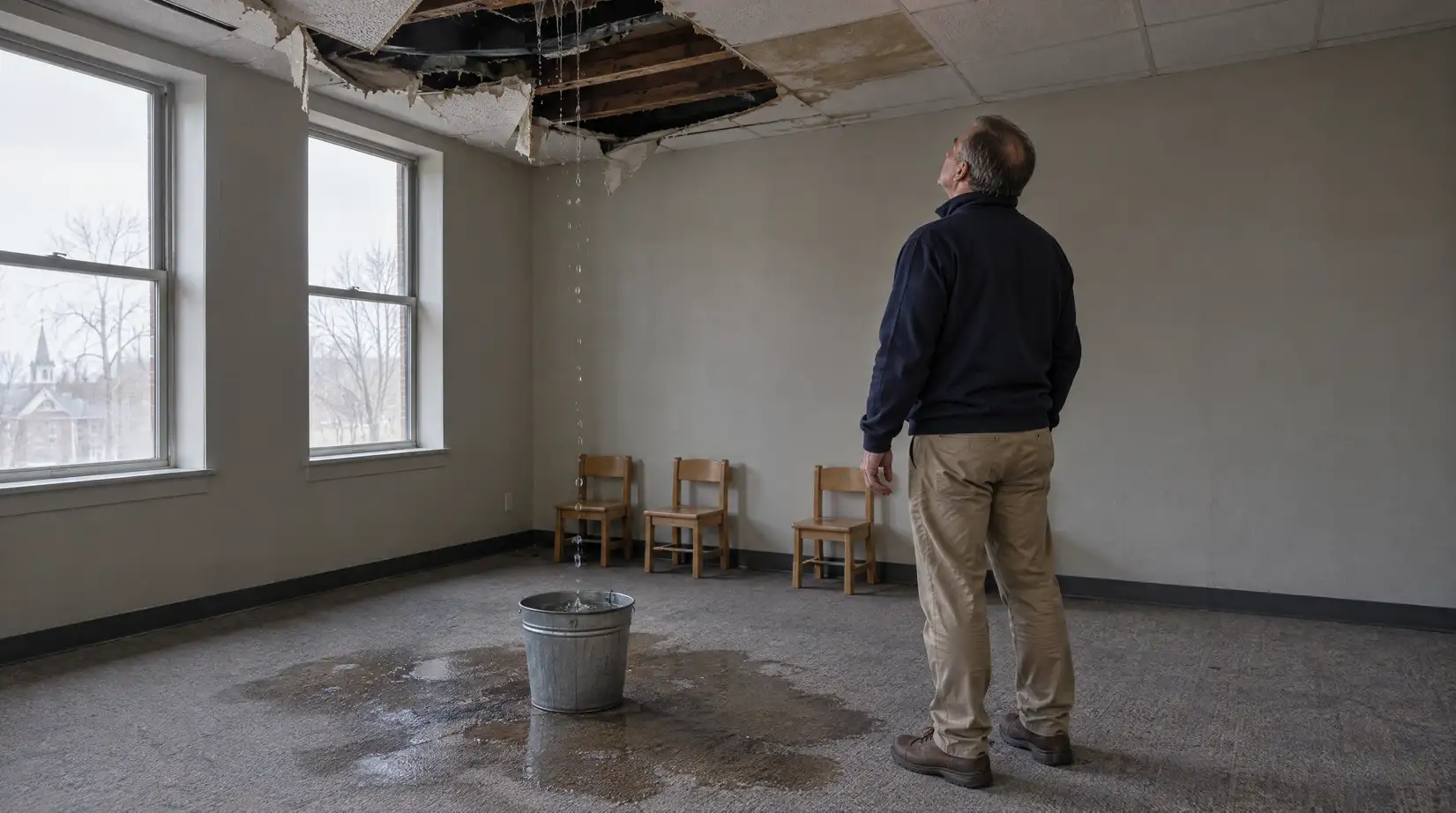
Ready.gov advises documenting all damage before you clean up. Take photos, make a list, and tell local officials about the damage [3]. FEMA explains why: an adjuster needs evidence of damage to prepare the repair estimate. It recommends photographing all damaged property, including discarded objects, structural damage, and standing floodwater levels [2].
United Policyholders gives the same instruction in one line: take photos before cleanup, disposal, or repairs, and photo-document all damage [4].
Report the Claim Promptly
State guidance says to contact your insurer as soon as possible. Provide your name, policy number, a description of the damage (not its cost), and your contact information. Keep trying if communications are down [1]. Before the adjuster visits, make or copy an inventory of damaged or lost items and obtain contractor estimates if feasible [1].
Ready.gov also states that homeowner’s insurance policies do not cover flooding, and that flood insurance typically takes up to 30 days to take effect [5]. Because of that waiting period, a flood claim may be at risk if the policy was bought shortly before the storm. The FEMA Helpline is 1-800-621-3362 [5].
Understanding Your Policy: Wind vs. Flood Coverage
Because the wind-versus-flood classification often shapes the outcome of a hurricane claim, reading your policy language before the adjuster arrives is part of documenting your loss.
How Wind and Flood Coverage Divide
Most property insurance (homeowners, renters, and business) excludes flood damage but typically covers wind damage. In some areas owners must buy separate wind-only coverage, which may cover water that enters a structure because wind damaged a roof or wall. Flood insurance covers only flood damage [6]. When flood is the peril that hits, filing a flood damage claim follows FEMA’s own process rather than the standard property claim path.
FEMA confirms that most property policies leave out flood damage and that the National Flood Insurance Program (NFIP) offers flood insurance to property owners, renters, and businesses [7].
FEMA’s agent guidance also says damage from winds below 74 mph (tropical storm strength or less) would most likely be covered under a residential property policy [6]. Commercial policies vary, so confirm the wind terms in your own policy.
| Coverage type | What it typically addresses | Notable limit |
|---|---|---|
| Standard property policy | Wind damage, including water that enters after wind damages a roof or wall | Typically excludes flood damage |
| Separate windstorm policy | Wind damage where the standard policy excludes or caps wind | Does not cover flooding |
| Flood insurance (NFIP) | Flood damage only | Excludes wind and windstorm damage |
The Gap Between Two Policies
The NFIP’s Standard Flood Insurance Policy states that FEMA will pay for “direct physical loss by or from flood” to insured property [8], and FEMA’s own fact sheet confirms that a flood policy covers only physical damage directly caused by a flood [9].
In some areas, owners must buy separate wind-only coverage, which may cover water that enters a structure because wind damaged a roof or wall [6].
An owner holding only one of the two policy types is protected against just one of a hurricane’s two main perils.
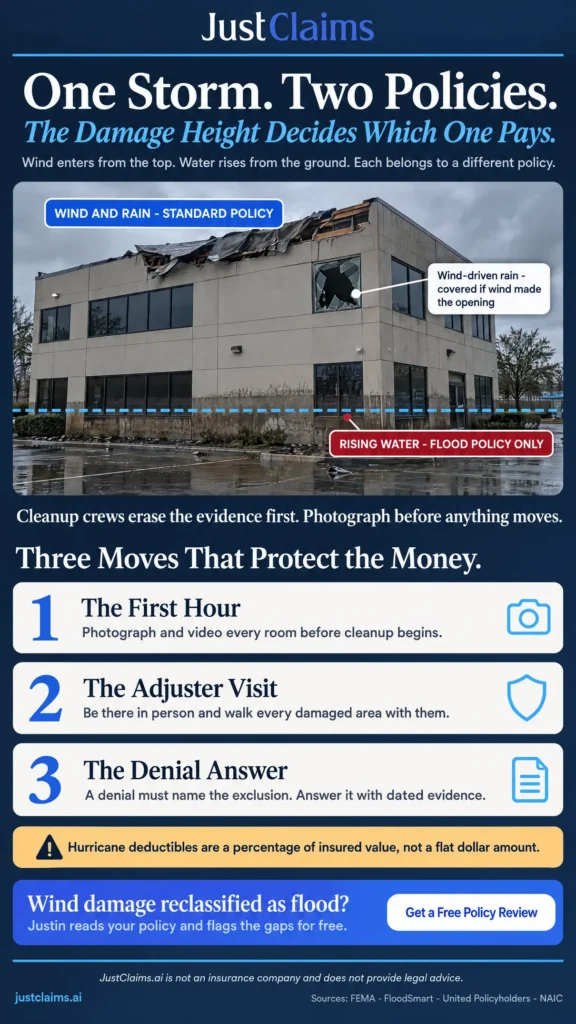
FEMA’s NFIP fact sheet draws the line this way: rain propelled into a covered structure by wind is wind-driven rain, and water entering through a wind-damaged roof is a wind loss — neither is covered under a flood policy [9].
An NFIP policy covers water entering from the ground up, such as storm surge, heavy rainfall, or overflow of a body of water [9], and FEMA defines flood as a general and temporary inundation of normally dry land or properties [10]. This distinction is one of the most challenging parts of a hurricane claim [15], so your photos should show how water entered the building — a breached roof or window versus rising water.
How to Document Damage with Photos and Logs
Documentation gaps are a common reason claims are reduced or denied, and a thorough record can help support your valuation.
Capture Photos and Video Before Anything Moves
The Texas Department of Insurance advises policyholders to take pictures and video of storm damage and not to throw anything away until the adjuster says so [11].
FEMA’s flood claim guidance says photos and videos should show structural damage, standing floodwater levels inside and outside, and damaged appliances, furniture, and other items. They should be taken before anything is moved, removed, or discarded, including items you plan to throw away [12].
Preserve Samples and Organize by Room
FEMA advises keeping swatches of building materials and photographing water-damaged carpet, flooring, wallpaper, and drapes before disposing of them, so the adjuster can see them at the inspection. It also suggests organizing photos and videos by room when giving them to the adjuster [12].
For commercial properties, organizing by suite, floor, or equipment area follows the same logic.
Build the Inventory and Repair Log
The NAIC Post-Disaster Claims Guide says the adjuster will ask for an inventory of damaged personal property. It advises gathering pre-loss photos or videos and receipts for damaged items. When receipts are missing, it suggests searching online retailers to estimate costs. It also says to tell the insurer and agent when you report the claim that you have photos, videos, and cost estimates [13].
The Texas Department of Insurance adds that you should keep a list of repairs, save receipts, and avoid permanent repairs before the adjuster sees the damage [11].
If you start cleanup before an inspection, FEMA’s Hurricane Ian guidance says to take pictures, list your losses, and keep receipts for all disaster-caused expenses [14].
Navigating the Adjuster Meeting
Slow responses and low initial offers are among the concerns property owners commonly raise. Preparation before the adjuster arrives gives you a documented basis for questioning an estimate that undervalues the loss.
Prepare Your Lists, Records, and Bids
The NAIC advises listing all damaged or destroyed property and damage to the main building and other structures, such as a garage, tool shed, or in-ground pool. If records are missing, you can work from memory or from photos [13].
Gather pre-loss photos or videos and receipts for damaged items, and use online retailers to estimate costs when receipts are missing [13].
If there is time before the inspection, you can get written contractor bids. Bids aren’t required, but they help when they itemize materials, prices, and labor line by line [13].
Take Notes and Track Response Times
The NAIC recommends taking notes during the adjuster meeting, including the adjuster’s name and contact information, and asking when to expect to hear back. Ask the insurer at filing how soon the adjuster will inspect. If no adjuster contacts you within a reasonable time, contact your agent or insurer [13]. A written record of these contacts helps if you later need to show delays.
Understand Adjuster Types and Scope of Loss
A company adjuster and an independent adjuster cost the policyholder nothing, but a public adjuster must be paid by the policyholder. Many states require public adjusters to be licensed. Ideally, you and the insurer agree on a “scope of loss,” and appraisal and arbitration are two ways to resolve disputes over the estimate [13].
In South Florida, where hurricane losses are a recurring exposure, a public adjuster in Miami can take over that valuation work for a percentage of the settlement.
The NAIC guide also recommends being present during the inspection — “you should be there when the adjuster comes to your home” — making only essential protective repairs such as tarping before the visit, and preparing your questions in advance [13].
Common Reasons for Claim Denials and How to Appeal
Documentation and classification issues are commonly cited when insurers reduce or deny a hurricane claim, so each denial reason points to a specific record you should already be building.
Why Insurers Deny or Reduce Claims
United Policyholders’ hurricane claim guidance is blunt about what supports a claim: documentation — detailed records of damages, expenses, and interactions with adjusters [15]. Its first-steps checklist notes that most property policies cover wind-driven rain but exclude flood damage, which is why the classification dispute in the previous section decides so many outcomes [4].
If an adjuster says damage isn’t covered, UP advises getting an independent professional opinion before giving up on some or all of the claim [4].
The NAIC adds a mechanical step: if the insurer denies any part of the claim, ask for the denial in writing and keep all paperwork [13].
Filing a Formal Appeal or Complaint
Start with the insurer: state your concerns, provide the documentation it requests, and keep detailed records of every communication. If that fails, Florida policyholders can submit an insurance concern to the Department of Financial Services, which can require the insurer to explain its actions — by statute, insurers have 14 days to respond to the Department [16].
The NAIC gives the same sequence nationally: ask for any denial in writing, keep all paperwork, and contact your state insurance department if the response doesn’t resolve it [13]. Match each stated denial reason to a specific document: photographs, receipts, contractor bids, or policy language.
Mediation as a Dispute Option
Florida’s Department of Financial Services offers mediation as a pre-appraisal and pre-suit process: a certified neutral mediator helps the policyholder and insurer try to resolve the claim, and the result is non-binding — neither party has to accept the outcome [17].
Before mediation begins, a Florida public adjuster can prepare the claim file and the estimate so the mediated number starts from documented damage.
For residential claims, a mediator is assigned on receipt of an eligible request and the conference occurs within 21 calendar days of the assignment [17].
Florida also runs a commercial residential mediation program for claims in which a condominium, cooperative, or homeowners’ association is the policyholder; there, the Department gives the parties 21 calendar days to resolve the dispute before a mediator is assigned, and the insurer pays the mediation cost, capped at $5,000 [17]. Owners of other commercial properties should confirm what dispute options their own state’s insurance department offers.
Frequently Asked Questions
Does my business property policy cover hurricane flooding?
In most cases it does not. Property insurance of all kinds, including business policies, generally excludes flood damage while typically covering wind damage [6].
Flood coverage is available separately through the NFIP for businesses as well as other property owners [7].
What should I photograph before cleaning up after a hurricane?
Record structural damage, standing water levels inside and outside, and damaged equipment, furniture, and stock, and do so before moving or discarding anything [12].
Keep swatches of damaged building materials and group images by room so the adjuster can follow them easily [12].
What can I do if the adjuster does not contact me?
Ask your insurer at the time of filing how soon an inspection will occur, and note the adjuster’s name and contact details once assigned. If a reasonable amount of time passes with no contact, reach out to your agent or the insurer directly [13].
Can I fight a denial or a low settlement offer?
Yes. Ask for the denial in writing, answer each stated reason with supporting documents, and escalate to your state insurance department if it isn’t resolved [13]; in Florida you can submit an insurance concern to the Department of Financial Services online [16].
Disputes over the repair estimate can also go through appraisal or arbitration [13]. Some states, such as Florida, offer non-binding mediation as well [17].
How to Recover Your Full Claim Value
Hurricane recovery depends on three things: accurate wind-versus-flood classification, thorough documentation made before cleanup, and a prepared presence at the adjuster inspection. On a commercial loss, small valuation errors compound quickly, and provisions such as Business Interruption and Law & Ordinance are easy to overlook because they depend on exact policy wording. The Ordinance or Law Coverage A, B, and C guide explains how those three coverages pay for code-required upgrades after a loss.
Collect your receipts, estimates, and photographs now, and compare each against the insurer’s scope of loss line by line. Then get a free commercial property policy review from Justin: upload your policy and loss documentation, and its AI-assisted analysis will review the file and flag potential coverage gaps, including Business Interruption and Law & Ordinance provisions, before the insurer’s number becomes the final number.
This content is for informational purposes only and does not constitute legal or insurance advice. Coverage decisions depend on the specific terms, conditions, and exclusions of each policy and the laws of the applicable jurisdiction; policyholders and contractors should consult with a qualified professional for advice on their particular situation.
Sources
[2] Are You Ready? An In-Depth Guide to Citizen Preparedness — Ready.gov (FEMA)
[3] Recovering from Disaster — Ready.gov
[4] First Steps After a Hurricane and/or Flood — United Policyholders
[6] What Your Clients Need to Know About Wind Insurance vs. Flood Insurance — FloodSmart (NFIP)
[8] Standard Flood Insurance Policy, Dwelling Form (F-122) — FEMA
[10] Flood (Glossary Definition) — FEMA
[11] Storm Recovery Tips — Texas Department of Insurance
[12] File Your Flood Insurance Claim — FEMA
[13] Post-Disaster Claims Guide — National Association of Insurance Commissioners
[14] Florida Hurricane Ian (DR-4673-FL) — FEMA
[15] Navigating Insurance Claims After Hurricanes Helene and Milton — United Policyholders
[16] Get Insurance Help — Florida Department of Financial Services
[17] Mediation and Neutral Evaluation — Florida Department of Financial Services

Stephane Elias

A seasoned insurance professional with nearly a decade of experience, Stephane Elias is currently serving as a Senior Claims Professional and Public Adjuster with JustClaims. Throughout his career, Stephane has represented policyholders through leading public adjusting firms and served as a loss consultant for law firms specializing in insurance litigation, giving him extensive expertise in complex property insurance claims. A licensed public adjuster in TX (#2645032), FL (#W564547), and six other states, he specializes in commercial and residential property claims, claims management, appraisals, mediation, and strategic partnerships. Stephane is passionate about helping policyholders overcome delayed, denied, and underpaid insurance claims, ensuring they receive the full recovery they’re entitled to under their policy.