Does Insurance Cover Lightning? Coverage Guide 2026
September 25, 2026
Written by Taylor Bezek
Share


Lightning is a named peril on nearly every standard property insurance policy, capable of channeling roughly 300 million volts of electricity through a structure in a fraction of a second. Yet contractors managing restoration scopes routinely find that insurers approve the visible fire or roof damage while overlooking fried wiring, damaged electrical panels, and internal electronics hidden behind the walls. That gap between what a policy covers and what actually gets paid can leave property owners — and the contractors rebuilding their homes — short on the funds needed to finish the job.
Key Takeaways
- Coverage basics: Lightning is typically a covered peril under standard homeowners policies — dwelling, other structures, and personal property coverage each play a role after a direct hit.
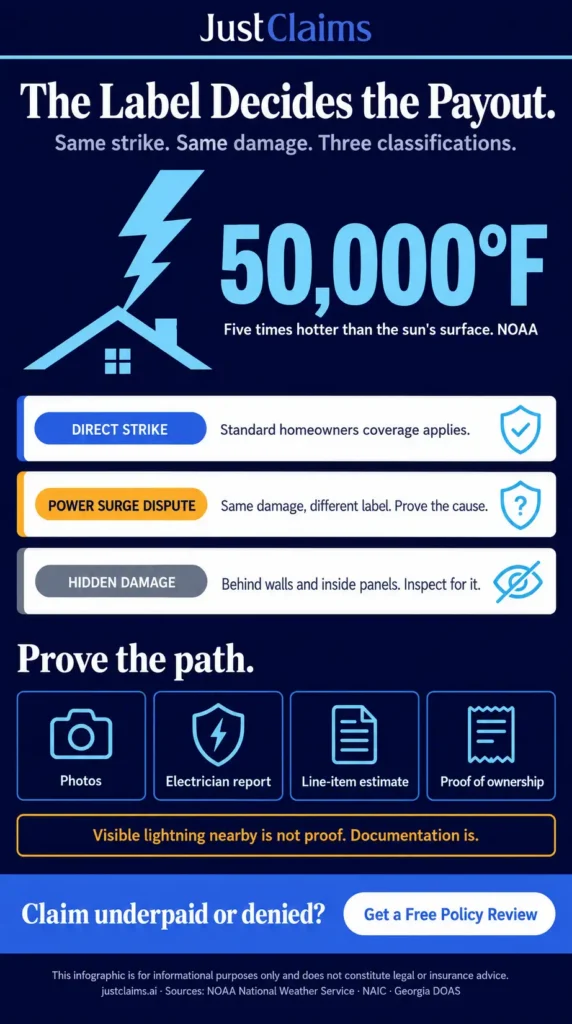
- Power involved: A typical lightning flash carries about 300 million volts and can heat the air it passes through to 50,000°F — five times hotter than the surface of the sun.
- The cause-of-loss trap: Visible lightning in the area is not sufficient proof that damage was caused by lightning — the same damage can be attributed to another cause, such as a power surge.
- Policy language decides: Homeowners policies pay for perils listed in the contract — some cover all perils except those excluded, others only perils specifically named.
- Documentation standard: Georgia’s Department of Administrative Services requires a Lightning Affidavit completed by a certified electrician for lightning claims filed against state agencies.
- Proof required: Strong claims typically include photos and video of the damage, a written contractor estimate, an electrician’s inspection report, and proof-of-ownership records.
What Property Insurance Covers After a Lightning Strike
Some lightning damage is easy to miss in a first walkthrough, so understanding what a policy is supposed to cover is the first step toward flagging a shortfall. Homeowners policies typically include coverage for lightning, and each coverage part plays a distinct role after a direct hit: dwelling coverage pays for damage to the house and attached structures, other structures coverage pays for structures not attached to the house such as fences and sheds, and personal property coverage pays the value of damaged or lost possessions [1].
The physics behind a strike explain why the resulting claims are so often larger and more complex than they first appear. A typical lightning flash carries about 300 million volts and around 30,000 amps — compared to household current at 120 volts and 15 amps [2] — and can heat the air it passes through to 50,000°F, five times hotter than the surface of the sun [3].
For contractors scoping a restoration job, that kind of energy means the claim may involve far more than the roof entry point or the char marks visible from the attic.
The Hidden Damage Trap: Why Fried Wiring Gets Missed
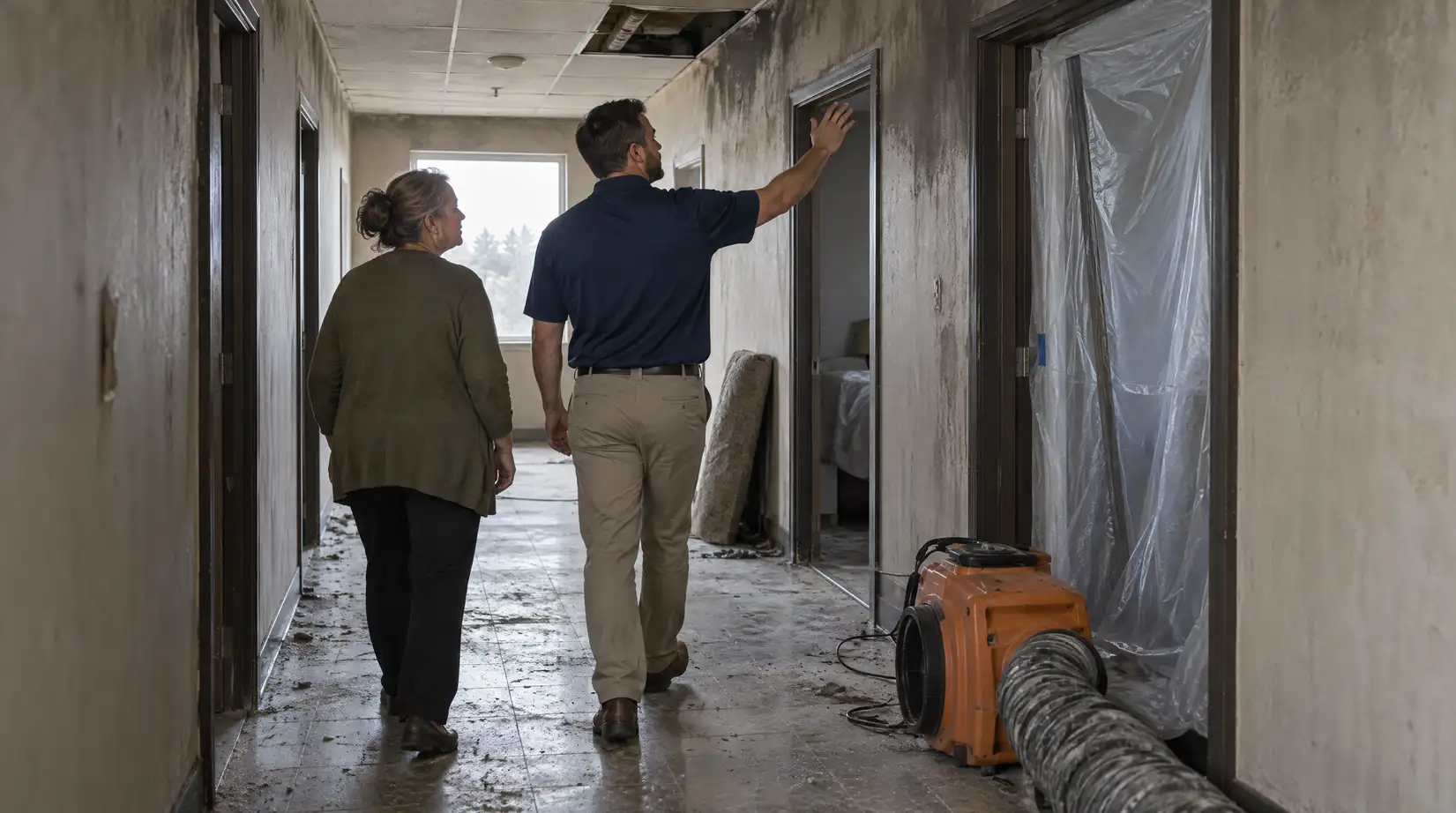
The NAIC’s post-disaster claims guidance cautions that after a loss, you may not be able to see all the damage — and recommends having a contractor inspect the home [4]. Adjusters who rely on a walkthrough alone can miss significant hidden damage, such as compromised wiring or electrical components. A charred roof deck or a scorched chimney is easy to photograph and easy to approve.
Wiring buried inside walls, a fried electrical panel, or internal circuit boards inside HVAC systems and appliances are not — and an adjuster without electrical training may never open that damage up for inspection. Contractors who know what an insurance adjuster inspection is supposed to examine can flag the systems most likely to be skipped before the walkthrough even starts.
The harder fight is proving how the damage happened. Georgia’s Department of Administrative Services warns its own agencies that visible lightning in the area is not sufficient proof that loss or damage was caused by lightning — the same damage could have been caused by something else, such as a power surge [5].
Because homeowners policies pay for damages caused by the perils listed in the contract, up to the policy limit [1], how the cause of loss gets classified can decide how much of the claim gets paid — even when the physical damage is identical either way.
Policy Language Gaps That Undervalue Lightning Claims
Because cause-of-loss classification directly affects how much of a claim gets paid, reviewing the actual policy language before accepting an adjuster’s classification matters. Coverage can be written for all perils except those explicitly excluded, or for only the perils specifically named in the policy [1] — and where lightning-related surge damage falls depends on the exact wording. Property owners and contractors can request the specific policy language in writing and compare it against the documented cause of loss before agreeing to a settlement category.
| Damage Scenario | Description | Coverage Consideration |
|---|---|---|
| Direct Strike | Lightning hits the structure directly | Homeowners policies typically include coverage for lightning [1] |
| Disputed Cause | Damage could be attributed to lightning or to another cause, such as a power surge | Visible lightning in the area is not sufficient proof of a lightning-caused loss — documentation of the cause matters [5] |
| Hidden Damage | Wiring, panels, or components damaged behind walls or inside appliances | You may not be able to see all the damage; a contractor inspection is recommended [4] |
Strong documentation is the primary tool for closing this gap. The NAIC recommends taking photos or videos of the damaged areas and personal property, getting written bids from contractors that detail materials, prices, and labor line by line, and keeping receipts and an inventory list of damaged items [4].
An insurer is only required to pay for personal property the policyholder can prove they owned at the time of loss [6] — and where electrical damage is suspected, an electrician’s written inspection report noting signs such as melted wiring rounds out the file. A home inventory list built before the loss — room-by-room photos, serial numbers, and receipts — turns that proof-of-ownership burden into a checklist instead of a search through damaged rooms.
The Lightning Damage Claim Filing Process
A lightning claim moves through the same basic sequence as any property claim: document the damage, inspect for what isn’t visible, price the repairs, and file with proof. The NAIC’s post-disaster claims guide lays out that sequence for homeowners [4] — the steps below adapt it to the specific demands of a lightning loss, where critical damage can hide behind walls and inside panels.
1. Document the Damage Immediately
Photograph and video every visible sign of damage from multiple angles — entry and exit points, scorch marks, and any structural cracking — and jot down notes about significant damage [4]. Avoid permanent repairs before speaking with the insurer, since the company may not pay for repairs it didn’t authorize [4]. This visual record becomes the baseline reference for every later estimate and inspection.
2. Get a Certified Electrician Inspection
Have a certified electrician inspect the property for signs of hidden damage such as melted wiring, tripped or damaged breakers, and compromised panels. Some jurisdictions formalize this step: Georgia’s Department of Administrative Services requires that any lightning-related property damage claim filed against a state agency include a Lightning Affidavit completed by a certified electrician, submitted with the Notice of Loss within 48 hours of discovering the damage [5].
Even outside that specific requirement, a written electrician’s report gives the adjuster a documented reason to open up walls rather than price only what is visible.
3. Obtain a Professional Repair Estimate
A written estimate from a professional contractor establishes the cost of restoring the structure and its systems, separate from the electrician’s diagnostic findings. The NAIC recommends bids that detail the materials to be used, the prices of those materials, and labor on a line-by-line basis [4] — and the estimate should itemize both visible structural repairs and any electrical or mechanical replacement work identified during inspection. An itemized Xactimate estimate carries that same structure by default, which is why carriers tend to challenge the line items rather than the format.
4. Submit Proof of Ownership and File the Claim
Proof-of-ownership records for damaged personal property — a home inventory list and receipts showing when items were purchased [4] — round out the documentation package submitted with the claim. The insurer is only required to pay for personal property the policyholder can prove they owned at the time of loss [6].
Filing all four elements together, rather than piecemeal, reduces the chance that an adjuster processes the claim under an incomplete picture of the loss.
Protecting Contractor Scope and Client Relationships During Restoration
Hidden electrical damage can surface after the first settlement has already been issued, so contractors managing a restoration scope need a documentation trail that protects both the repair budget and the client relationship.
The NAIC advises policyholders to contact the insurance company and adjuster any time damage is found that hasn’t already been reported or inspected [4] — and when an insurer underpays a lightning claim, the shortfall can land on the contractor’s invoice, not the carrier’s ledger, if the scope isn’t backed by inspection records tied to the original loss.
Keeping supplemental documentation — updated photos as walls are opened, revised estimates as hidden damage is confirmed, and written communication with the property owner about scope changes — creates a clear paper trail if the carrier disputes a supplement request. Property owners and contractors who track this documentation together, rather than after the fact, are better positioned to resolve payment disputes without straining the restoration timeline or the working relationship.
Frequently Asked Questions
Does insurance cover a lightning strike that hits a nearby tree instead of the house?
Coverage depends on the documented cause of loss. If current from the strike traveled into the home and damaged wiring or appliances, the claim may turn on whether the damage is attributed to lightning or to another cause such as a power surge — visible lightning in the area is not, by itself, sufficient proof of a lightning-caused loss [5].
Check whether the policy covers all perils except those excluded or only perils specifically named [1], and document the path of the current with an electrician’s report.
What if the insurer says the damage came from a power surge, not lightning?
Cause of loss can be the deciding point in a lightning claim: the same fried panel or damaged appliances can be attributed to a direct strike or to a surge from the electrical system, and the classification affects what gets paid. Regulators caution that visible lightning nearby is not sufficient proof on its own [5].
A certified electrician’s written findings, photos of entry and exit points, and the policy’s named-peril language [1] are the evidence that anchors the classification.
Why would an adjuster miss electrical damage during an inspection?
Fried wiring, damaged panels, and affected internal electronics are often hidden inside walls or appliance housings and are not visible during a standard walkthrough — the NAIC notes that homeowners may not be able to see all the damage after a loss [4]. Without a certified electrician’s inspection specifically looking for signs like melted wiring, this damage can be left off the claim entirely.
What documentation gives a lightning claim the best chance of full payment?
The strongest claims combine photos and video of the damage, a certified electrician’s inspection report, a written contractor estimate with line-by-line detail, and proof-of-ownership records for damaged belongings [4][6]. Some jurisdictions, like Georgia for state agency claims, formalize the electrician report into a required affidavit [5].
How to Strengthen Your Lightning Damage Claim
A lightning strike can trigger fire damage, structural cracking, and electrical failures all in the same event — and each of those categories carries different documentation requirements and different odds of full payment. Property owners and contractors who nail down the cause of loss early, and who back every claim with an electrician’s inspection and a detailed contractor estimate, put themselves in a stronger position when the settlement comes back lower than the actual repair cost.
If your insurance claim was denied or underpaid, start with a free AI policy review — JustClaims’ expert team, accelerated by our bespoke AI, reviews the policy language, compares it against your documentation, and flags likely underpayments so you can go back to the carrier with confidence.
This content is for informational purposes only and does not constitute legal or insurance advice. Coverage decisions depend on the specific terms, conditions, and exclusions of each policy and the laws of the applicable jurisdiction; policyholders and contractors should consult with a qualified professional for advice on their particular situation.
Sources
[1] Homeowners Insurance — NAIC (National Association of Insurance Commissioners)
[2] How Powerful Is Lightning? — NOAA National Weather Service
[3] How Hot Is Lightning? — NOAA National Weather Service
[4] Post-Disaster Claims Guide — NAIC (National Association of Insurance Commissioners)
[6] My Insurance Doesn’t Cover What? — NAIC (National Association of Insurance Commissioners)

Taylor Bezek

As the General Manager at JustClaims, Taylor Bezek brings over a decade of experience managing complex residential, commercial, and large-loss claims. A licensed Public Adjuster in TX (#2125659), FL (#W455048), CO (#769172), and 10 additional states, Taylor founded his own firm before joining JustClaims to scale a tech-forward solution for the insured. He is committed to combining industry expertise with AI to enhance speed, clarity, and outcomes for every policyholder. Taylor's mission is to modernize the public adjusting profession and ensure owners get exactly what they are entitled to.