Frozen Pipes Insurance Claim: 5 Tips to Get Paid in 2026
September 24, 2026
Written by Taylor Bezek
Share


Commercial property owners face outsized financial risk when frozen pipes burst: water damage from burst frozen pipes is among the most common types of winter property damage, and plumbing and interior fire sprinklers can freeze in extreme cold — particularly during power outages. Whether the claim is paid usually turns on two questions: was the discharge “sudden and accidental,” and did the owner take reasonable steps to keep the building heated? A 2026 federal court ruling shows insurers winning these disputes when utility records show minimal heating — which makes the quality of an owner’s documentation, and the accuracy of the loss valuation, decisive from the first hour.
Key Takeaways
- Coverage trigger: most homeowner and commercial property policies cover damage from a frozen pipe that bursts when it results from a “sudden and accidental” discharge — but policies generally require the insured to maintain a minimum temperature in the building, or to shut off the water supply if the property is vacant.
- Denial risk: insurers may deny a frozen pipe claim if they determine the property owner failed to take reasonable precautions — such as maintaining adequate heat — to prevent the pipe from freezing.
- Sprinkler risk: interior fire sprinklers can freeze in extreme cold, particularly during power outages, and national sprinkler safety guidance calls for areas containing wet-pipe sprinkler piping to be conditioned to at least 40°F.
- Valuation risk: how an insurer calculates a business interruption loss — the pre-loss period used, the revenue formula, the length of the restoration period — can make a significant difference in what is paid, and code-upgrade costs are commonly covered only under an “Ordinance or Law” additional coverage.
- Legal precedent: a 2026 federal court ruling in Hill v. Farmers Prop. & Cas. Ins. Co. found an insurer’s denial supported where utility records showed minimal heating activity during a freeze event.
- Professional help: public adjusters work for the policyholder, not the insurer, and typically charge a fee equal to a percentage of the claim paid — a fee that is negotiable.
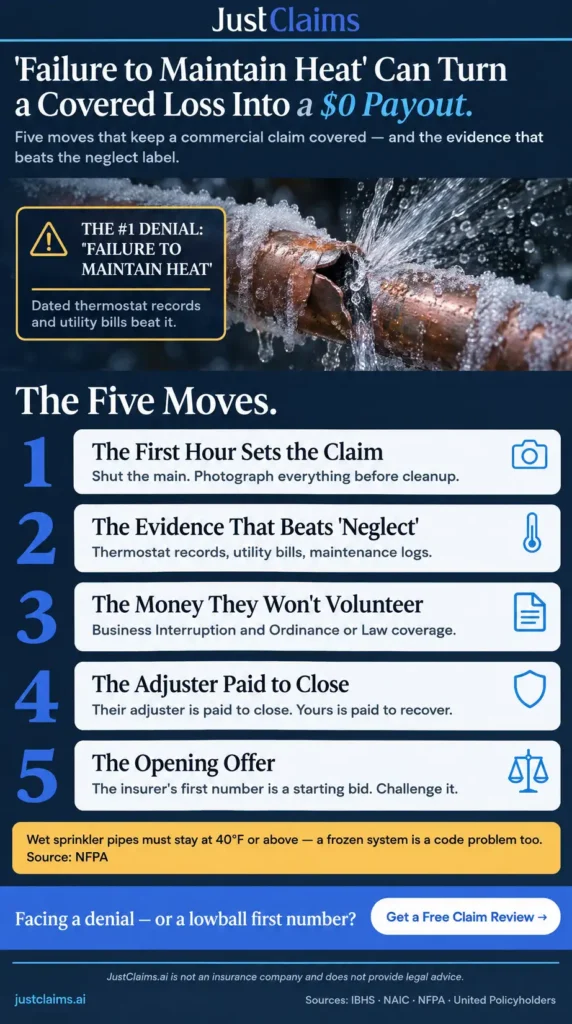
The five tips that follow cover the immediate response, the denial triggers insurers use, the two coverage gaps most often underpaid, when to bring in a public adjuster, and how to challenge a low valuation before accepting it.
Immediate Steps to Take After a Frozen Pipe Bursts
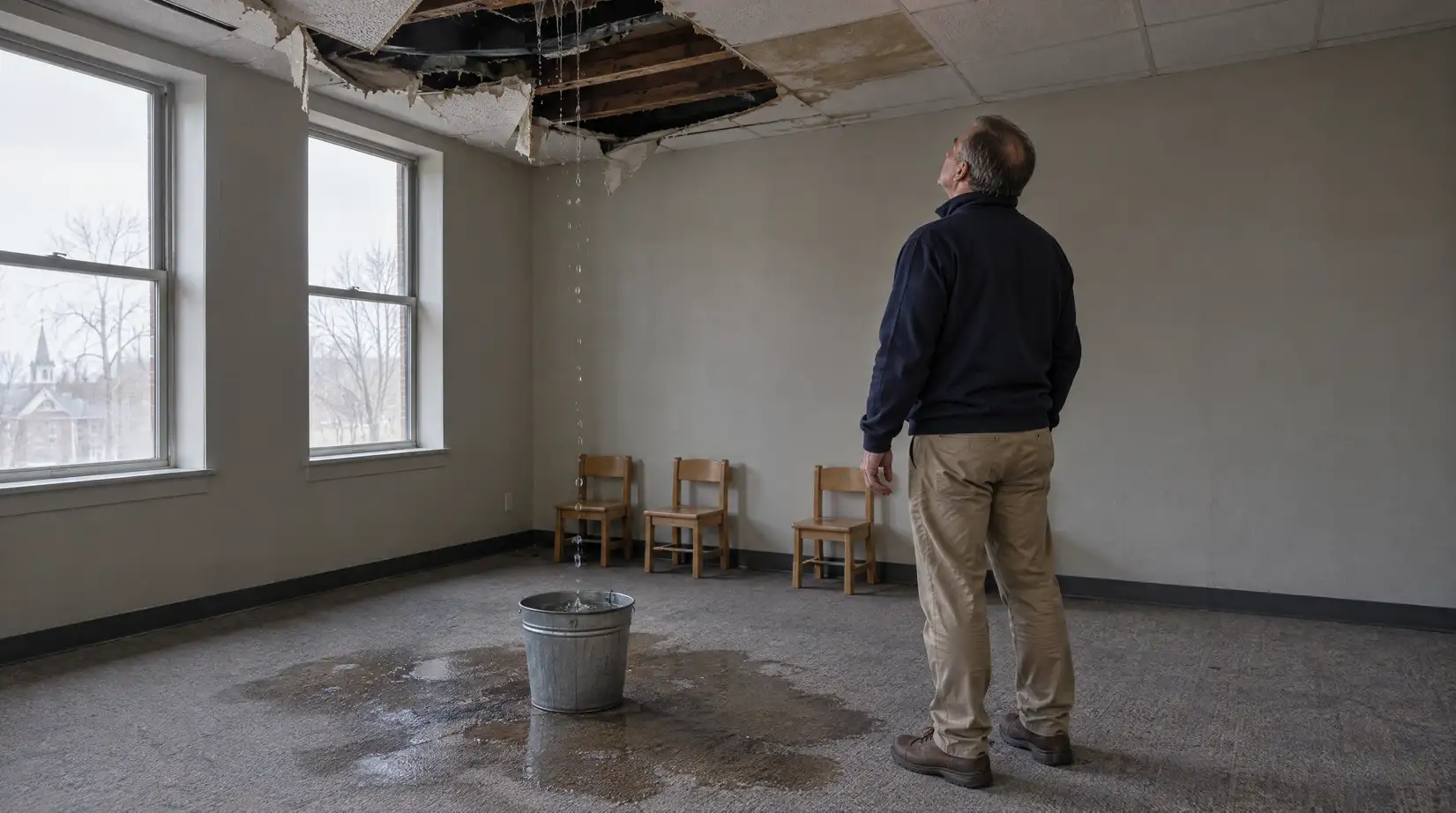
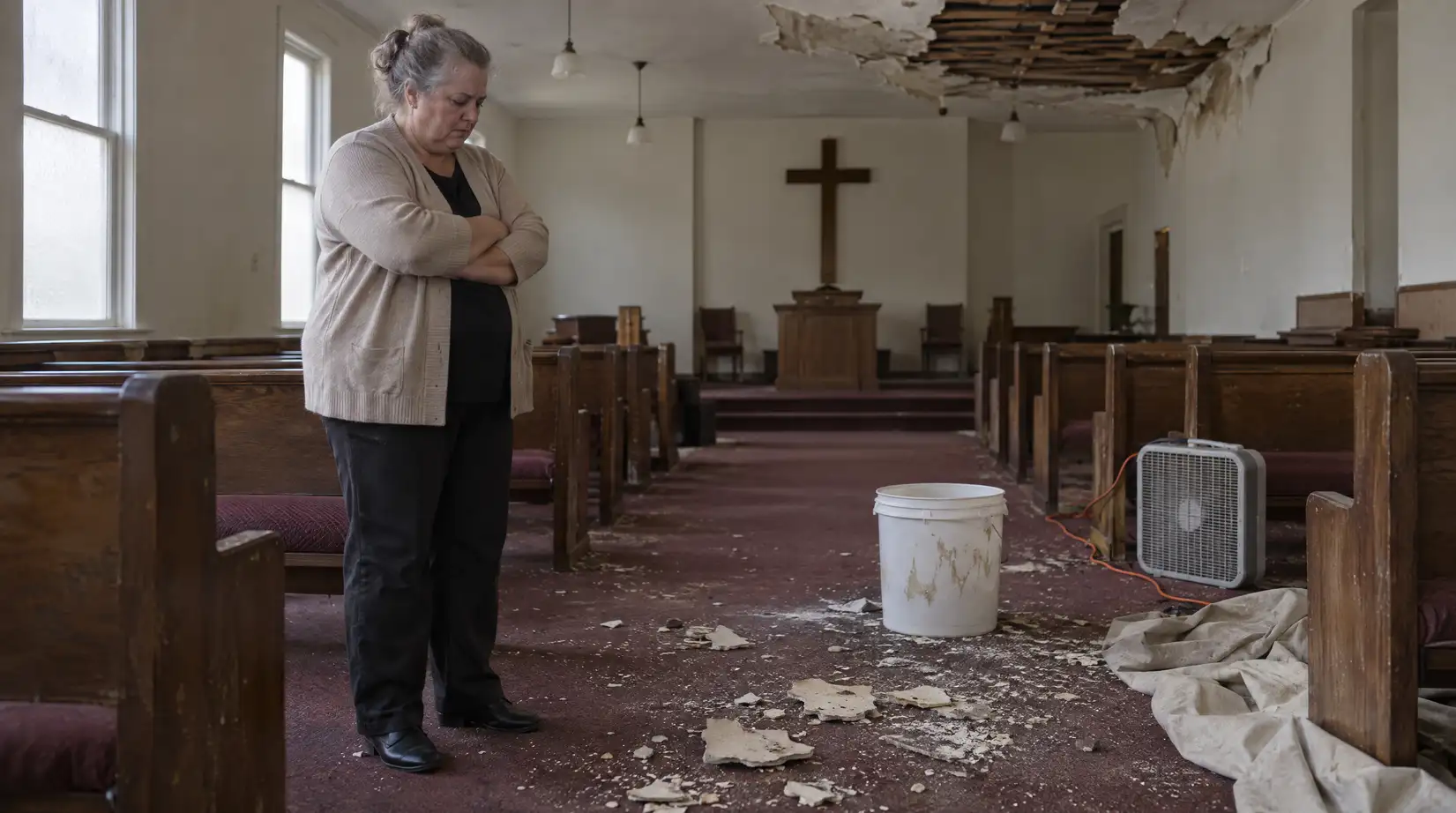
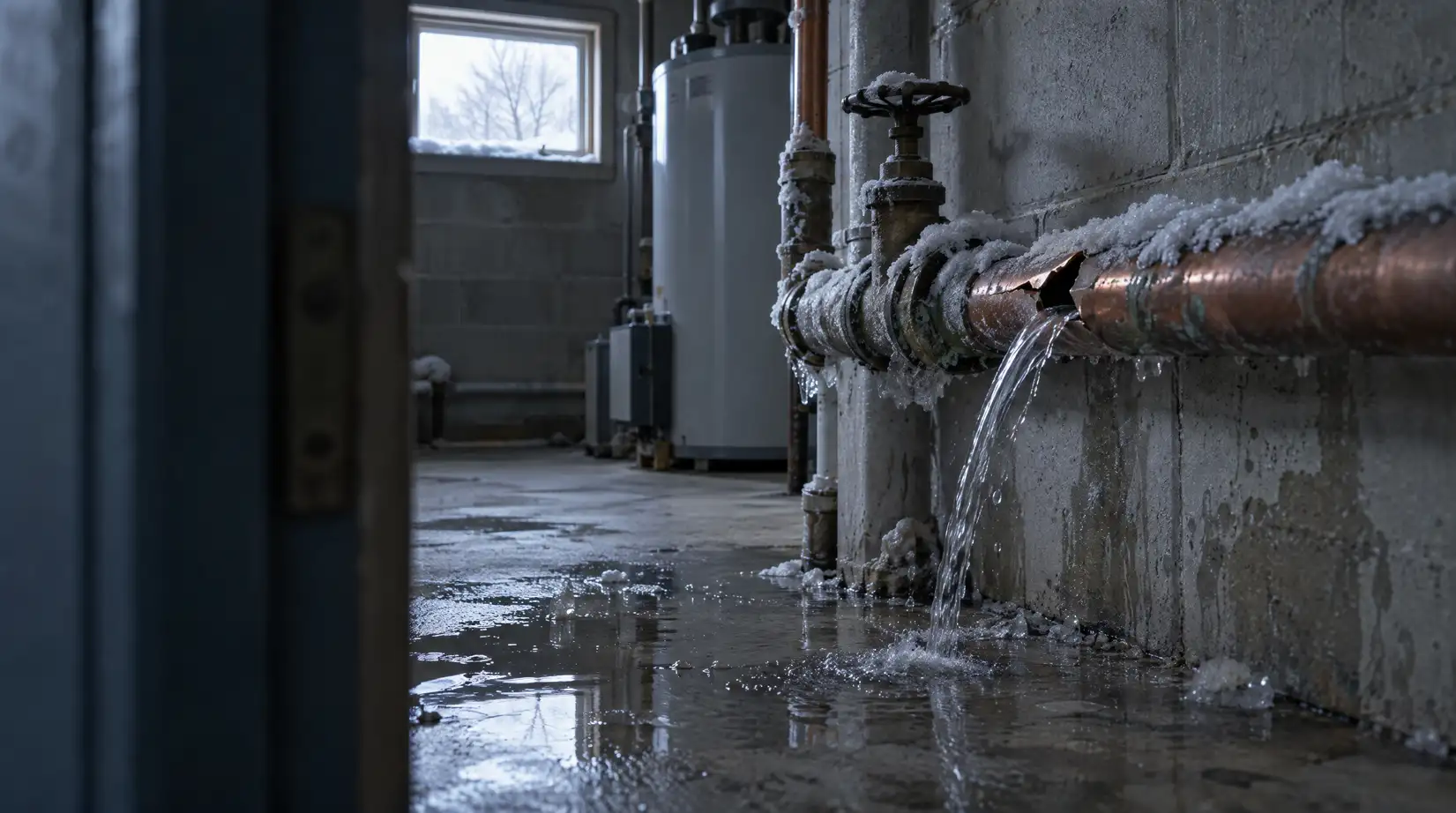
Water damage from burst frozen pipes is among the most common types of winter property damage, and plumbing and interior sprinklers can freeze in extreme cold — particularly during power outages [1]. No commercial property is fully insulated from this exposure, regardless of climate zone. Given how much of the outcome traces directly to the quality of the initial response, the steps a property owner takes in the first hours after a burst pipe often determine whether the claim is paid in full or challenged later.
| Step | Action | Why It Matters |
|---|---|---|
| 1 | Shut off the main water supply and power to affected electrical systems | Stops additional damage and reduces safety risk |
| 2 | Photograph and video all damage before cleanup begins | Preserves evidence for the adjuster’s cause-of-loss determination |
| 3 | Contact a licensed restoration contractor and keep all invoices | Documents mitigation costs the policy may reimburse |
| 4 | Save utility bills and heating system maintenance records | Supports evidence of reasonable care in maintaining heat |
Shut Off Water and Secure the Property
The first priority is stopping active water flow at the main shutoff valve and cutting power to any electrical systems in the affected area. Property owners should note the exact time the water was shut off, since this timestamp can matter later if the insurer questions how quickly mitigation began.
Photograph and Preserve Evidence Before Cleanup
Before any drying, demolition, or repair work starts, property owners should document the full extent of the damage with photos and video, including standing water levels, affected inventory, and the condition of the pipe itself if it is visible. This record becomes the baseline the adjuster will compare against later drying and repair estimates.
Engage a Restoration Contractor and Track Every Cost
Hiring a licensed restoration contractor quickly limits secondary damage such as mold growth, but property owners should request itemized invoices rather than lump-sum estimates. Detailed, dated records of mitigation spending give the adjuster less room to dispute reimbursement later in the process.
Why Insurers Deny Frozen Pipe Claims: Sudden and Accidental vs. Failure to Maintain Heat
Because the financial exposure from a single burst pipe can escalate quickly at a commercial property, insurers scrutinize the cause of loss closely before releasing payment. Most homeowner and commercial property policies cover damage from a frozen pipe that bursts when it results from a “sudden and accidental” discharge from a plumbing source or system [2].
Coverage usually depends on the insured having taken reasonable steps to keep pipes from freezing: policies generally require maintaining a minimum temperature in the building, or shutting off the water supply if the property is vacant, and an insurer that determines the plumbing was neglected can deny the damage [3]. State regulators warn that failing to take such steps can lead to a denied claim [4] — a reminder of how common, and how contested, this cause of loss has become.
A 2026 federal court ruling in Hill v. Farmers Prop. & Cas. Ins. Co. shows how courts evaluate a property owner’s “reasonable care to maintain heat” defense. The court examined prior maintenance history and warning signs — including a known clogged furnace filter and an unusually low thermostat reading left uninvestigated — along with objective evidence such as utility usage records showing minimal heating activity during the freeze event [5]. The ruling found the insurer’s denial was supported, in part because the standard of care a property owner must meet can rise as weather severity increases [5].
For commercial property owners, this means routine HVAC maintenance logs, thermostat records, and utility bills can become decisive evidence in a coverage dispute long before the claim reaches litigation.
Policy Language, Business Interruption, and Ordinance or Law Coverage Gaps
Because commercial burst-pipe losses can escalate quickly in scale, the accuracy of the initial valuation matters as much as the cause-of-loss determination. Sprinkler-protected buildings carry added exposure: interior sprinklers can freeze in extreme cold, particularly during power outages [1], and national sprinkler safety guidance calls for areas of a building containing wet-pipe sprinkler piping to be conditioned to at least 40°F [6]. That 40-degree line is exactly the kind of protective safeguard carriers police after a loss — under a protective safeguards endorsement, coverage can be suspended when a required system is out of service.
Property owners with sprinkler-protected buildings should expect closer adjuster scrutiny on these claims and should request a full accounting of how the loss was calculated.
Complex claims require forensic-level analysis of policy endorsements that are easy to overlook in a fast-moving adjustment.
Two areas deserve particular attention: Business Interruption coverage, where how the lost income is calculated — the pre-loss period used, the revenue formula, and the length of the restoration period — can make a significant difference in what is paid [7], and Ordinance or Law coverage, which addresses the added cost of bringing damaged systems up to current building code during repair and is commonly listed under a policy’s “Additional Coverages” [8].
Property owners can request the adjuster’s full loss worksheet and compare it line by line against the policy’s actual endorsement language rather than accepting a summary settlement figure. Where the math or the coverage interpretation looks off, a documented, line-item challenge — citing the specific policy provision — supports the position that the carrier reconsider the valuation before a final payment is issued.
The Role of Public Adjusters in Maximizing Commercial Payouts
Because a single misvalued line item can cost a commercial property owner a significant share of the total claim, many owners turn to a public adjuster or a claims-review service to challenge the carrier’s numbers before accepting a settlement. A public adjuster works for the policyholder — not the insurance company — and typically charges a fee equal to a percentage of the claim paid; that fee is negotiable [9]. Because compensation is tied to the settlement rather than an upfront retainer, the arrangement lowers the financial barrier for a property owner weighing whether a formal challenge is worth pursuing.
This model matters most in frozen pipe cases, where insurer response times can stretch for weeks while a commercial property sits with active water damage, mounting mitigation costs, and lost income from Business Interruption exposure that grows the longer the claim remains unresolved. Technology-assisted policy review has shortened the time it takes to identify where a settlement offer falls short of the policy’s actual language.
Rather than waiting on a manual line-by-line audit, property owners can run their claim file and policy documents through a digital review tool that flags mismatches between the adjuster’s worksheet and the endorsements governing Business Interruption, Ordinance or Law, and sprinkler-related sub-limits. Faster identification of these gaps means a property owner can respond to the carrier with a documented rebuttal while the claim is still open, rather than after a check has already been issued and accepted.
Frequently Asked Questions
Because frozen pipe claims raise recurring questions about coverage triggers and valuation, the answers below address the concerns commercial property owners raise most often during a dispute.
What does “sudden and accidental” mean in a frozen pipe insurance claim?
It generally refers to a discharge of water that happens abruptly rather than one that develops gradually because a property was left unheated or unmaintained for an extended period. Insurers use this distinction to separate genuine accidents from losses they attribute to neglect [3], so the timeline and condition of the heating system before the freeze often become central to the coverage decision.
Can a commercial property claim be denied if the building’s heat failed?
Yes — if the insurer can show the property owner did not take reasonable steps to maintain adequate heat, coverage can be reduced or denied. Courts have looked at evidence such as prior maintenance records, thermostat settings, and utility usage during the freeze event to decide whether the property owner met that standard of care [5].
How costly is a typical commercial frozen pipe claim?
There is no reliable published average for commercial frozen pipe claims — costs vary widely with the extent of the water damage, whether a sprinkler system was involved, and how the loss is valued. What is consistent: frozen pipes are among the most common sources of winter property damage [1], and how the insurer calculates the loss can make a significant difference in the final payment [7] — which is why the valuation review matters as much as the repair estimate.
How are public adjusters paid on a frozen pipe claim?
Public adjusters work for the policyholder, not the insurance company, and typically charge a fee equal to a percentage of the claim paid by the insurer — a fee that is negotiable [9]. This structure ties their compensation directly to the outcome of the claim rather than the time spent working on it.
How to Secure Full Payment on Your Claim
Frozen pipe losses at commercial properties carry outsized financial stakes, and the difference between a fair settlement and an underpaid one often comes down to how carefully the policy language, the cause-of-loss determination, and the loss valuation were reviewed. Property owners who document mitigation steps promptly, understand the “sudden and accidental” standard, and request a full accounting of Business Interruption and Ordinance or Law calculations put themselves in a stronger position when a settlement offer looks incomplete.
Given how long insurer reviews can drag on while damage and lost income accumulate, a faster, more thorough review of the claim file can meaningfully change the outcome. Upload your policy for a free commercial coverage review — JustClaims’ expert team, accelerated by our bespoke AI, will flag the Business Interruption and Ordinance or Law coverage your insurer may have missed.
This content is for informational purposes only and does not constitute legal or insurance advice. Coverage decisions depend on the specific terms, conditions, and exclusions of each policy and the laws of the applicable jurisdiction; policyholders and contractors should consult with a qualified professional for advice on their particular situation.
Sources
[1] Winter Ready Home — Insurance Institute for Business & Home Safety (IBHS)
[6] Sprinkler System Basics: Types of Sprinkler Systems — National Fire Protection Association (NFPA)
[7] Getting (Back To) Business Interruption Insurance — United Policyholders
[8] Building Code, Ordinance or Law Compliance — United Policyholders
[9] Commercial Property Insurance Public Adjusters — Illinois Department of Insurance

Taylor Bezek

As the General Manager at JustClaims, Taylor Bezek brings over a decade of experience managing complex residential, commercial, and large-loss claims. A licensed Public Adjuster in TX (#2125659), FL (#W455048), CO (#769172), and 10 additional states, Taylor founded his own firm before joining JustClaims to scale a tech-forward solution for the insured. He is committed to combining industry expertise with AI to enhance speed, clarity, and outcomes for every policyholder. Taylor's mission is to modernize the public adjusting profession and ensure owners get exactly what they are entitled to.